
Tax Season Security San Antonio TX – How to Protect Your Financial Documents from Theft and Fraud
Every year, as April approaches, San Antonio residents gather stacks of W-2 forms, bank statements, investment reports, and receipts. This annual ritual of preparing tax documents also creates a window of vulnerability that identity thieves and scammers eagerly exploit. Tax season security in San Antonio TX demands more than just filing on time. It requires a proactive approach to safeguarding your most sensitive financial information from both physical theft and digital fraud.
Financial security during tax season involves understanding the risks, implementing proper storage solutions, and knowing when to seek professional assistance. Whether you store documents in a tax document safe at home or rely on digital backups, the choices you make now can protect your identity and your finances for years to come. April security preparations should begin well before the filing deadline arrives.
Why Tax Season Requires Extra Vigilance
Tax season creates a perfect storm for criminals. During this period, millions of Americans handle documents containing Social Security numbers, employer identification numbers, bank account details, and income information. The urgency to meet filing deadlines often leads people to take shortcuts with document security. Criminals understand this pattern and intensify their efforts accordingly.
According to the Federal Trade Commission, tax identity theft occurs when someone uses your Social Security number to file a fraudulent tax return and claim your refund. Victims often discover the crime only when their legitimate return gets rejected. The financial and emotional toll of resolving such cases can extend for months or even years. A proper tax document safe and consistent security habits significantly reduce these risks.
What Scams Target San Antonio Residents During Tax Season?
Texas residents face specific threats that intensify between January and April. The Texas Attorney General has issued multiple consumer alerts about IRS impersonation schemes targeting Texans. These scams arrive through phone calls, emails, and text messages demanding immediate payment or threatening arrest.
Understanding how these scams operate provides essential protection. Scammers often create a sense of urgency, claiming you owe back taxes or face legal consequences. They may request payment through gift cards, wire transfers, or cryptocurrency. The IRS never initiates contact through email, text, or social media to request personal or financial information. Any such communication should raise immediate red flags for your April security awareness.
| Scam Type | Warning Signs | Protective Action |
|---|---|---|
| Phone Impersonation | Threats of arrest, demands for immediate payment | Hang up and call IRS directly using official numbers |
| Phishing Emails | Generic greetings, suspicious links, urgent language | Never click links; forward to [email protected] |
| Fake Tax Preparers | Promises of inflated refunds, no PTIN displayed | Verify credentials through IRS directory |
| Mail Fraud | Unexpected notices demanding payment to unfamiliar addresses | Verify through official IRS correspondence guidelines |
Essential Security Measures for Your Tax Documents
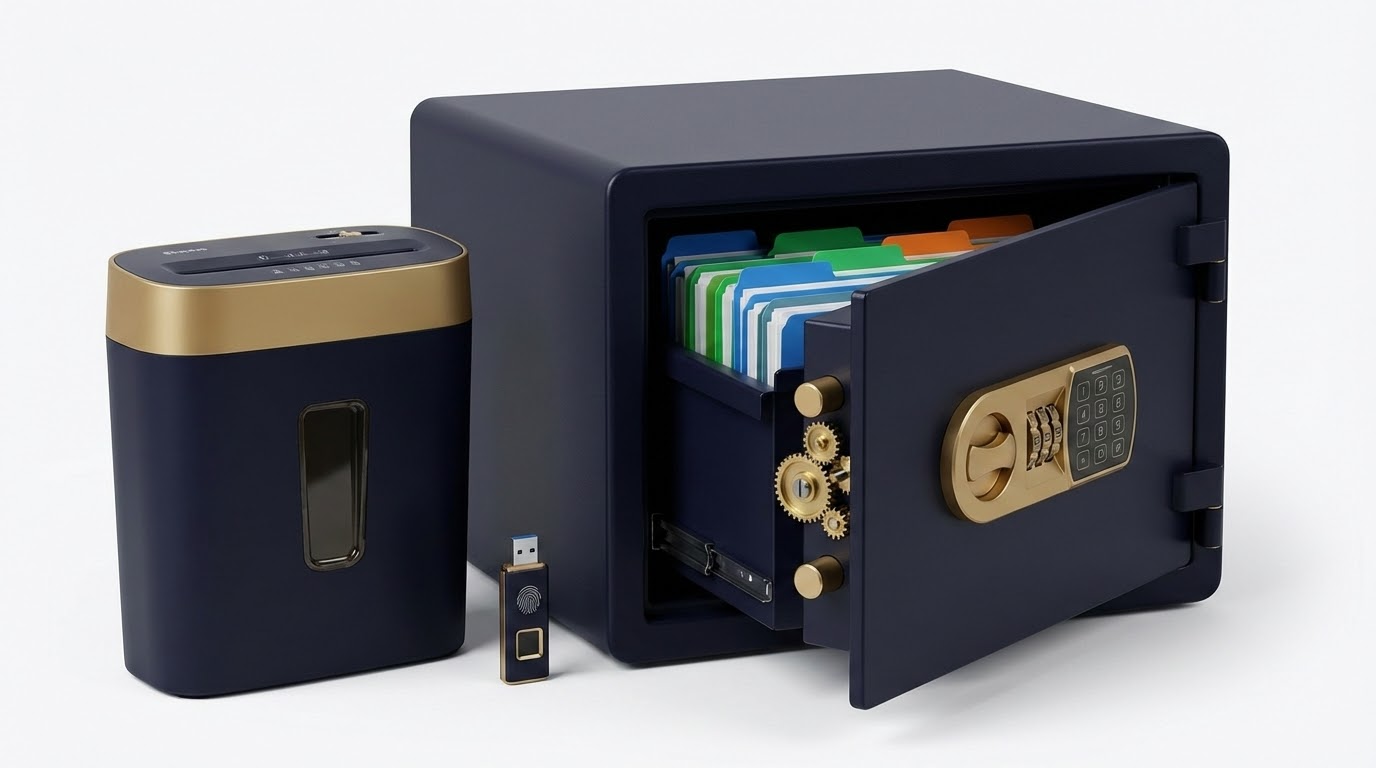
Protecting your financial documents requires a layered approach that addresses both physical and digital vulnerabilities. The strategies you implement should function year-round, not just during the filing season. Consistent security practices create habits that automatically protect your sensitive information regardless of the calendar date.
Physical Document Security: Protecting Paperwork
The foundation of tax season security in San Antonio TX begins with how you store physical documents. A quality tax document safe provides the first line of defense against theft, fire, and water damage. The IRS recommends maintaining organized records in a secure location, emphasizing that good recordkeeping serves both tax compliance and personal security goals.
When selecting a safe for tax documents, consider fire resistance ratings, water protection capabilities, and physical anchoring options. A safe that can be easily carried away offers limited protection against determined thieves. Professional installation ensures your safe remains secured to the structure of your home, dramatically reducing theft risk.
“Cristin is hands-down the best locksmith I’ve ever worked with. She showed up quickly and handled a tricky lockout with total professionalism.”
How Long Should You Keep Tax Documents?
Understanding retention requirements prevents both premature disposal and unnecessary clutter. The IRS provides specific guidelines through Topic No. 305 that every taxpayer should understand. General rules suggest keeping supporting documents for at least three years from the filing date. However, several situations require longer retention periods.
Documents related to property purchases, home improvements, and investment basis should be kept until you dispose of the asset plus the applicable limitation period. If you underreported income by more than 25%, the limitation extends to six years. Cases involving fraud or failure to file have no limitation period, meaning those records should be kept indefinitely.
| Document Type | Retention Period | Reason |
|---|---|---|
| Tax Returns (copies) | Indefinitely | Reference and proof of filing |
| W-2 and 1099 Forms | 3-7 years | Income verification |
| Property Records | Until sale plus 7 years | Basis calculation |
| Business Expense Receipts | 3-7 years | Audit support |
| Investment Statements | Until sale plus 7 years | Cost basis documentation |
Where Should You Store Tax Documents at Home?
Location matters as much as the storage container itself. A tax document safe tucked into a master bedroom closet provides different security characteristics than one anchored in a basement utility room. Consider accessibility, visibility to potential intruders, and environmental factors when choosing your storage location.
Avoid storing sensitive documents in easily accessible areas like home offices with street-facing windows or garages where delivery personnel and visitors may pass. The ideal location balances convenient access for legitimate use with obscurity from potential thieves. Many San Antonio homeowners benefit from professional consultation to identify optimal placement within their specific floor plans.
What Makes a Tax Document Safe Actually Secure?
Not all safes provide equal protection. Marketing terms like “fireproof” and “waterproof” often overstate actual capabilities. Understanding the ratings and standards behind these claims helps you make informed purchasing decisions. A safe rated for 30 minutes of fire protection at a specific temperature provides different security than one rated for two hours.
Key features to evaluate include UL fire ratings, water resistance certifications, lock mechanisms, steel gauge thickness, and anchoring capabilities. Electronic locks offer convenience but require battery maintenance. Mechanical combination locks avoid battery concerns but may be slower to access. The right choice depends on your specific needs, document volume, and budget considerations.
Fire and Water Protection Reality
Paper ignites at approximately 451 degrees Fahrenheit, but it can become unreadable at lower temperatures due to charring and smoke damage. Quality document safes maintain internal temperatures below this threshold for specified periods during fires. However, once the rated time expires, protection diminishes rapidly. Water protection becomes relevant both during flooding events and after fires when sprinkler systems or firefighting efforts saturate the area.
How Do You Protect Digital Tax Documents?
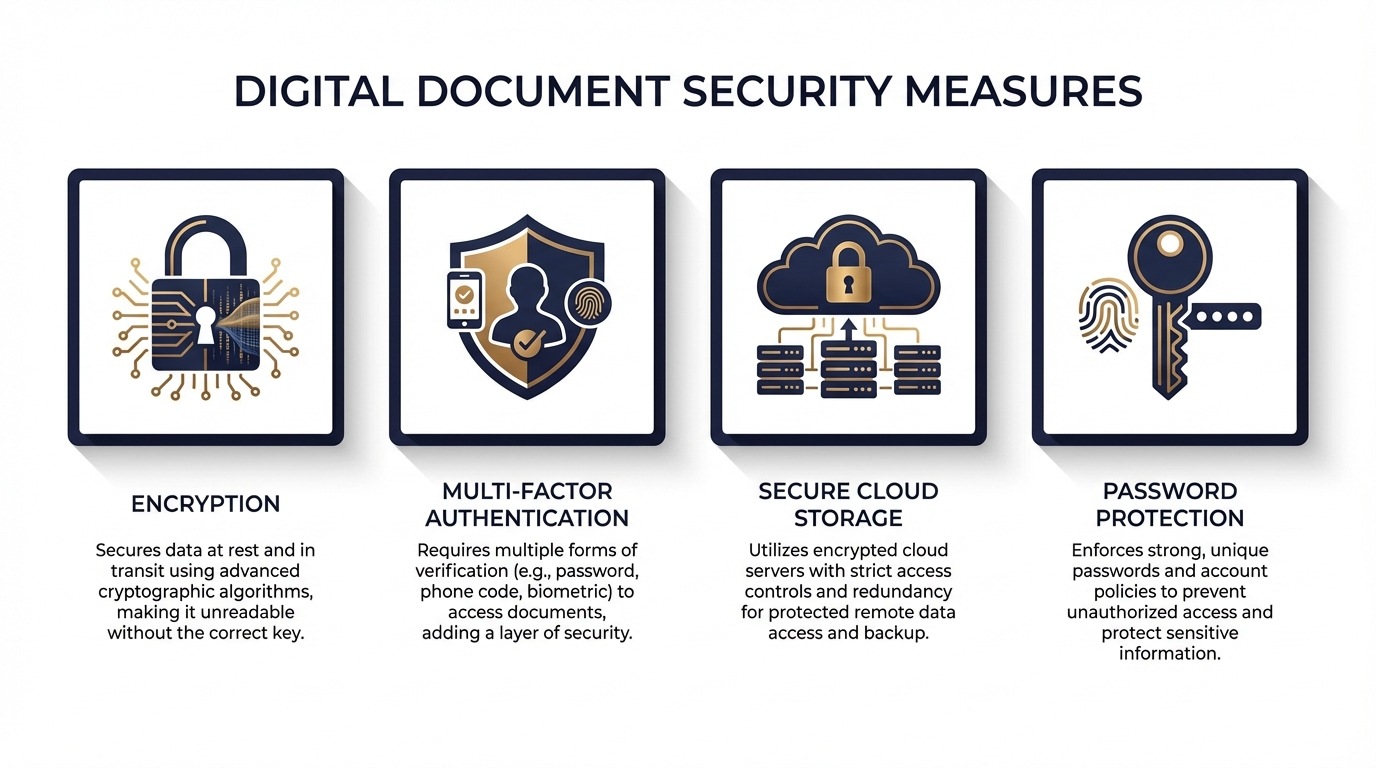
Digital storage offers convenience and backup redundancy but introduces cybersecurity concerns. Strong passwords, multi-factor authentication, and encrypted storage form the foundation of digital financial security. The National Institute of Standards and Technology provides comprehensive guidelines for authentication security that apply to personal document protection.
Avoid storing unencrypted tax documents on shared computers, public cloud services without encryption, or devices that lack password protection. When scanning paper documents for digital backup, ensure the resulting files receive the same protection you would give physical originals. A compromised digital copy can enable identity theft just as easily as a stolen paper document.
Common Digital Security Mistakes
Many people undermine their digital security through convenience-driven shortcuts. Emailing tax documents to accountants without encryption exposes sensitive data. Saving files with obvious names like “2024 Tax Return” on shared family computers creates unnecessary risk. Using the same password across multiple financial accounts means one breach compromises everything. Taking time to implement proper digital hygiene pays dividends in long-term financial security.
“Arrived within 15 minutes, fixed my lock in less than 10. Fast and reasonably priced.”
When Should You Shred Old Tax Documents?
Proper disposal matters as much as proper storage. Documents containing Social Security numbers, account numbers, or other identifying information should never enter regular trash or recycling streams. Cross-cut shredding renders documents unrecoverable and eliminates a common avenue for identity theft.
San Antonio residents can take advantage of community shredding events offered by local banks and organizations. These events provide free, secure document destruction for personal papers. For regular disposal needs, investing in a quality cross-cut shredder enables immediate destruction of sensitive materials as they become obsolete.
What Should Go in a Bank Safe Deposit Box Instead?
Some documents warrant security beyond what home storage provides. Original birth certificates, Social Security cards, property deeds, vehicle titles, and irreplaceable family documents may justify bank safe deposit box rental. The trade-off involves reduced accessibility compared to home storage.
The Emergency Financial First Aid Kit concept from FEMA recommends maintaining copies of essential documents in a secure home location while storing originals off-site. This approach provides both security and accessibility during emergencies when bank access may be limited.
Emergency Preparedness and Professional Assistance
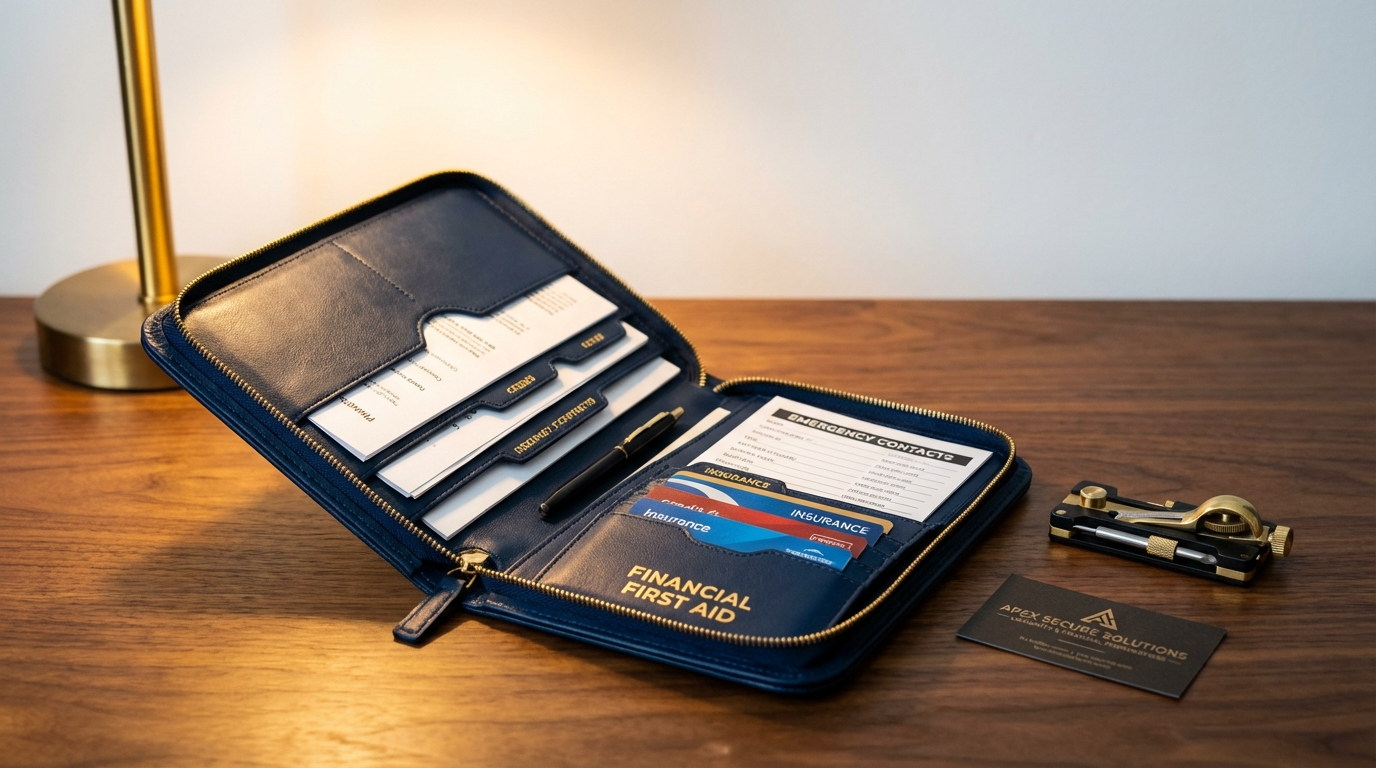
Preparing for unexpected events requires advance planning. Natural disasters, home fires, and burglaries can strike without warning. Having a documented system for your financial records simplifies recovery and reduces the stress of reconstructing your financial identity after a crisis.
Building Your Emergency Financial Kit
An Emergency Financial First Aid Kit consolidates essential information and document copies in one accessible location. This kit should include copies of identification documents, insurance policies, account numbers, contact information for financial institutions, and a household inventory. Storing this kit in a quality safe at home while maintaining backup copies off-site creates resilience against multiple disaster scenarios.
Need Professional Safe Installation?
Our licensed technicians can install and anchor your document safe for maximum security.
When Does Your Home Need Professional Security Assessment?
Several situations indicate the value of professional locksmith consultation for tax season security in San Antonio TX. If your current safe lacks proper anchoring, a professional can evaluate installation options specific to your home construction. Upgrading lock mechanisms on filing cabinets and home entry points adds layers to your overall security posture.
Our team at Immediate Response Locksmith San Antonio can assess vulnerabilities you might overlook and recommend targeted improvements. This includes evaluating existing safes for wear, testing lock functionality, and identifying entry points that could benefit from upgraded hardware. Professional assessment often reveals simple fixes that dramatically improve protection.
Safe Installation and Maintenance
Proper safe installation requires understanding your home’s structural elements. Anchoring a safe to a wooden subfloor provides different security than anchoring to a concrete slab. Weight distribution, accessibility, and concealment all factor into optimal placement. A qualified locksmith brings experience with various installation scenarios and can recommend solutions tailored to your specific situation.
For reliable safe installation and services in San Antonio, professional expertise ensures your tax document safe functions as intended and remains secured against removal attempts.
How Do You Choose a Trustworthy Emergency Locksmith?
Selecting a reliable locksmith requires due diligence. The locksmith industry unfortunately includes some operators who quote low prices initially then inflate charges upon arrival. Protecting yourself involves requesting complete pricing upfront, verifying business credentials, and confirming the scope of work before authorizing any service.
Reputable locksmiths provide clear estimates, arrive in marked vehicles, carry proper identification, and offer written receipts. They welcome questions about their qualifications and can explain exactly what services they will perform. Taking time to verify these details, even during emergency situations, prevents unpleasant surprises and ensures quality work.
| Question to Ask | Why It Matters | Red Flag Responses |
|---|---|---|
| What is the total cost including trip charges? | Prevents surprise fees | Vague answers or refusal to quote |
| Are you licensed and insured? | Protects against liability | Hesitation or inability to provide proof |
| What is your estimated arrival time? | Sets realistic expectations | Promises that seem too good to be true |
| Will you provide a written receipt? | Documents the transaction | Cash-only demands with no documentation |
“Yvette was an absolute lifesaver. Kind, patient, and genuinely cared.”
Ongoing Vigilance Beyond Tax Season

Financial security requires year-round attention. Regular monitoring of bank statements, credit card activity, and credit reports catches fraudulent activity early when it can be more easily resolved. The Texas Attorney General recommends obtaining free annual credit reports and reviewing them for unauthorized accounts or inquiries.
Staying informed about evolving scam tactics helps you recognize new threats as they emerge. Criminals constantly adapt their methods, making ongoing education an essential component of financial security. Subscribing to consumer protection alerts from official sources keeps you updated without overwhelming your attention.
Frequently Asked Questions About Tax Season Security
What documents require the highest security during tax season?
Documents containing Social Security numbers, employer identification numbers, bank account details, and income information require maximum protection. This includes W-2 forms, 1099 statements, bank statements, investment reports, and any correspondence from the IRS or state tax authorities.
Can identity thieves file tax returns using stolen information?
Yes, this represents one of the most common forms of tax-related identity theft. Criminals file fraudulent returns early in the season using stolen personal information, claiming refunds before legitimate taxpayers file. Victims often discover the fraud when their legitimate returns are rejected as duplicates.
How quickly should you report suspected tax identity theft?
Report suspected tax identity theft immediately. Contact the IRS Identity Protection Specialized Unit, file a report with the FTC, and place fraud alerts on your credit reports. Quick action limits damage and begins the recovery process.
Are digital copies of tax documents legally acceptable?
The IRS accepts digital copies of most tax documents for recordkeeping purposes. However, some situations may require original documents, particularly for legal proceedings or certain transactions. Maintaining both digital backups and secure physical storage provides maximum flexibility.
What should you do if your tax document safe is damaged in a disaster?
After ensuring personal safety, document the damage with photographs before attempting to open or move the safe. Contact your insurance company and a professional locksmith for assistance accessing contents. Even damaged safes may have protected their contents if fire or water ratings were appropriate for the event duration.
How often should safe locks and batteries be checked?
Electronic safe locks should have batteries replaced annually regardless of low-battery indicators. Mechanical locks should be tested monthly and professionally serviced every few years. Regular maintenance prevents lockouts and ensures reliable access when you need your documents.
Ready to Strengthen Your Tax Season Security?
15+ years serving San Antonio. Licensed, insured, and available 24/7.
Your financial documents deserve protection that matches their importance to your identity and livelihood. From selecting the right tax document safe to ensuring proper installation and ongoing maintenance, every decision contributes to your overall financial security posture. San Antonio residents face the same threats as taxpayers nationwide, but local resources and professional services can provide tailored protection.
Have you evaluated your current document security setup for vulnerabilities? Whether you need a professional safe installation, a security assessment of your home office, or emergency locksmith services, expert assistance is available around the clock. Contact our team to discuss how we can help protect what matters most to you and your family.