
Restaurant Locksmith San Antonio TX – Complete Security Guide for Food Service Owners
Running a restaurant in San Antonio means juggling countless responsibilities every single day. From managing kitchen operations to ensuring customer satisfaction, security often takes a backseat until something goes wrong. A broken back door lock during the dinner rush or a lost key situation at 5 AM before prep starts can derail your entire operation. This comprehensive guide addresses the unique security challenges that restaurant owners face and explains why working with a specialized restaurant locksmith San Antonio TX professional makes all the difference for your business.
Why Do Restaurants Need a Specialized Commercial Locksmith Instead of a General One?
Restaurants operate under conditions that most residential properties never experience. Your doors open and close hundreds of times daily. Staff turnover means constant key management headaches. Emergency exits must comply with specific safety codes while still protecting against unauthorized entry. A general locksmith who primarily handles home lockouts may not understand these commercial realities.
Food service locks endure significantly more wear than residential hardware. Kitchen doors face grease exposure, temperature fluctuations, and constant traffic from servers, cooks, and delivery personnel. Storage room doors must secure expensive inventory while allowing quick access during service. A commercial locksmith brings experience with high-traffic door hardware, understands compliance requirements, and can recommend solutions designed for your specific operational needs.
What Should You Check Before Calling a Restaurant Locksmith in San Antonio?
Choosing the right locksmith protects your business from both security vulnerabilities and potential scams. Before making that call, verify several critical factors that separate legitimate professionals from unreliable operators.
Essential Questions for Your Initial Phone Call
Ask about pricing structure immediately. Reputable locksmiths provide estimates before arriving and explain any potential additional charges. Request their Texas DPS license number and verify it through the official TOPS Search Licensees portal. Inquire about their experience with commercial food service establishments specifically. A locksmith familiar with restaurant operations understands urgency differently than one accustomed to residential calls.
Warning Signs of Non-Transparent Pricing
Be cautious if a locksmith refuses to provide any estimate over the phone or quotes an unusually low service call fee that seems too good to be true. The Texas Department of Insurance consumer guide recommends being wary of pressure to act quickly without proper documentation. Always request written confirmation of the agreed price before work begins.
How Much Does a Restaurant Locksmith Cost in San Antonio?
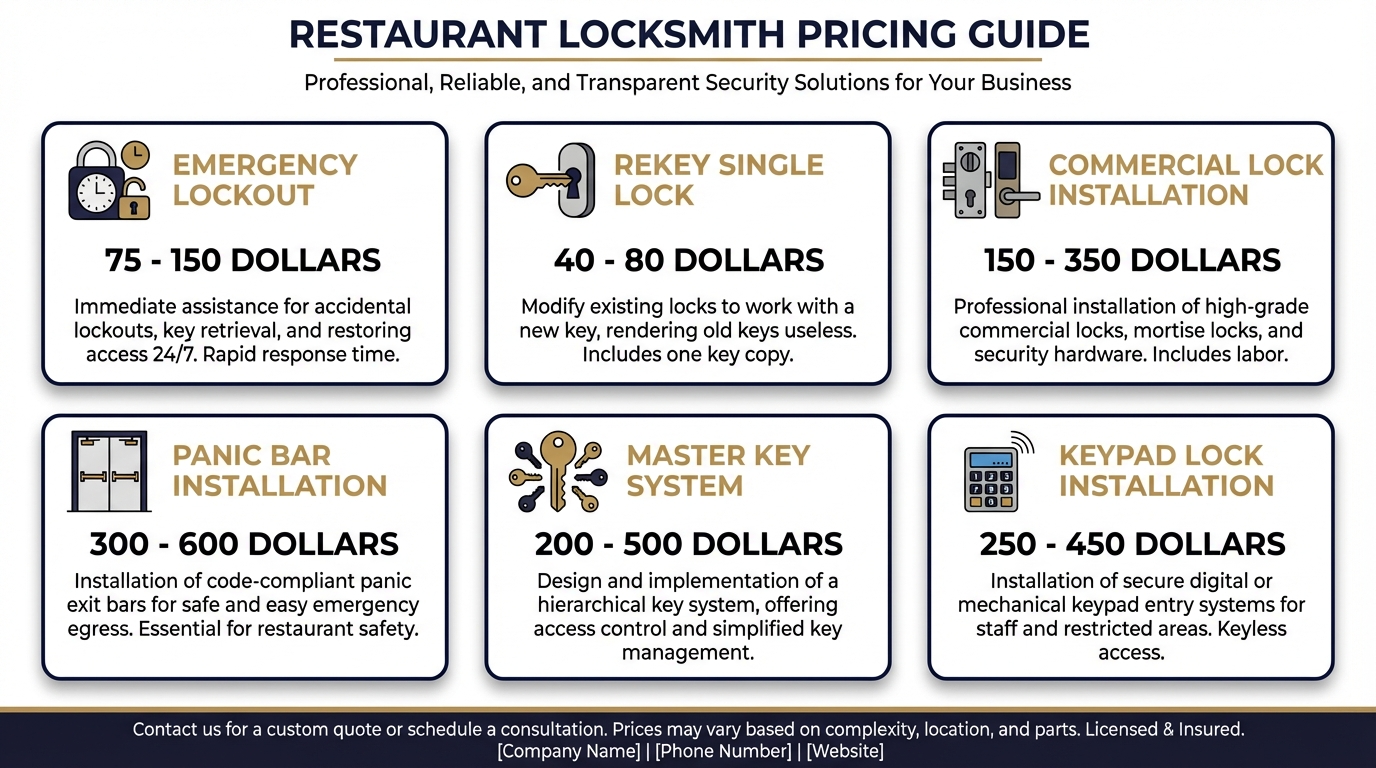
Commercial locksmith pricing varies based on several factors unique to restaurant environments. Understanding these variables helps you budget appropriately and recognize fair pricing when you see it.
| Service Type | Typical Price Range | Factors Affecting Cost |
|---|---|---|
| Emergency Lockout | $75 – $150 | Time of day, door type, lock complexity |
| Rekey Single Lock | $40 – $80 | Lock brand, cylinder type |
| Commercial Lock Installation | $150 – $350 | Security grade, door preparation needed |
| Panic Bar Installation | $300 – $600 | Device type, door modifications required |
| Master Key System Setup | $200 – $500+ | Number of locks, hierarchy complexity |
| Keypad Lock Installation | $250 – $450 | Features, wireless connectivity |
Heavy commercial doors common in restaurant back-of-house areas require more labor than standard interior doors. After-hours emergency calls typically include additional fees. Always confirm whether the quote includes parts or just labor to avoid surprises when the invoice arrives.
How Quickly Can a Locksmith Reach My Restaurant During an Emergency?
Response time matters enormously in restaurant emergencies. A lockout situation during prep means lost labor costs and potentially delayed opening. Most established San Antonio commercial locksmiths offer response times between 20-45 minutes depending on location and current call volume.
When calling about an emergency, ask for a specific estimated arrival time rather than accepting vague promises. An immediate response locksmith understands that restaurants cannot afford to wait hours. Consider establishing a relationship with a commercial locksmith before emergencies happen. Having a trusted contact already familiar with your location and lock types speeds up future service calls significantly.
Locked Out of Your Restaurant: What Gets You Back Inside Without Door Damage?
Professional commercial locksmiths attempt non-destructive entry methods first. Drilling or forcing a lock should be the last resort, not the first option. Experienced technicians carry specialized tools designed for commercial lock mechanisms that allow bypass without permanent damage.
Commercial doors represent significant investments. A steel back door with a heavy-duty frame costs substantially more to replace than a residential entry door. Skilled locksmiths recognize this and work methodically to preserve your existing hardware whenever possible. If drilling becomes necessary due to a damaged cylinder or high-security lock, the locksmith should explain why before proceeding and discuss replacement options.
Should You Rekey Your Restaurant Locks or Replace Them Completely?
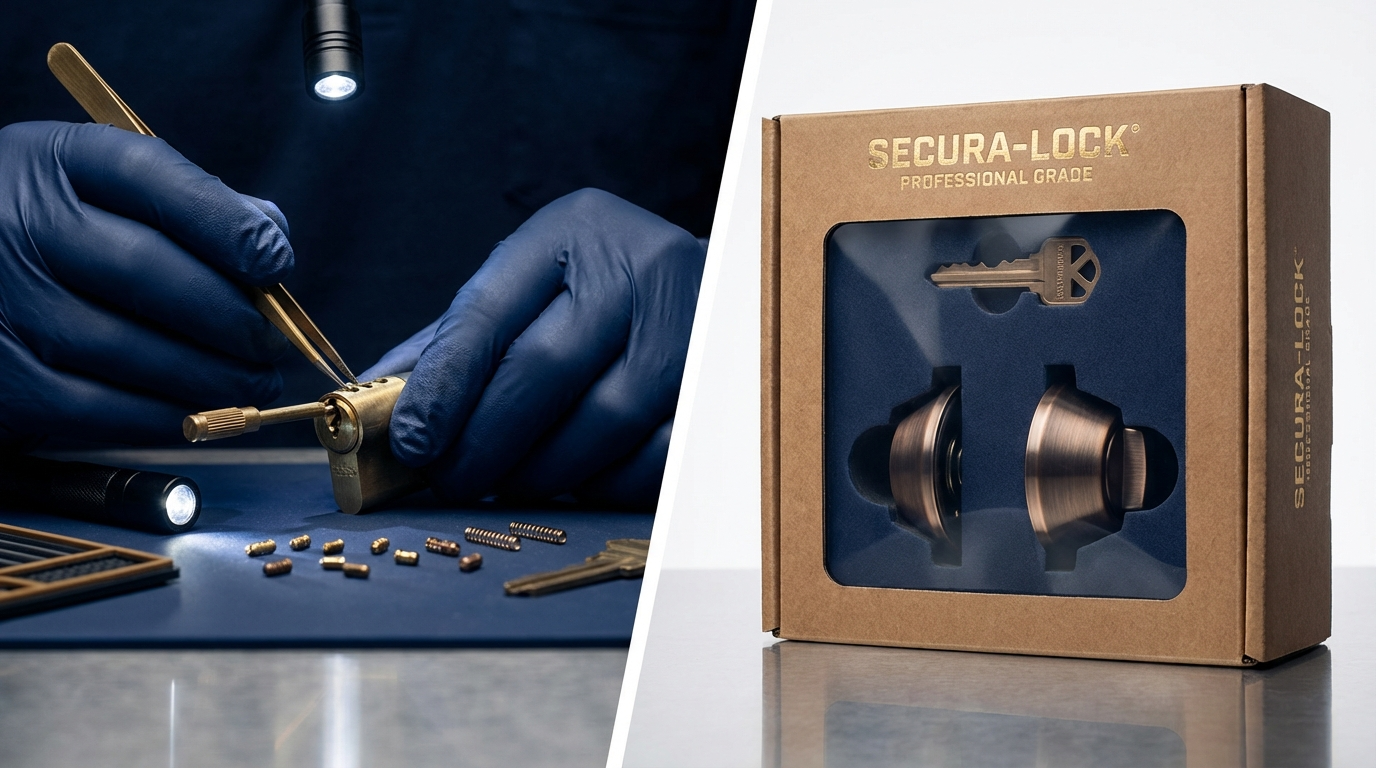
This question comes up frequently, especially after employee departures or security concerns. Rekeying changes the internal pin configuration so old keys no longer work, while replacement installs entirely new lock hardware.
When Rekeying Makes Sense
Rekeying works well when your existing hardware remains in good condition. The process costs less than replacement and completes faster. After employee turnover, rekeying eliminates access for anyone holding old keys without the expense of new locksets. Most commercial cylinders can be rekeyed multiple times before needing replacement. Under Texas Property Code Section 92.156, landlords must rekey locks between tenants, and similar best practices apply to commercial properties managing staff access.
Signs That Indicate Full Replacement
Replace locks showing visible damage, excessive wear, or mechanical problems like sticking or difficult operation. If a key broke inside the cylinder causing internal damage, replacement often proves more reliable than repair. Upgrading security levels also requires new hardware since rekeying cannot improve a lock’s physical resistance to forced entry.
An Employee Just Quit Unexpectedly: How Do You Secure the Restaurant Today?
Employee departures create immediate security vulnerabilities that require prompt attention. Former staff members may retain keys, know alarm codes, or remember access patterns. Taking systematic action protects your restaurant from potential theft or unauthorized entry.
Prioritize rekeying doors that the departing employee accessed regularly. Back doors, storage areas, and manager offices typically top the list. Change any numeric codes the employee knew, including alarm systems, keypad locks, and safe combinations. Document the changes and update your key log to maintain accurate records of who holds current keys.
What Is a Master Key System and Does Your Restaurant Need One?
Master key systems create hierarchical access levels using a single lock type throughout your facility. The owner or general manager holds a master key opening all locks. Department managers receive keys opening only their areas. Line staff get keys limited to specific doors like employee entrances or supply closets.
| Access Level | Typical Access Areas | Key Holder Examples |
|---|---|---|
| Grand Master | All doors throughout facility | Owner, General Manager |
| Master | All back-of-house, offices | Assistant Manager, Head Chef |
| Sub-Master | Kitchen, storage, receiving | Kitchen Manager, Inventory Lead |
| Individual | Single designated door | Line cooks, servers, delivery staff |
This system reduces the number of keys each person carries while maintaining security boundaries between departments. When someone leaves, only their specific key level requires rekeying rather than the entire building. Restaurants with multiple access points and varying staff responsibilities benefit most from master key implementation.
Which Kitchen Door Lock Works Best for High-Traffic Restaurant Environments?
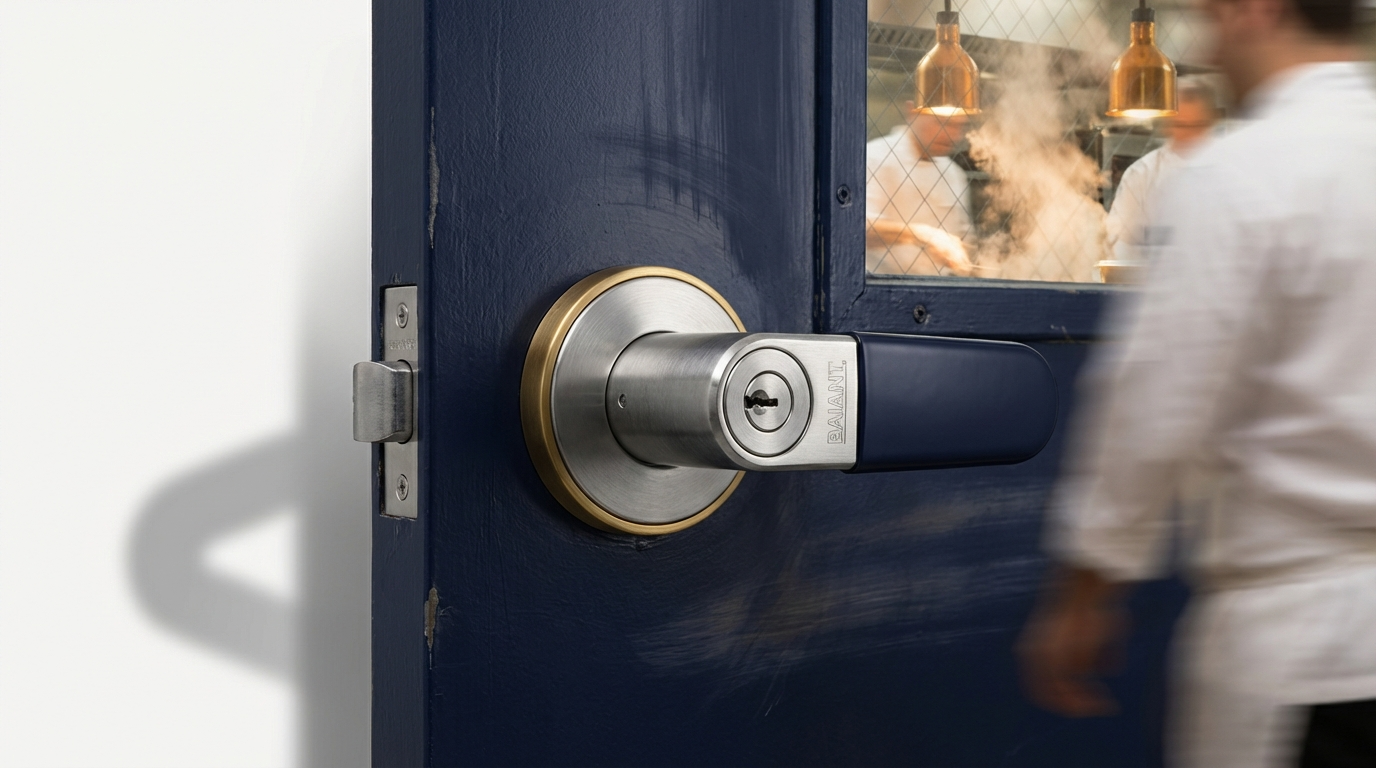
Kitchen doors face unique challenges that standard commercial locks may not handle well. Constant opening and closing, exposure to moisture and grease, and the need for quick passage during service all influence the ideal lock choice.
Heavy-duty cylindrical locks with stainless steel components resist corrosion better in kitchen environments. Look for locks rated for high-cycle commercial use, typically tested for 500,000 or more operations. Some restaurants benefit from passage-function hardware on kitchen doors that allows free movement during service hours while still accepting a cylinder for after-hours security.
What Are Food Service Locks and Where Should Restaurants Use Them?
Food service locks refer to hardware specifically designed or selected for food preparation environments. These products prioritize durability under intensive use, easy cleaning, and resistance to the temperature and humidity variations common in commercial kitchens.
Install food service appropriate hardware on walk-in cooler and freezer doors, dry storage areas, liquor storage rooms, and any door separating food prep areas from dining spaces. The hardware should withstand regular sanitization without corroding or degrading. Stainless steel and chrome finishes generally perform better than brass or bronze in these applications.
How Do You Properly Secure a Restaurant Back Door Against Break-Ins?
Back doors represent the most common entry point for restaurant burglaries. Less visible than front entrances and often located in alleys or parking areas, these doors require robust security measures beyond standard residential locks.
Addressing Door Alignment and Frame Issues
A door that does not close properly provides virtually no security regardless of lock quality. Sagging hinges, warped frames, or misaligned strike plates create gaps that allow forced entry. Professional locksmiths assess the entire door assembly, not just the lock mechanism. Proper alignment ensures the deadbolt or latch engages fully into a reinforced strike plate.
Quick Security Upgrades for Same-Day Installation
Several improvements can be completed during a single service visit. Installing a heavy-duty strike plate with 3-inch screws anchoring into the door frame significantly increases kick resistance. Adding a door reinforcement plate protects against spreading attacks. High-security cylinders with pick and bump resistance upgrade protection without replacing the entire lockset.
Do San Antonio Restaurants Need Panic Bars on Emergency Exits?
Building codes often mandate panic hardware on exit doors based on occupancy type and capacity. According to the International Building Code, panic hardware becomes required when occupant loads exceed 50 people in certain assembly occupancies. The National Fire Protection Association codes set similar requirements at 100 occupants for some classifications.
Texas Accessibility Standards add additional requirements for panic hardware installation. According to official TDLR guidelines, operable parts of door hardware must be positioned between 34 and 48 inches above the finished floor. This ensures accessibility for all users while maintaining emergency egress functionality. Non-compliant hardware can result in code violations during inspections.
Common Mistakes That Compromise Exit Safety
Some restaurant owners inadvertently create dangerous conditions by securing exit doors improperly. Chaining exit doors closed, adding deadbolts that require keys from inside, or disabling panic bars to prevent theft all violate life safety codes. These modifications can result in serious liability if an emergency prevents safe evacuation. Work with a knowledgeable commercial locksmith to find solutions that balance security with code compliance.
Need Panic Bar Installation or Repair?
Our licensed technicians ensure code-compliant emergency exit hardware.
Mechanical Locks vs. Keypads vs. Access Control: Which Fits Your Restaurant?
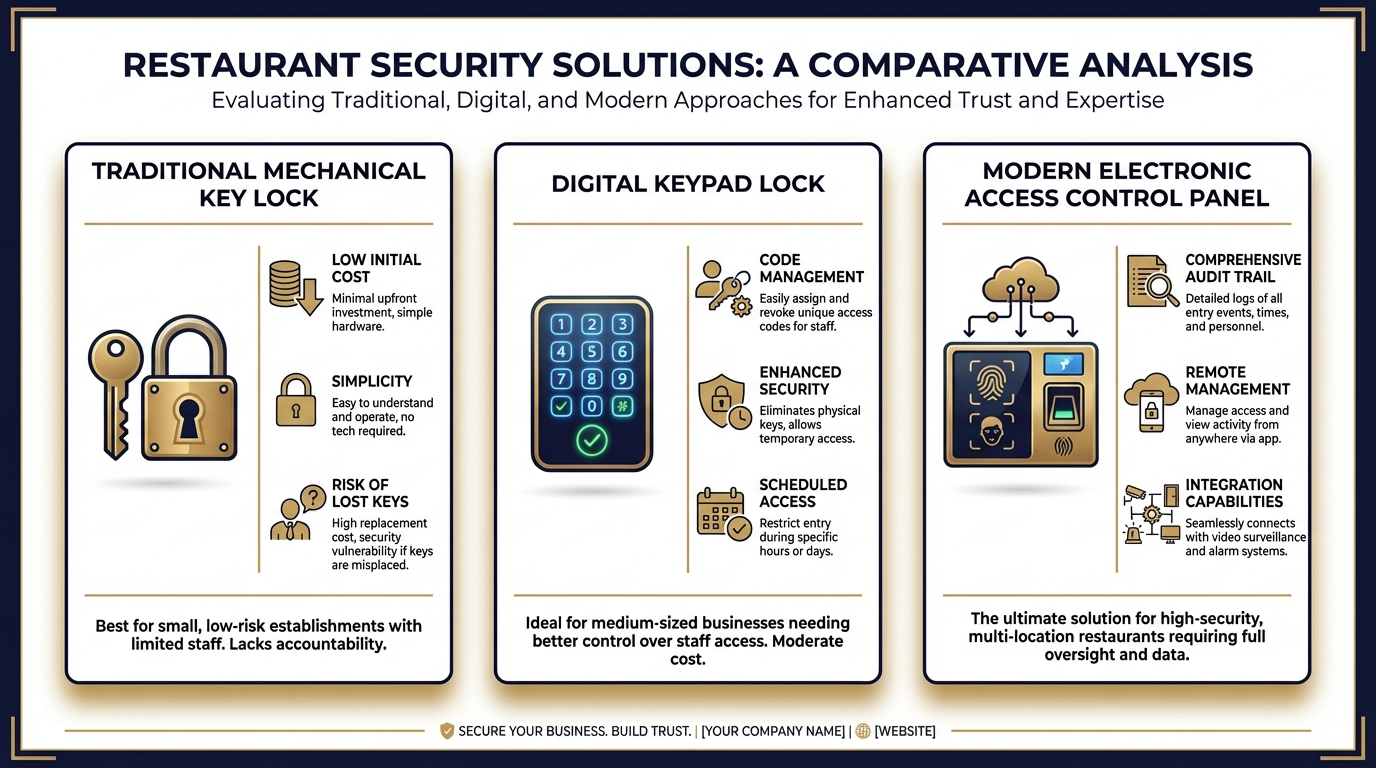
Each locking technology offers distinct advantages depending on your operational needs, budget, and management preferences. Understanding the tradeoffs helps you invest wisely.
Traditional mechanical locks cost less upfront and require no batteries or network connectivity. They work reliably but offer no audit trail of who accessed what and when. Rekeying addresses staff turnover but takes time and coordination. Keypad locks eliminate physical keys entirely, allowing code changes without locksmith visits. Staff members receive individual codes, creating some accountability. However, codes can be shared, and batteries require periodic replacement.
Full access control systems provide the most sophisticated management capabilities. Electronic credentials track entry times and identify specific users. Remote management allows changing permissions without on-site visits. These systems cost more initially but reduce long-term rekeying expenses and provide valuable security data. Multi-location restaurant groups often find access control systems justify their investment through centralized management efficiency.
How Can Smart Lock Technology Reduce Internal Theft at Your Restaurant?
Internal theft costs restaurants significant revenue annually. Securing sensitive areas like liquor storage, safes, and manager offices with access-controlled locks creates accountability that deters theft and simplifies investigation when losses occur.
Restricting access to high-value inventory areas ensures only authorized personnel can enter. Electronic systems log every access attempt, creating an audit trail showing exactly who opened each door and when. This documentation proves invaluable when inventory discrepancies arise. Even without sophisticated technology, implementing strict key control policies and limiting duplication significantly reduces theft opportunities.
Why Does Licensing Matter When Choosing a San Antonio Locksmith?
Texas regulates locksmiths through the Department of Public Safety Private Security Bureau. This oversight includes background checks, training requirements, and enforcement authority for violations. Working with licensed professionals protects your business legally and practically.
The Texas DPS Private Security division maintains records of all licensed locksmith companies and individuals. Texas Occupations Code defines a locksmith as someone who sells, installs, services, or maintains mechanical security devices. Verify any locksmith’s credentials before allowing them access to your business. The official verification portal allows instant license status checks using the company or individual name.
What Commercial Experience Should Your Restaurant Locksmith Have?
Not all licensed locksmiths possess equal commercial expertise. Texas DPS licensing requirements for company representatives include demonstrated knowledge of panic and exit devices as well as door closers. However, real-world restaurant experience provides insights that testing alone cannot measure.
Ask prospective locksmiths about their experience with food service establishments specifically. Inquire about their familiarity with local San Antonio building codes and health department requirements that might affect door hardware choices. A locksmith who has worked with multiple restaurants understands the operational constraints and time pressures unique to the industry.
How Should Restaurants Schedule Preventive Security Maintenance?
Reactive locksmith calls during emergencies cost more and cause more disruption than planned maintenance. Establishing a preventive maintenance schedule keeps your security hardware functioning properly and identifies problems before they cause lockouts or security breaches.
| Maintenance Task | Recommended Frequency | Why It Matters |
|---|---|---|
| Lubricate all lock cylinders | Every 6 months | Prevents sticking, extends cylinder life |
| Check door closer adjustment | Quarterly | Ensures proper closing, code compliance |
| Inspect panic bar function | Monthly | Maintains emergency egress reliability |
| Test all keys in locks | Quarterly | Identifies worn keys before they break |
| Review key inventory | Quarterly | Accounts for all issued keys |
| Full security audit | Annually | Identifies vulnerabilities, plans upgrades |
Door closers on high-traffic doors require particular attention. Older accessibility standards specified that closers should allow at least three seconds for the door to travel from 90 degrees to 12 degrees of opening. Improperly adjusted closers create accessibility issues and accelerate hardware wear. Regular professional inspection catches these issues early.
Frequently Asked Questions About Restaurant Locksmith Services
Can a locksmith open my restaurant without proof of ownership?
Licensed locksmiths follow protocols to verify authorization before providing entry services. Expect to show identification matching business registration documents, a lease agreement, or contact information for property management who can confirm your authority. These precautions protect you from unauthorized individuals gaining access.
How long does it take to rekey an entire restaurant?
Timing depends on the number of locks involved. A typical restaurant with 8-12 keyed locks can be rekeyed in 2-4 hours. Master key system implementation takes longer due to the planning and coordination required. Schedule rekeying during closed hours to avoid disrupting operations.
Will my insurance cover locksmith services after a break-in?
Most commercial property insurance policies cover emergency locksmith services following a covered burglary event. Review your policy or contact your insurance agent for specific coverage details. Document all work performed and retain invoices for claims purposes.
Can smart locks work during power outages?
Battery-powered smart locks continue functioning during power outages since they do not rely on building electrical systems. Most quality commercial smart locks provide low-battery warnings weeks before failure. Some models include mechanical key override as backup. Discuss power failure scenarios with your locksmith when selecting electronic hardware.
How often should restaurant locks be replaced entirely?
Quality commercial locks typically last 7-10 years under normal use conditions. High-traffic locations may require replacement sooner. Signs indicating replacement needs include difficult key insertion, locks that stick or require jiggling, visible corrosion, and loose mounting. Regular maintenance extends lock lifespan significantly.
What happens if a key breaks inside my lock?
Professional locksmiths carry extraction tools designed to remove broken key fragments without damaging the cylinder. If the break caused internal damage, cylinder replacement may be recommended. Avoid attempting extraction with improvised tools as this often pushes fragments deeper or damages the mechanism.
Need Restaurant Locksmith Services in San Antonio?
Licensed technicians available 24/7 for commercial food service security.
Is your restaurant as secure as it should be? Whether you need emergency lockout assistance, want to upgrade aging hardware, or require a comprehensive security assessment, professional help is available. Contact the team at Immediate Response Locksmith San Antonio to discuss your specific restaurant security needs and schedule a consultation today.
Ready to Secure Your Restaurant?
15+ years serving San Antonio businesses. Licensed, insured, and available 24/7.