
Licensed Locksmith San Antonio – What to Expect from a Verified Professional
When you find yourself locked out of your home, car, or business in San Antonio, the last thing you need is uncertainty about who is coming to help. Choosing a licensed locksmith San Antonio residents can trust means protecting your property, your family, and your peace of mind. Texas law establishes clear requirements for locksmith licensing, and understanding these regulations empowers you to make informed decisions during stressful situations.
This comprehensive guide explains how Texas regulates locksmiths, what distinguishes a professional locksmith from potential scammers, and exactly how to verify credentials before any work begins. Whether you need an immediate response locksmith for an emergency or scheduled commercial services, these insights help you navigate the process with confidence.
Why Does Licensing Matter When Hiring a Locksmith in San Antonio?
Licensing serves as your first layer of protection when inviting someone to access your locks, keys, and security systems. The Texas Department of Public Safety Private Security Program oversees locksmith regulation under Texas Occupations Code Chapter 1702, which establishes standards for both individual technicians and locksmith companies.
A certified locksmith operating legally in Texas has undergone background checks and met specific competency requirements. This regulatory framework exists because locksmiths possess specialized skills that could be misused. When you hire an unlicensed operator, you lose legal recourse if something goes wrong, and you may unknowingly invite someone with a criminal history into your property.
For San Antonio businesses, the stakes rise even higher. Commercial properties often involve master key systems, employee access management, and sensitive inventory. A professional locksmith understands these complexities and carries appropriate liability insurance to protect your interests.
How Does Texas Regulate Locksmith Companies and Technicians?
Understanding Texas DPS Locksmith Regulations
The Texas Department of Public Safety administers licensing through the Private Security Program. According to official DPS guidance, anyone who advertises services using the term “locksmith” must hold proper licensing. This applies whether the entity is a sole proprietor, a large company, or an individual employee.
Texas Administrative Code specifies qualification pathways for obtaining a locksmith company license, including documented experience or completion of approved training courses. The Texas DPS explicitly states that advertising under headings like “Locks and Locksmiths” constitutes acting as a locksmith company, regardless of whether the work involves traditional lock manipulation or vehicle unlocking.
How Licensing Protects San Antonio Consumers
The licensing process creates accountability. Background checks screen for criminal history, while competency requirements ensure technicians possess genuine skills. When disputes arise with a licensed locksmith San Antonio customers can file complaints through official channels and pursue legal remedies.
Even during emergencies requiring an immediate response locksmith, these licensing requirements remain in effect. A legitimate 24/7 service maintains proper credentials around the clock. The pressure of a lockout situation does not excuse unlicensed activity, and reputable providers understand this distinction.
What Steps Verify Whether a Locksmith Holds Valid Texas Licensing?
Using the Texas DPS Online License Search
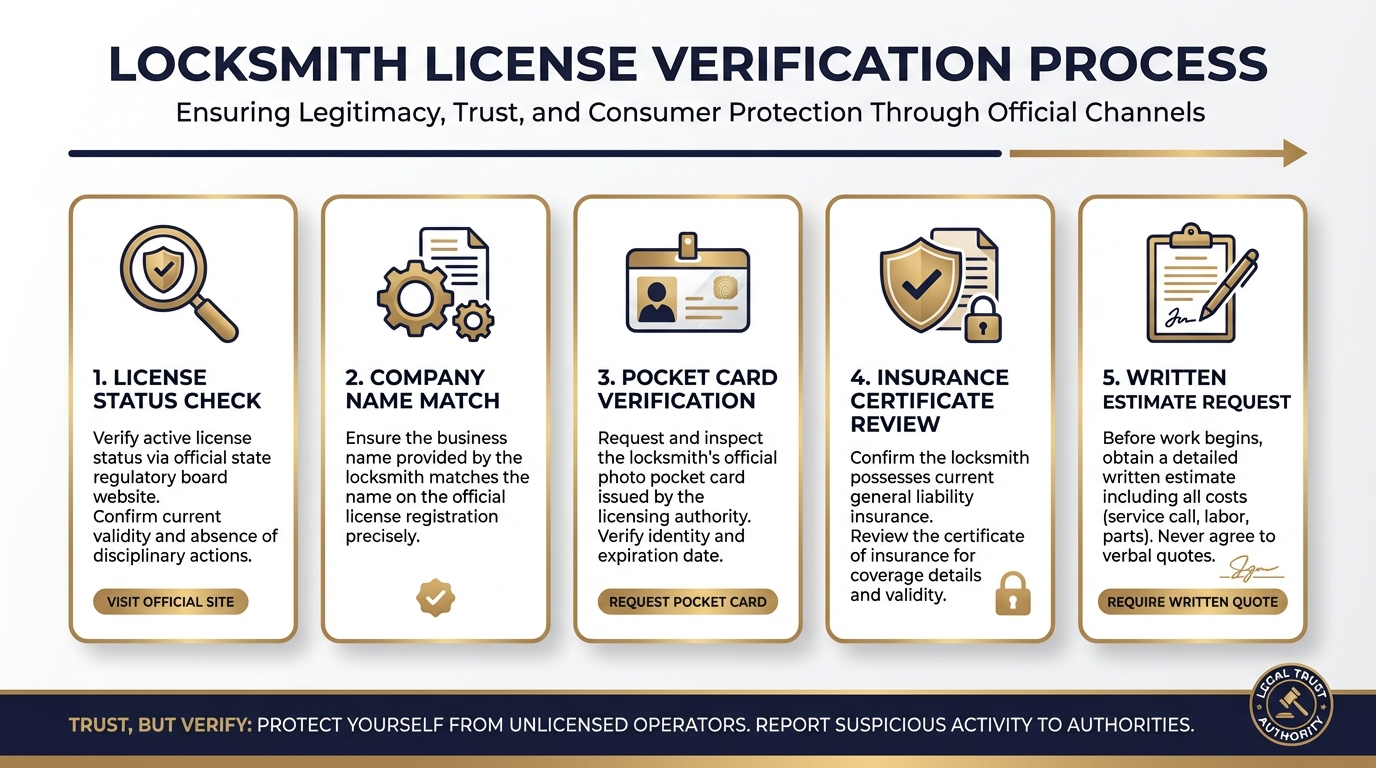
The Texas Online Private Security (TOPS) portal provides public access to license verification. Navigate to the TOPS portal and select “Search Licensees” to check credentials before scheduling service. You can search by company name, individual name, or license number.
When reviewing results, confirm that the license status shows as active and that the company name matches exactly what appears in advertisements. Pay attention to expiration dates. A certified locksmith maintains current credentials and can provide their license number readily upon request.
What to Ask for When the Technician Arrives
Physical verification adds another layer of confirmation. Texas DPS issues pocket cards to licensed individuals, which technicians should carry during service calls. Ask to see this identification before work begins, and compare the name to what you verified online.
A professional locksmith expects these requests and responds without hesitation. If the technician arriving differs from who was dispatched, request their individual credentials as well. This becomes especially important with an immediate response locksmith situation where urgency might tempt some to skip verification steps.
| Verification Step | What to Look For | Where to Check |
|---|---|---|
| License Status | Active, current expiration date | TOPS Portal online search |
| Company Name Match | Exact match to advertisements | TOPS Portal, compare to marketing |
| Pocket Card | DPS-issued ID with photo | Request from technician on-site |
| Insurance Certificate | Current liability coverage | Request documentation from company |
| Written Estimate | Itemized costs before work begins | Require from technician before authorization |
Which Warning Signs Indicate Potential Locksmith Scams?
Red Flags of Unlicensed or Scam Locksmiths
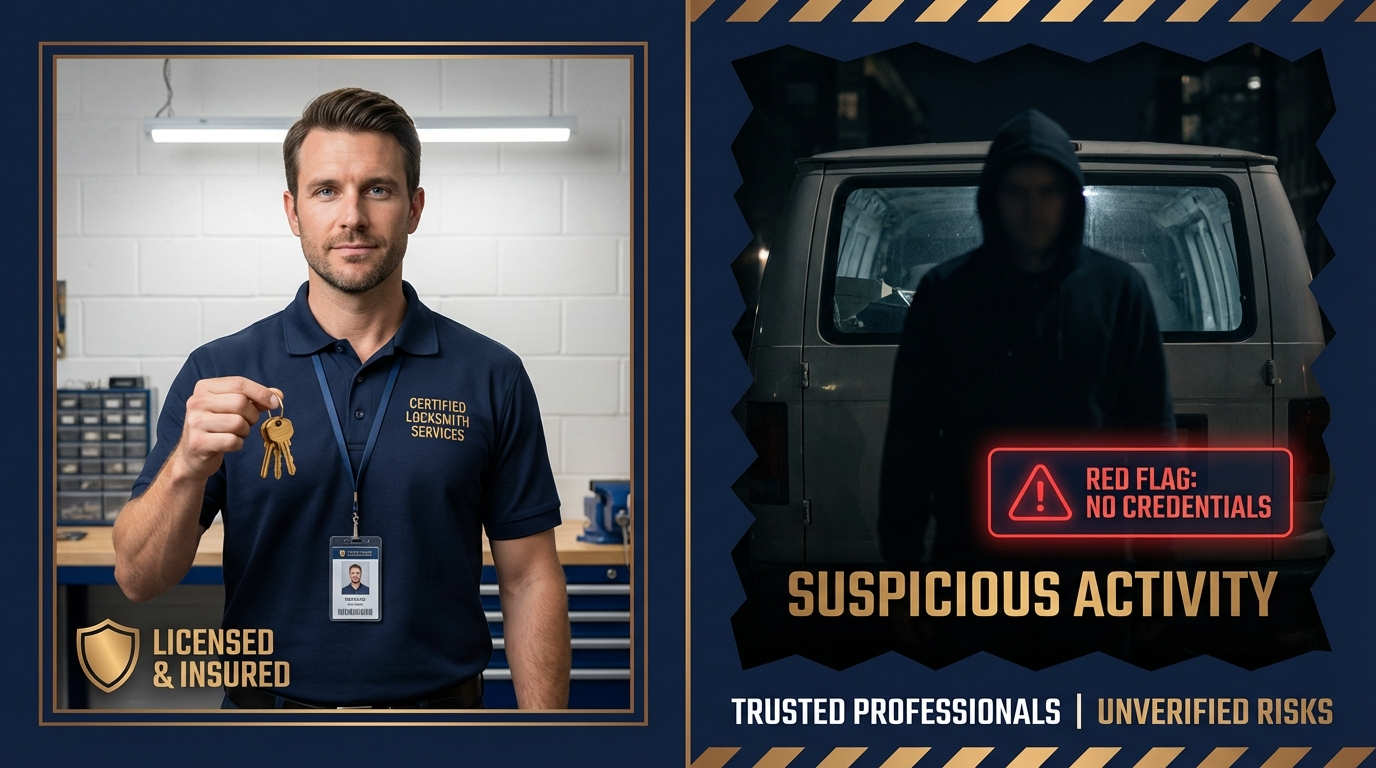
The Better Business Bureau identifies several common scam patterns that San Antonio residents should recognize. Extremely low initial quotes often serve as bait, with prices increasing dramatically once the technician arrives and you feel committed. Cash-only demands prevent paper trails and dispute resolution through credit card companies.
Generic or unmarked vehicles sometimes indicate operators who prefer anonymity. Refusal to show identification or licensing documentation should immediately end the interaction. Aggressive upselling—insisting you need complete lock replacement when rekeying would suffice—represents another manipulation tactic.
What to Do If You Encounter a Suspicious Locksmith
Trust your instincts. If something feels wrong, you retain the right to refuse service at any point before work begins. Do not feel pressured by claims that you owe a service fee just for the visit, especially if no price was quoted in advance.
Report suspicious activity to the Texas DPS Private Security Program and the Better Business Bureau. Your report helps protect other San Antonio residents from similar experiences. When choosing your next provider, prioritize verified credentials and transparent communication from the first phone call.
What Distinguishes Professional Locksmith Services from Questionable Operators?
Transparency in Pricing and Services
A professional locksmith provides clear pricing before starting any work. This means a specific quote—not a vague range that can expand after the technician gains access to your property. The Federal Trade Commission warns consumers about locksmiths who quote low prices over the phone, then dramatically increase costs once on-site.
Request itemized estimates that separate labor, parts, and any emergency or after-hours fees. A certified locksmith welcomes these questions because transparent practices build customer trust and long-term business relationships.
Requiring Proper Authorization and Identification
Texas Occupations Code mandates that locksmiths obtain identification and signed authorization before performing certain services, particularly when gaining entry to properties or vehicles. This legal requirement protects everyone involved by creating documentation that the service was requested by an authorized party.
A licensed locksmith San Antonio professionals should ask for your ID and have you sign authorization before beginning work. If a locksmith skips this step, treat it as a warning sign. Legitimate operators understand that proper documentation protects them from liability claims just as much as it protects property owners.
Insurance and Accountability
Accidents happen even with skilled technicians. A Texas licensed professional carries liability insurance that covers potential damage during service. The DPS requires proof of insurance as part of the licensing process, using official forms to document minimum coverage levels.
Insurance matters because it provides recourse if something goes wrong. Without it, you bear the full cost of any damage. When evaluating providers, asking about insurance coverage represents reasonable due diligence, not an insult to the technician’s competence.
How Should You Evaluate Pricing from a San Antonio Locksmith?
Understanding typical pricing structures helps you identify both fair quotes and potential manipulation. Several factors legitimately influence locksmith costs.
| Service Type | Typical Components | Variables Affecting Price |
|---|---|---|
| Emergency Lockout | Service call fee, labor | Time of day, location accessibility |
| Rekeying | Labor per lock, pins | Number of locks, lock complexity |
| Lock Replacement | Hardware cost, installation labor | Lock grade, door type, brand |
| Commercial Services | Assessment, hardware, installation | Building size, access control complexity |
A professional locksmith explains how these components apply to your specific situation. Request the complete quote in writing before authorizing work. If the technician refuses or gives vague answers, consider this a significant warning sign regardless of how urgent your situation feels.
When Does Rekeying Make More Sense Than Replacing Locks?
This common question affects both residential and commercial customers. Rekeying changes the internal pin configuration so old keys no longer work, while replacement installs entirely new hardware. Each approach has appropriate applications.
Rekeying typically costs less and works well when existing hardware remains in good condition. Moving into a new home, terminating an employee who had keys, or consolidating multiple locks to work with one key all represent excellent rekeying candidates. Under Texas Property Code Section 92.156, landlords must rekey locks between tenants, making this service particularly relevant for San Antonio property managers.
Replacement becomes necessary when locks show significant wear, when upgrading security grade, or when existing hardware proves incompatible with desired key systems. A certified locksmith evaluates your specific situation and recommends the most cost-effective solution rather than automatically suggesting the more expensive option.
What Commercial Services Do Licensed San Antonio Locksmiths Provide?
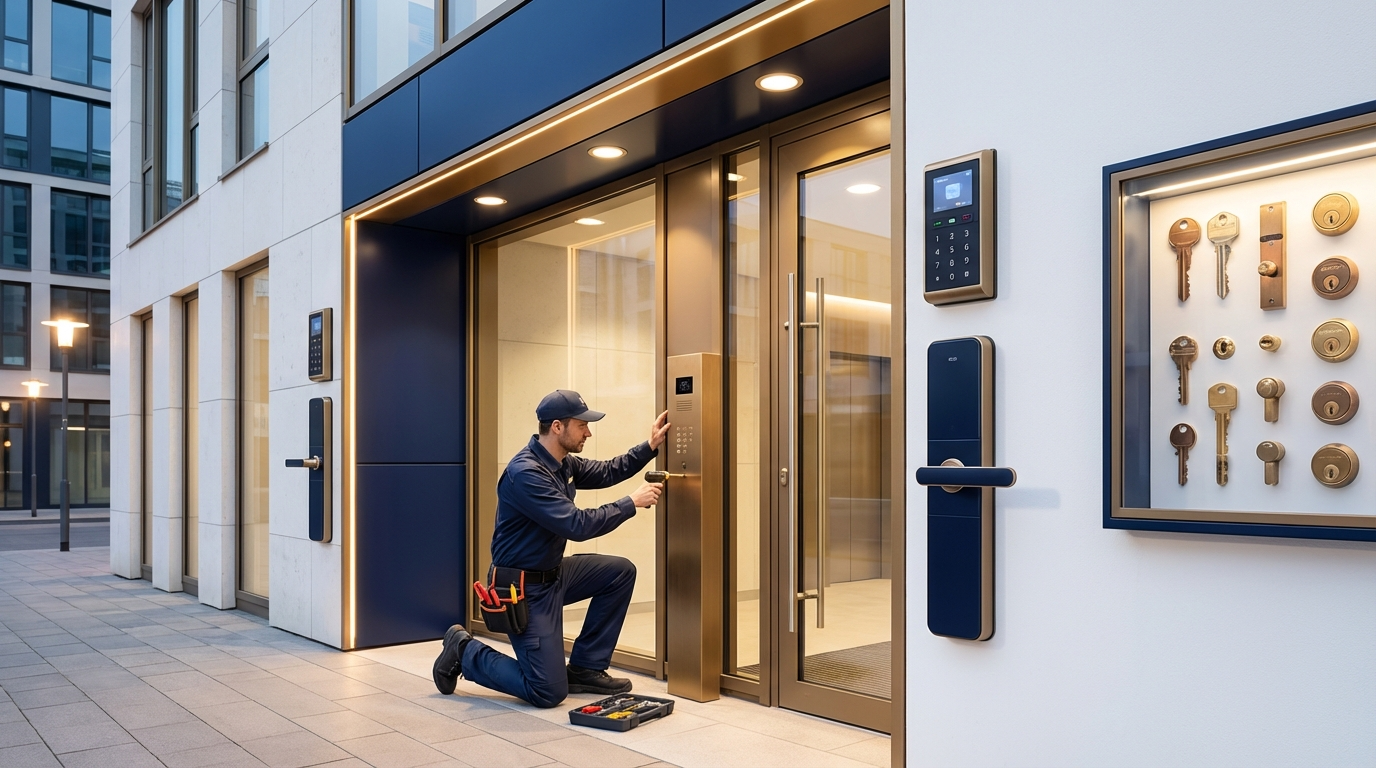
Business security involves considerations beyond residential work. A professional locksmith serving commercial clients offers services including master key system design, high-security lock installation, access control integration, panic bar installation, and emergency lockout response for businesses.
Master key systems allow different access levels for employees while maintaining management override capability. High-security locks resist picking, drilling, and bumping attempts that defeat standard residential hardware. Access control systems track entry and enable remote management of who can enter specific areas.
For San Antonio businesses, establishing a relationship with a licensed locksmith San Antonio provider before emergencies occur allows for better planning. You can discuss security assessments, agree on response protocols, and ensure someone trustworthy responds when urgent situations arise.
Need Commercial Locksmith Services?
Licensed technicians available 24/7 for San Antonio businesses. Master key systems, access control, and emergency response.
How Quickly Can an Emergency Locksmith Arrive in San Antonio?
Response time varies based on technician location, traffic conditions, and current demand. Reputable providers give realistic estimates rather than promising impossibly fast arrivals. When calling for an immediate response locksmith, ask for a specific ETA and request updates if circumstances change.
At Immediate Response Locksmith, our technicians typically arrive within 15-30 minutes throughout San Antonio and surrounding areas including New Braunfels, Schertz, Boerne, and Alamo Heights. We maintain multiple technicians on call to ensure rapid response even during peak demand periods.
Be cautious of providers who promise arrival times that seem too good to be true, as this sometimes indicates a dispatch service rather than a local company. Dispatch services may send the nearest available technician regardless of qualifications or licensing status.
Why Do Some Locksmiths Advertise Without Proper Licensing?
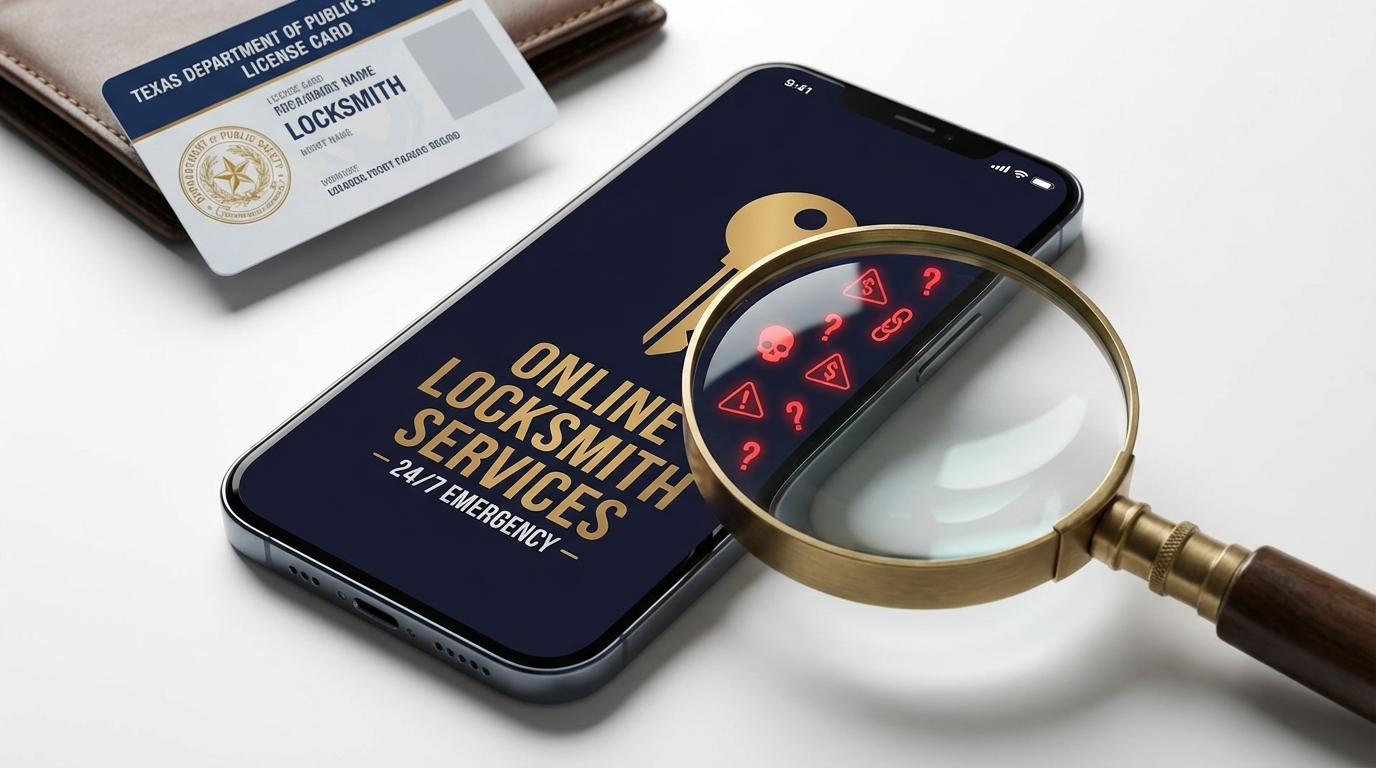
Understanding the problem helps you avoid it. Some operators advertise using the term “locksmith” despite lacking proper credentials, betting that most customers will not verify. Others operate through large lead-generation networks that may not adequately vet subcontractors.
Texas DPS enforcement addresses violations, but the burden of initial verification falls on consumers. By checking credentials before scheduling service—or at minimum before work begins—you protect yourself from operators who count on customer ignorance or urgency.
The investment of a few minutes using the TOPS portal can prevent significant problems including overcharging, property damage, and compromised security.
What Documentation Should You Receive After Locksmith Service?
Proper documentation protects both parties and provides records for future reference. A professional locksmith provides itemized invoices showing services performed, parts installed, labor charges, and any applicable taxes or fees.
For businesses, these records support expense tracking and may prove necessary for insurance claims or lease compliance. Residential customers benefit from documentation when selling property or demonstrating security upgrades to insurers.
Warranty information should accompany any hardware installation. Understand what the warranty covers, its duration, and the process for making claims. Reputable providers stand behind their work and welcome questions about guarantee terms.
How Does Working With a Local Licensed Provider Benefit San Antonio Customers?
Local providers have community reputation at stake in ways that distant dispatch services do not. A licensed locksmith San Antonio company builds business through satisfied customers and referrals, creating incentive for quality service and fair treatment.
Local knowledge also proves valuable. Familiarity with common lock types in San Antonio neighborhoods, relationships with local suppliers for quick parts availability, and understanding of area-specific security concerns all contribute to better service outcomes.
When evaluating providers, consider how long they have served the San Antonio area and whether they maintain a physical business presence. These factors suggest stability and accountability that fly-by-night operations cannot match. Immediate Response Locksmith has served the greater San Antonio area for over 15 years from our location at 314 E Nakoma Dr. Ste D.
Frequently Asked Questions
Do all locksmiths in Texas need a license to operate legally?
Yes, anyone advertising services using the term “locksmith” in Texas must hold proper licensing through the Department of Public Safety Private Security Program. This applies to both companies and individual technicians. Exemptions exist for certain narrow activities, but those exemptions specifically prohibit using the term “locksmith” or creating the impression of being licensed.
How much should I expect to pay for a lockout service in San Antonio?
Pricing varies based on time of day, lock type, and service complexity. Emergency or after-hours calls typically include additional fees. A professional locksmith provides a complete quote before beginning work. If the quoted price seems dramatically lower than other providers, this may indicate a bait-and-switch tactic where costs increase after arrival.
Can a locksmith open my door without damaging the lock?
In most cases, yes. A certified locksmith attempts non-destructive entry methods first. Drilling or destructive techniques become necessary only with certain high-security locks or damaged mechanisms. A professional explains the situation and obtains your approval before using methods that require hardware replacement.
What should I do if I lost my only key to a commercial property?
Contact a licensed locksmith San Antonio provider for emergency access and immediate rekeying. Treat lost keys as a security event—previous keys should no longer work. Consider this an opportunity to evaluate your key management practices and possibly implement access control systems that eliminate physical key dependency.
How can I verify a locksmith’s insurance coverage?
Request a certificate of liability insurance from the company. Texas DPS requires proof of insurance as part of the licensing process. Legitimate providers maintain current documentation and can furnish it upon request. If a company refuses or makes excuses, consider this a warning sign about their overall professionalism.
What makes a lock “high-security” compared to standard hardware?
High-security locks incorporate features that resist picking, drilling, bumping, and key duplication. These include patented keyways, reinforced materials, and anti-manipulation mechanisms. A professional locksmith can assess your current hardware and recommend upgrades appropriate to your security requirements and budget.
Does Texas law require landlords to rekey locks between tenants?
Yes. Under Texas Property Code Section 92.156, landlords must rekey or change locks on all exterior doors of a dwelling within seven days of each new tenant taking possession. This requirement protects tenants from previous occupants who may have retained keys. A licensed locksmith can help property managers maintain compliance efficiently.
Ready to Work With a Verified Professional?
Choosing the right locksmith protects your property, your family, and your business. By verifying credentials, requesting transparent pricing, and understanding what professional service looks like, you position yourself to make confident decisions even during stressful lockout situations.
For reliable, licensed locksmith San Antonio services with transparent pricing and verified credentials, contact Immediate Response Locksmith. We welcome your questions about licensing, insurance, and service procedures because informed customers make the best long-term clients.
Ready to Get Started?
15+ years serving San Antonio. Texas Licensed #B16307. Fully insured. Available 24/7.