
Insured Locksmith San Antonio TX – Your Guide to Choosing a Bonded and Covered Locksmith
When you find yourself locked out of your home, car, or business, the last thing you want to worry about is whether the locksmith arriving at your door is legitimate and properly covered. Choosing an insured locksmith San Antonio TX residents can trust means protecting yourself from potential liability, ensuring quality workmanship, and gaining peace of mind during stressful situations. This comprehensive guide walks you through everything you need to know about hiring a bonded locksmith, understanding what it means to be liability insured, and how to verify credentials before any work begins.
Why Choose an Insured Locksmith in San Antonio, TX?
Selecting an insured locksmith provides a critical layer of protection for both residential and commercial clients. When a locksmith carries proper insurance coverage, it demonstrates their commitment to professional standards and responsible business practices. This coverage protects you financially if something goes wrong during the service call, whether that means accidental damage to your door frame, lock mechanism, or surrounding property.
The risks of hiring an uninsured locksmith extend beyond immediate concerns. Without proper coverage, you could be held responsible for any injuries that occur on your property during the service. Additionally, if the locksmith damages your property, you may have no recourse for compensation. A bonded locksmith often maintains insurance as well, offering an even higher level of protection for customers.
An Immediate Response Locksmith that maintains full insurance coverage offers the best of both worlds: rapid arrival times combined with the security of knowing you are protected. Speed should never come at the expense of safety and accountability.
What Does Being a Covered Locksmith Actually Mean for Your Business?
For commercial clients, understanding what a covered locksmith offers is essential to protecting business assets. When a locksmith maintains proper insurance, it shields your business from potential damages that might occur during service. This includes everything from scratched door hardware to more significant issues like damaged electronic access systems or compromised security equipment.
The financial protection that liability insured locksmiths provide guards against professional errors or accidents. If a technician accidentally damages an expensive commercial lock system or causes harm to other property while working, their insurance coverage handles the claim rather than your business bearing the cost.
Many commercial projects and property managers in San Antonio require vendors to be fully insured before they can work on site. According to the City of San Antonio Development Services, various contractor categories must maintain general liability insurance as part of their registration requirements. This standard exists because businesses recognize that working with insured professionals reduces overall risk exposure.
How Does a Bonded Locksmith Differ from an Insured One?
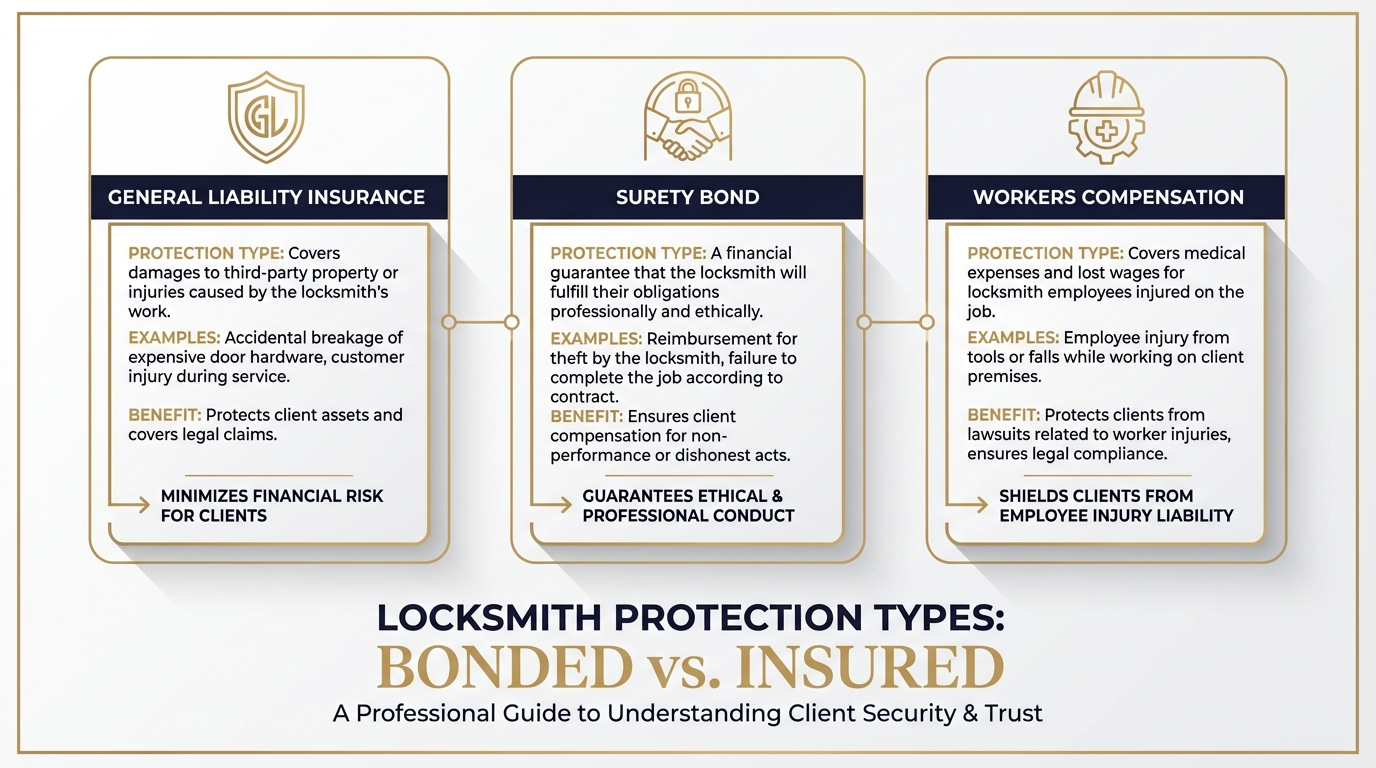
Understanding the distinction between bonded and insured locksmiths helps you make more informed decisions. When a locksmith is “insured,” they carry general liability insurance that covers property damage or injuries that occur during their work. This insurance protects both the locksmith and the client from unexpected costs related to accidents or mistakes.
A bonded locksmith holds a surety bond, which provides a financial guarantee against theft, fraud, or failure to complete work as agreed. According to Investopedia, a surety bond involves a three-party agreement where a bonding company guarantees that the locksmith will fulfill their obligations to the customer.
The key difference lies in what each protects against. Insurance covers accidental damage and liability, while bonding protects against intentional wrongdoing or contractual failures. Many reputable locksmiths maintain both bonding and insurance to offer comprehensive protection.
| Protection Type | What It Covers | Who Benefits |
|---|---|---|
| General Liability Insurance | Accidental property damage, injuries during service | Both client and locksmith |
| Surety Bond | Theft, fraud, failure to complete work | Primarily the client |
| Workers Compensation | Employee injuries on the job | Locksmith employees |
When Should You Require Both Bonding and Liability Insurance?
Certain situations call for locksmiths who maintain both bonding and insurance coverage. High-security commercial environments, properties with valuable assets, and situations involving master key system installations all warrant this higher level of protection. When technicians have access to sensitive areas or security systems, bonding provides an additional layer of accountability.
Residential customers also benefit from working with bonded and insured professionals, particularly when the work involves rekeying entire properties or installing new security systems. According to Texas Property Code § 92.156, landlords must rekey locks between tenants, making it essential to work with properly credentialed professionals for these required services.
Which Documents Should You Request Before Work Begins?
Before allowing any locksmith to begin work, request specific documentation to verify their credentials. Start by asking for a Certificate of Insurance, which proves current coverage. The Texas Department of Insurance provides guidelines on what these certificates should contain and how to interpret them.
Additionally, ask for business identification, including a company ID badge and vehicle markings that match the company name. A legitimate locksmith should readily provide this information without hesitation. Note that a certificate of insurance confirms coverage exists but does not modify or extend the actual policy terms.
How Can You Verify a Locksmith’s Insurance is Actually Valid?
Verifying insurance requires more than simply accepting a document at face value. Contact the insurance company listed on the certificate to confirm the policy remains active. Check that the company name on the certificate matches the locksmith business you are hiring. Ensure the coverage dates include the date of your service call.
Be aware that some certificates may contain misleading information. A Texas Department of Insurance bulletin warns about certificates that misrepresent coverage scope or terms. Always verify directly with the insurance provider when dealing with significant commercial work or high-value properties.
What Questions Should You Ask During the First Phone Call?
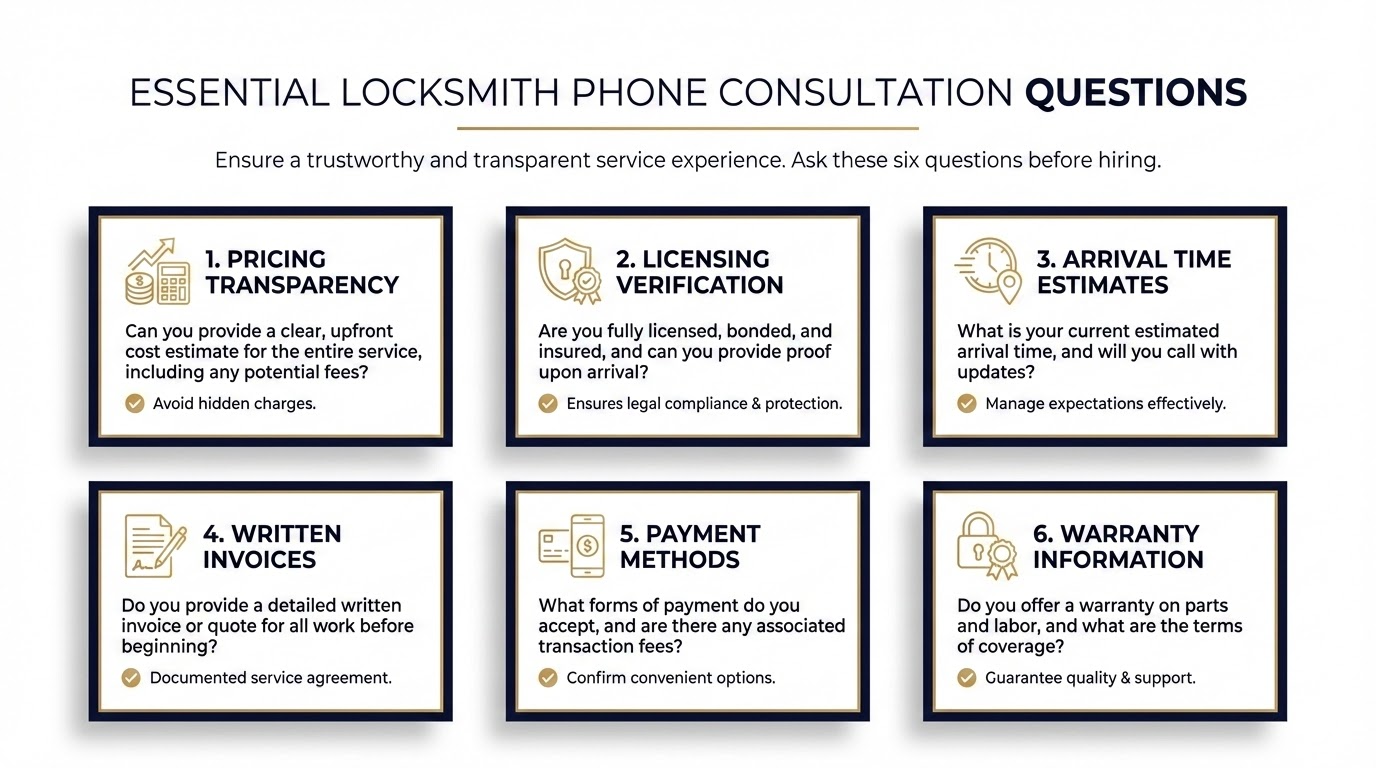
The initial phone conversation with a locksmith reveals much about their professionalism and legitimacy. Ask these essential questions before agreeing to service:
| Question | Why It Matters | Red Flag Response |
|---|---|---|
| What is the total price including service call? | Prevents surprise charges | Vague answers or refusal to quote |
| Are you licensed, bonded, and insured? | Confirms professional standards | Hesitation or deflection |
| What is your estimated arrival time? | Sets realistic expectations | Promises that seem too quick |
| Will I receive a written invoice? | Ensures documentation | Cash-only, no receipt offered |
| What payment methods do you accept? | Legitimate businesses offer options | Cash only or gift cards |
| Do you provide a warranty on work? | Shows confidence in quality | No warranty or vague terms |
Why Do Legitimate Locksmiths Provide Written Price Quotes?
Professional locksmiths understand that transparency builds trust. A written price quote protects both parties by establishing clear expectations before work begins. This documentation should include the service call fee, labor costs, parts costs, and any potential additional charges that might apply based on the specific situation.
When a locksmith refuses to provide pricing information or gives vague responses, consider this a significant warning sign. According to the Better Business Bureau, one common scam involves quoting a low price over the phone and then dramatically increasing the charge once on site.
How Can You Avoid Locksmith Scams During Emergency Situations?
Emergency lockouts create vulnerability that dishonest operators exploit. Protecting yourself starts with never authorizing work without a firm price agreement. Demand identification and company credentials before allowing any work to proceed. Pay only after the service is complete and you have received a detailed receipt.
The Federal Trade Commission advises consumers to research locksmiths before emergencies occur. Keep contact information for a trusted locksmith in your phone so you are not searching desperately during a crisis. This preparation eliminates the pressure that leads to poor decisions.
Watch for these specific red flags: unmarked vehicles, technicians without company identification, pressure to drill or replace locks unnecessarily, and demands for cash payment. Legitimate professionals arrive in marked vehicles, carry proper identification, and offer multiple payment options.
What Makes Commercial Locksmith Services Different from Residential?
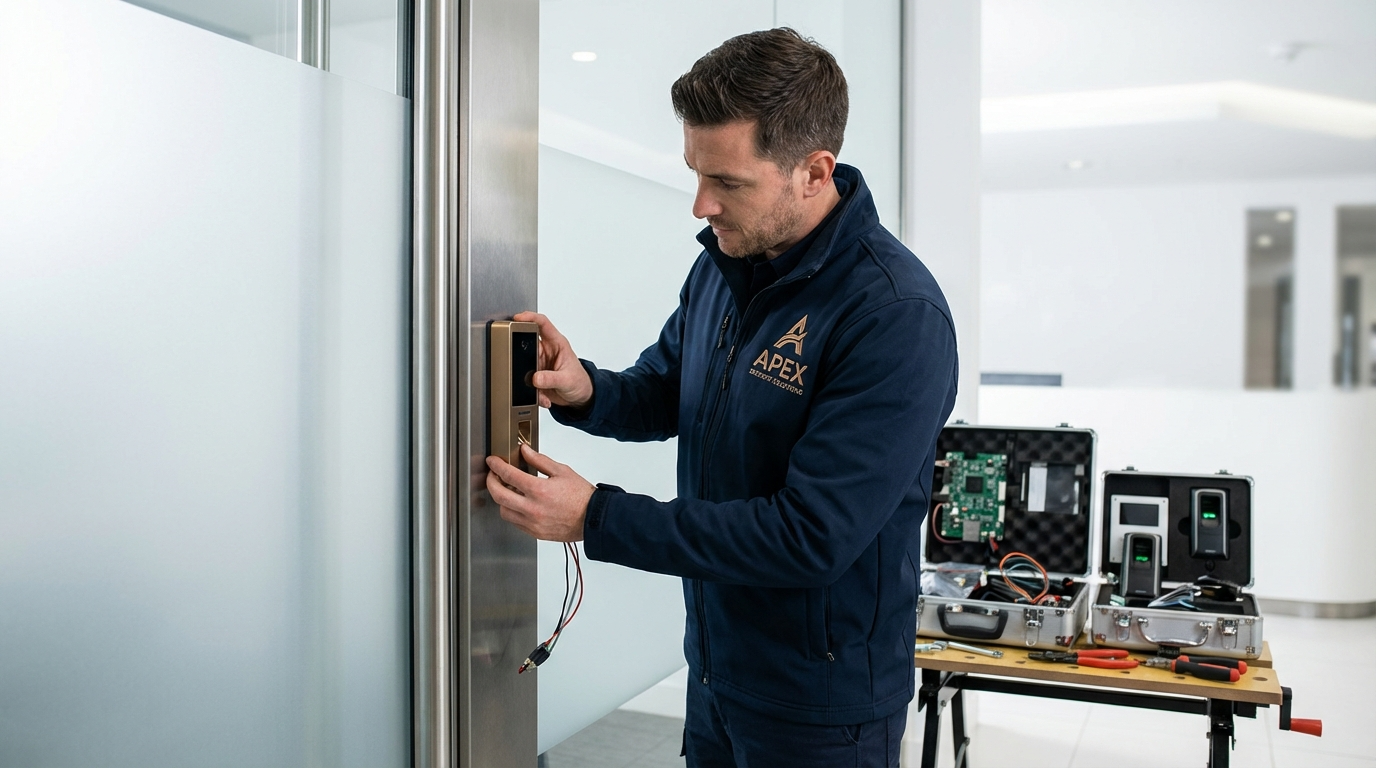
Commercial locksmith services involve unique considerations that make insurance coverage even more critical. Business properties often contain expensive equipment, sensitive information, and complex security systems. Damage to commercial door hardware or access control systems can cost thousands of dollars to repair or replace.
A liability insured locksmith provides essential protection for commercial clients facing scenarios like office rekeying after employee turnover, access control system installation, emergency lockouts affecting business operations, and high-security lock upgrades. Each situation carries potential for property damage that insurance coverage addresses.
Proper documentation matters significantly for commercial services. Businesses need detailed invoices for accounting purposes, proof of insurance for their own liability protection, and warranty information for future reference. An insured locksmith San Antonio TX businesses rely on should provide all necessary paperwork without being asked.
Need Commercial Locksmith Services?
Licensed, bonded, and insured technicians available 24/7 for San Antonio businesses.
How Does Insurance Demonstrate Professional Commitment?
Maintaining proper insurance coverage requires investment and ongoing commitment from locksmith businesses. This investment signals several important qualities to customers. It shows the company operates as a legitimate business entity with proper legal structure. It demonstrates financial stability sufficient to maintain coverage. It indicates awareness of professional standards and industry best practices.
Locksmiths who cut corners on insurance often cut corners elsewhere. The willingness to invest in proper coverage typically correlates with investment in training, quality tools, and genuine replacement parts. When you choose a covered locksmith, you are often choosing overall higher quality service.
What Specific Commercial Situations Require Insured Locksmiths?
Several commercial scenarios specifically demand working with insured professionals. Master key system installations affect entire building security and involve significant liability if errors occur. Access control system work connects to broader security infrastructure where mistakes create serious vulnerabilities.
Safe installation and service requires specialized skills and carries high stakes if damage occurs. High-security lock installations for banks, medical facilities, or government contractors involve strict compliance requirements that typically mandate insured vendors. After-hours emergency service for businesses often requires documentation of vendor credentials for security protocols.
How Do Property Managers Evaluate Locksmith Vendors?
Property management companies maintain strict vendor qualification processes that typically require proof of insurance, bonding, and licensing. These requirements exist because property managers bear responsibility for the properties they oversee. Working with unqualified vendors creates liability exposure they cannot accept.
Meeting these qualification standards positions a locksmith as a preferred vendor capable of handling ongoing commercial accounts. For property managers evaluating locksmiths, the ability to provide immediate proof of coverage streamlines the approval process and demonstrates professional operations.
Comparing Warranty Coverage and Insurance Protection
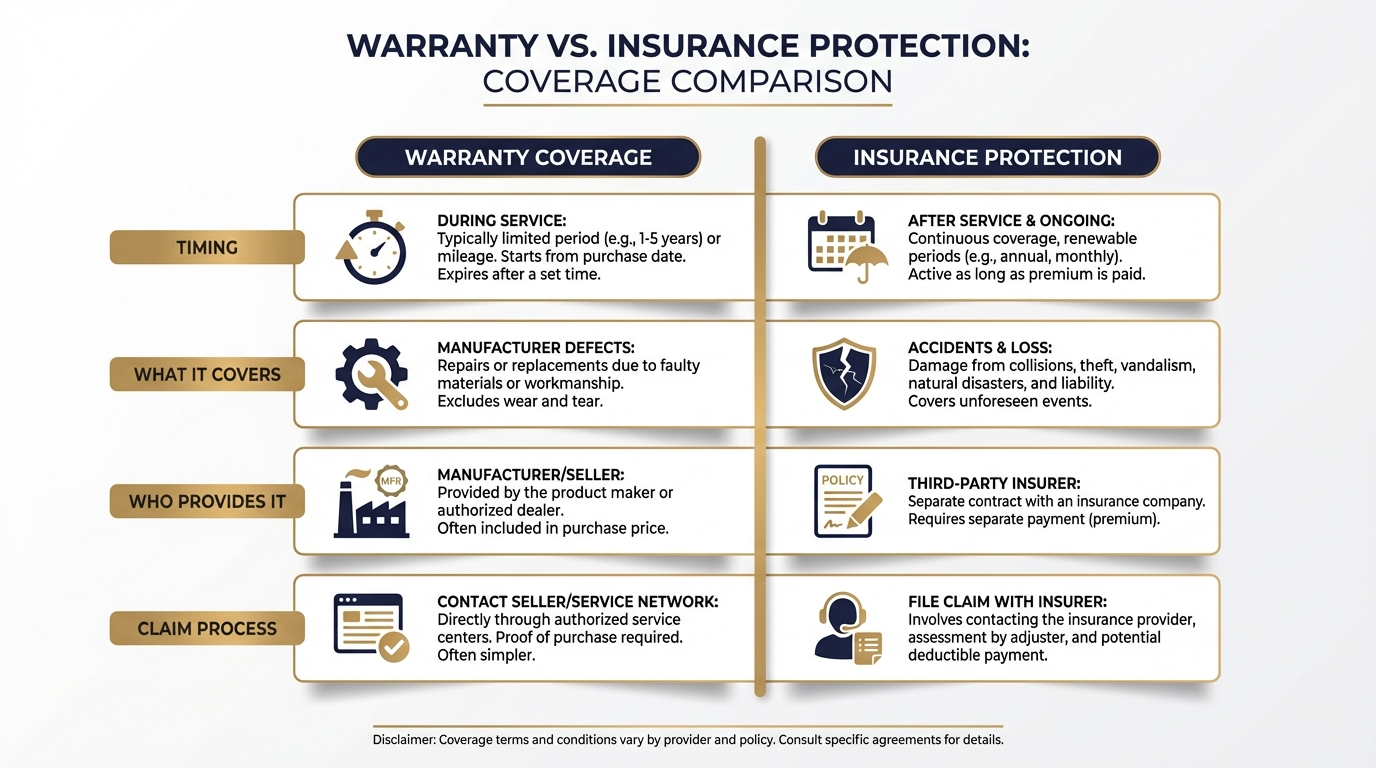
Many customers confuse warranty coverage with insurance protection, but these serve different purposes. Insurance covers damage that occurs during the service call itself. Warranty coverage addresses product or workmanship failures that emerge after the job is complete.
| Aspect | Insurance Coverage | Warranty Coverage |
|---|---|---|
| Timing | During service | After service completion |
| What It Covers | Accidental damage, injuries | Defective parts, workmanship issues |
| Who Provides It | Insurance company | Locksmith or manufacturer |
| Claim Process | File with insurer | Contact locksmith directly |
Quality locksmiths offer both insurance protection and meaningful warranty coverage. Ask about warranty terms for both parts and labor before authorizing work. Document warranty information carefully for future reference.
What Role Does Texas Licensing Play in Locksmith Regulation?
Texas maintains specific regulations governing locksmith services through the Department of Public Safety. These regulations establish baseline standards for professional operation, though specific requirements vary based on service type. Understanding the regulatory landscape helps customers make informed decisions about which locksmiths meet legal requirements.
While licensing requirements provide one measure of legitimacy, insurance and bonding offer additional protection beyond minimum legal standards. The best locksmiths exceed regulatory minimums by maintaining comprehensive coverage that protects their customers fully.
How Can You Research Locksmiths Before Emergencies Occur?
Proactive research prevents desperate decisions during lockout emergencies. Start by identifying locksmiths with established local presence, including physical addresses and consistent contact information. Review online feedback focusing on patterns rather than individual reviews. Check for professional association memberships that indicate commitment to industry standards.
Save contact information for at least one verified locksmith in your phone before you need emergency service. This simple step eliminates the pressure of searching during a crisis when scammers are most likely to take advantage. For prompt and reliable service from an Immediate Response Locksmith that prioritizes your safety and security, ensure they are fully vetted before dispatch.
Frequently Asked Questions about Insured Locksmith San Antonio TX
What does bonded, licensed, and insured truly mean for a locksmith?
These three terms each address different aspects of professional qualification. Licensed means the locksmith meets state requirements to legally operate. Bonded indicates they hold a surety bond protecting customers against theft or failure to complete work. Insured confirms they carry liability coverage for accidental damage or injuries. Together, these credentials signify a professional, trustworthy service provider committed to responsible business practices. When a locksmith maintains all three, customers receive comprehensive protection across multiple potential risk areas.
How do I ensure I am hiring a legitimate and covered locksmith?
Verification requires several steps completed before authorizing work. Ask for proof of insurance and contact the insurer to confirm active coverage. Request business identification and verify the company name matches online listings and vehicle markings. Check reviews across multiple platforms looking for consistent patterns. Obtain a detailed written quote before work begins and never pay until service is complete with proper documentation provided. Avoid locksmiths who pressure you to make quick decisions or refuse to answer questions directly.
Why is general liability insurance important for a locksmith?
General liability insurance protects against accidental damage to property and injuries that might occur during service. Without this coverage, customers could face significant costs if something goes wrong. For example, if a locksmith accidentally damages an expensive door frame or injures themselves on your property, insurance coverage handles these situations. This protection benefits both parties by providing clear processes for addressing problems without disputes about financial responsibility.
Can I ask to see a locksmith’s insurance certificate before they start working?
Absolutely, and professional locksmiths expect this request particularly for commercial work. A legitimate locksmith should readily provide proof of insurance without hesitation. If a locksmith refuses this reasonable request or becomes defensive, consider it a significant warning sign. For residential emergencies, you may verify credentials after the fact, but commercial clients should always confirm coverage before authorizing any work on their properties.
What should I do if a locksmith damages my property during service?
Document the damage immediately with photographs and detailed notes. Obtain contact information for the locksmith’s insurance provider from their certificate of insurance. File a claim directly with the insurance company, providing all documentation of the damage and the circumstances. Keep copies of all work orders, receipts, and communications. If the locksmith was not properly insured, you may need to pursue resolution through small claims court or other legal channels, which underscores the importance of verifying coverage beforehand.
Ready to Work with a Trusted Insured Locksmith?
15+ years serving San Antonio. Licensed, bonded, and fully insured for your protection.
Finding a reliable insured locksmith San Antonio TX residents can depend on does not have to be stressful. Whether you need emergency lockout assistance, commercial security upgrades, or residential lock services, working with a properly bonded and insured professional protects your property and your peace of mind. Have you verified that your go-to locksmith maintains current insurance coverage? Take a moment now to confirm their credentials before your next service need arises. Contact us today to experience professional, accountable locksmith service backed by full insurance protection.