
“`html
Condo Locksmith San Antonio TX – Professional Security Solutions for Condominium Living
Living in a condominium presents unique security challenges that standard residential locksmith services often fail to address. When you choose a condo locksmith in San Antonio TX, you gain access to specialized expertise that accounts for shared building structures, HOA regulations, and master key systems. Understanding these distinctions helps you protect your unit while maintaining compliance with your building’s security protocols.
Condominium security requires a technician who understands the balance between individual unit protection and building-wide access requirements. From rekeying after a tenant change to installing high-security deadbolts that meet HOA standards, professional condo locksmith services ensure your home remains secure without disrupting the broader building infrastructure.
Why Standard Locksmith Services Fall Short for Condominiums
Single-family home locksmiths typically focus on standalone properties where the homeowner has complete control over all security decisions. Condominiums operate differently. Your front door lock might need to accommodate a master key system for maintenance access. Common area doors require coordination with building management. Even your mailbox lock could fall under specific regulations.
A condo locksmith in San Antonio TX brings familiarity with these complexities. They understand that changing your deadbolt might require HOA approval, that certain lock brands maintain compatibility with existing master key systems, and that documentation of lock changes often needs to go to property management. This specialized knowledge prevents costly mistakes and ensures your security upgrades integrate seamlessly with building protocols.
How Condominium Locks Differ from Traditional Residential Hardware
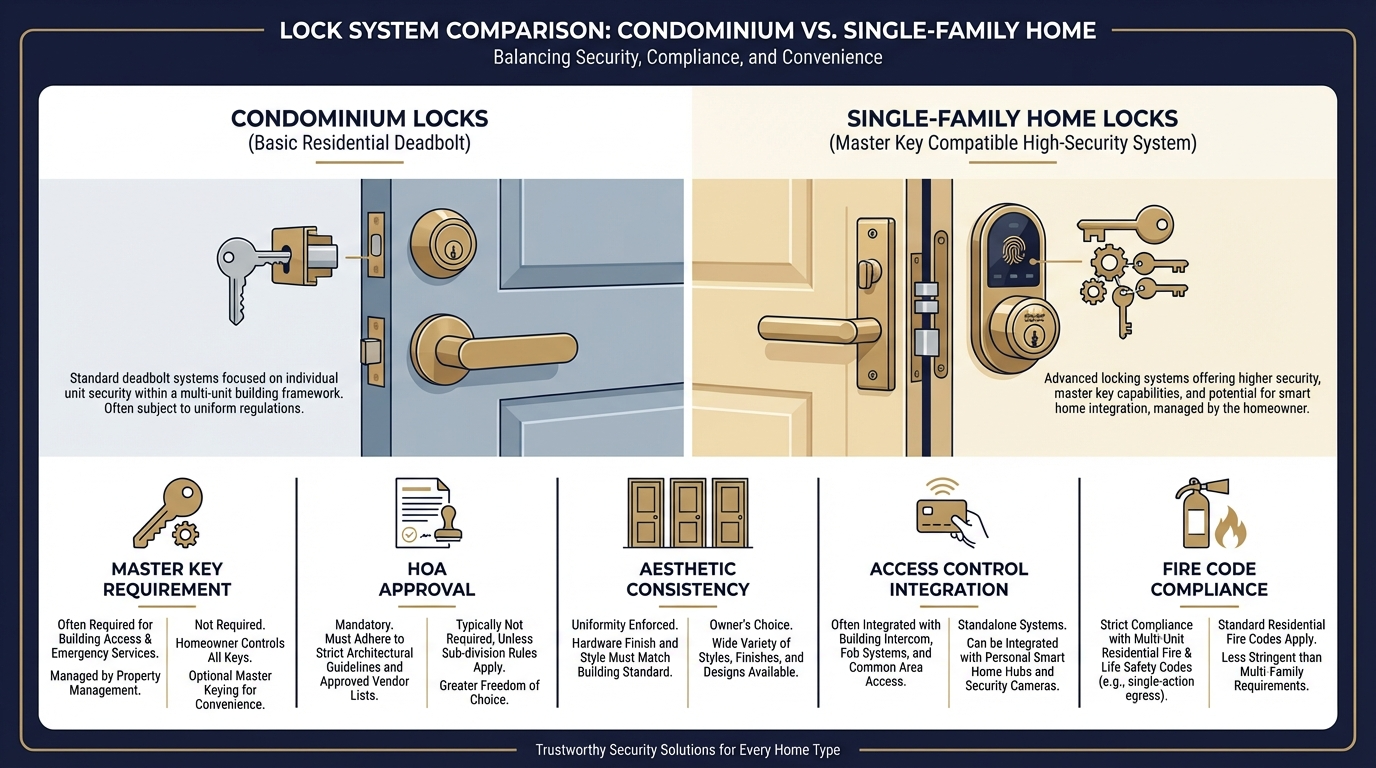
Condominium locks frequently incorporate features rarely seen in single-family homes. Master key compatibility allows building management and maintenance personnel to access units during emergencies while residents retain exclusive access through their individual keys. Access control systems in lobbies and common areas may integrate with unit-level security. Fire code requirements in multi-unit buildings can dictate specific lock types for egress compliance.
| Feature | Single-Family Home | Condominium Unit |
|---|---|---|
| Master Key Requirement | Rarely needed | Often required by HOA |
| HOA Approval for Changes | Not applicable | Frequently required |
| Aesthetic Consistency | Owner’s choice | May have building standards |
| Access Control Integration | Optional | Common in modern buildings |
| Fire Code Compliance | Basic requirements | Stricter multi-unit codes |
When Does an Immediate Response Locksmith Become Essential?
Lockout situations in condominiums carry additional stress factors. You might be locked out late at night in a building with limited after-hours access. A break-in attempt could leave your door compromised while you wait for help. Lost keys create security vulnerabilities that require immediate rekeying before unauthorized access occurs.
An Immediate Response Locksmith understands the urgency of condo-specific emergencies. Arriving quickly matters, but so does navigating building entry procedures, coordinating with security personnel, and working efficiently in shared hallways where noise and disruption affect neighbors. Professional technicians bring the tools and expertise needed to resolve your emergency without creating additional problems.
What Happens During a Condo Rekey Service?
Condo rekey services change the internal pin configuration of your existing locks so that old keys no longer work. This process preserves your current hardware while providing completely new keys. For condominium residents, rekeying offers particular advantages when moving into a unit previously occupied by other tenants or after losing keys.
The rekeying process typically takes less than thirty minutes per lock for standard cylinders. A technician removes the lock cylinder, replaces the pins to match a new key pattern, and tests the mechanism to ensure smooth operation. When master key compatibility is required, the new pin configuration maintains the building’s access hierarchy while still invalidating previous tenant keys.
Under Texas Property Code Section 92.156, landlords must change or rekey locks on exterior doors when a new tenant takes possession of a rental property. While condo owners operate under different regulations, this law underscores the importance Texas places on security during occupancy transitions.
Scenarios That Call for Immediate Rekeying
Moving into a new condo unit tops the list of rekeying priorities. Previous owners, tenants, real estate agents, and contractors may all possess copies of existing keys. A relationship ending where a former partner had keys creates similar security concerns. Even losing your own keys warrants rekeying since you cannot know whether someone found and copied them before returning.
Should You Rekey or Replace Your Condominium Lock Entirely?
Choosing between rekeying and full lock replacement depends on your current hardware condition and security goals. Rekeying costs less and works well when your existing locks function properly and meet your security standards. Replacement becomes necessary when locks show wear, when you want to upgrade to higher-security hardware, or when damage from a break-in attempt compromises the mechanism.
Condominium residents face an additional consideration: HOA requirements. Some buildings mandate specific lock brands or styles to maintain master key compatibility. Others require aesthetic consistency in hallway-facing hardware. Before investing in new locks, checking your building’s regulations prevents purchasing hardware that cannot be installed.
What Types of Locks Work Best in San Antonio Condominiums?
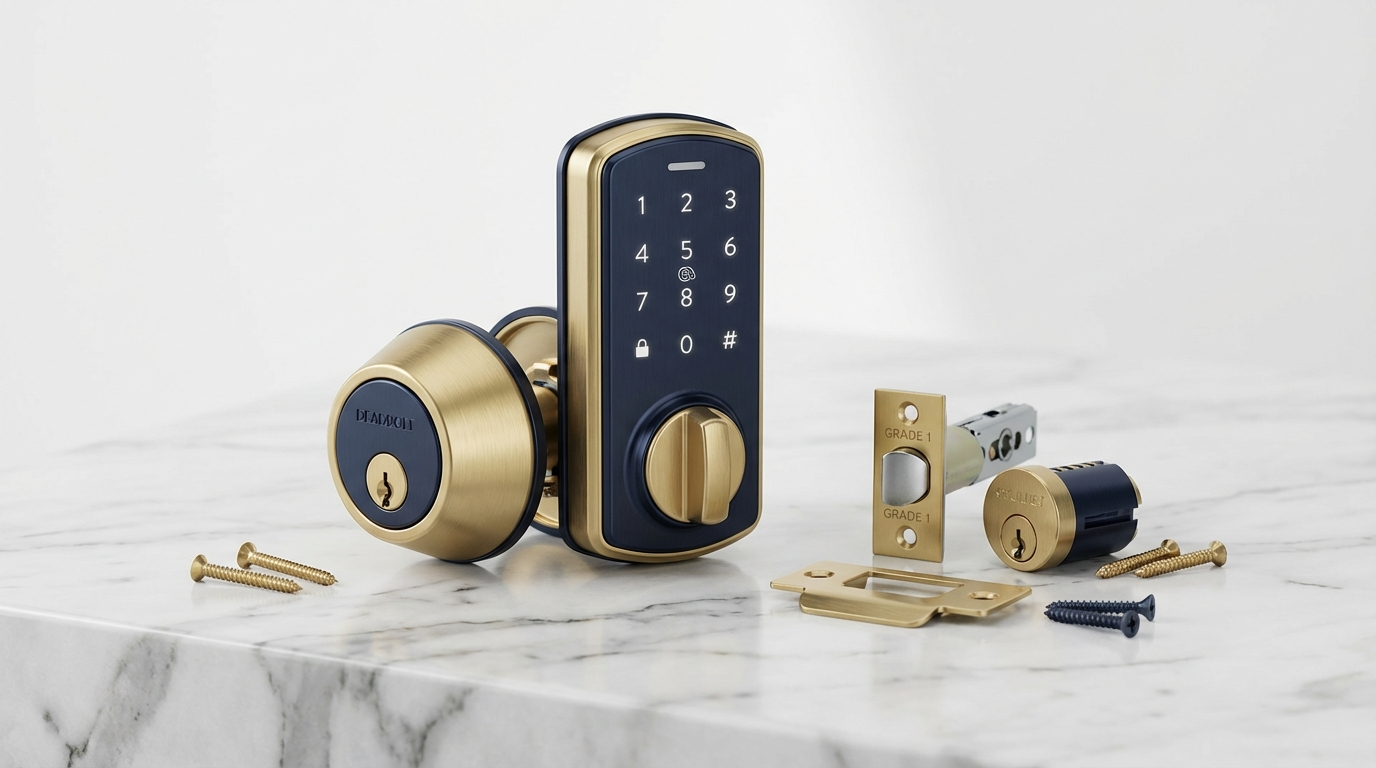
High-security deadbolts provide the strongest protection for condo entry doors. Look for locks rated Grade 1 or Grade 2 by industry standards, featuring pick-resistant cylinders and reinforced strike plates. These locks deter forced entry while maintaining the durability needed for daily use in multi-unit buildings.
Smart locks offer convenience features like keyless entry and remote access, but require careful consideration in condo settings. Verify that any electronic lock meets your building’s requirements before installation. Many HOAs have specific policies regarding smart lock installations, particularly those that modify door hardware appearance.
How Master Key Systems Benefit Condominium Buildings
Master key systems create a hierarchy of access throughout a condominium building. Individual residents hold keys that open only their own units. Maintenance personnel carry keys accessing multiple units or specific areas. Building management holds master keys for emergency access to any space. This layered approach balances security with practical building operations.
When you rekey or replace locks in a building with a master key system, maintaining compatibility requires specific technical knowledge. Your condo locksmith must understand the existing key hierarchy and configure new cylinders accordingly. Improper rekeying could lock out maintenance access or, worse, compromise the entire building’s master key security.
Emergency Lockout Solutions That Protect Your Door
Professional lockout services prioritize non-destructive entry techniques. Picking, bypassing, or shimming locks allows technicians to open doors without damaging hardware or door frames. In condominiums, avoiding damage matters particularly because repairs may require coordination with building management and could affect common area aesthetics.
Legitimate locksmiths in Texas must hold proper licensing through the Texas Department of Public Safety. This protects both you and the technician during emergency service calls. Always verify licensing before allowing any locksmith to perform work on your condo.
What Questions Should You Ask Before Hiring a Condo Locksmith?
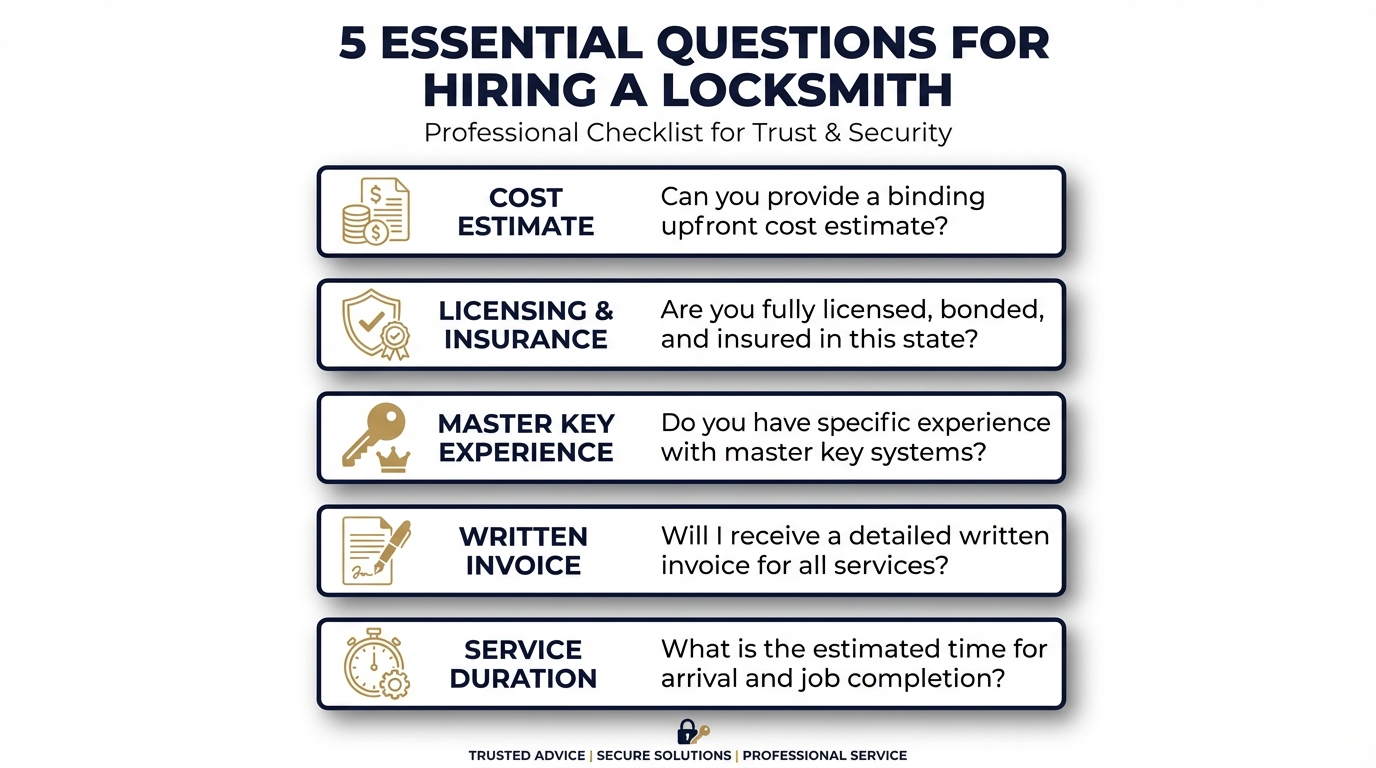
Protecting yourself from scams and subpar service starts with asking the right questions. Request a complete price estimate before any work begins, including trip charges, labor, and hardware costs. Ask about licensing and whether the company carries insurance. Verify that the technician has experience with condominium-specific requirements.
| Question to Ask | Why It Matters |
|---|---|
| What is the total cost including all fees? | Prevents surprise charges after work begins |
| Are you licensed with Texas DPS? | Confirms legal operation and accountability |
| Do you have experience with master key systems? | Ensures compatibility with building security |
| Will you provide a written invoice? | Documents the service for your records |
| How long will the service take? | Helps plan for building access and timing |
Need Professional Condo Locksmith Services?
Licensed technicians available 24/7 with 15-30 minute response times.
Texas Licensing Requirements for Professional Locksmiths
Locksmiths in Texas operate under regulation by the Texas Department of Public Safety through Texas Occupations Code Chapter 1702. Licensed locksmiths have completed required examinations covering topics like master-keying, lock types, and professional standards. These requirements ensure that licensed professionals possess verified technical knowledge.
Verifying a locksmith’s license protects you from unqualified technicians and potential scams. Licensed professionals face accountability through the regulatory system and must maintain standards to keep their credentials. When hiring a condo locksmith in San Antonio TX, checking license status takes only moments but provides significant peace of mind. Immediate Response Locksmith San Antonio maintains Texas License #B16307.
Warning Signs That Indicate Locksmith Scams
Scam locksmith operations follow predictable patterns. Unusually low quotes over the phone attract customers, then prices multiply once the technician arrives on-site. Demands for cash-only payment prevent chargebacks and create no paper trail. Unmarked vehicles and technicians without identification suggest unlicensed operators.
Legitimate locksmiths welcome questions about their credentials and provide transparent pricing before beginning work. At Immediate Response Locksmith, we provide upfront estimates and arrive in marked vehicles with proper identification.
Steps to Take If You Suspect a Scam
If a locksmith’s behavior raises concerns, you have options. Refuse service if prices change dramatically from the original quote. Request identification and license information before allowing any work. Report suspected unlicensed or fraudulent activity to the Texas DPS Private Security Bureau, which handles complaints about locksmith services.
HOA Considerations When Changing Condo Locks
Many condominium associations maintain rules about lock types, colors, and configurations. Before scheduling lock replacement, review your HOA documentation or contact building management. Some associations require specific brands to maintain master key compatibility. Others mandate that exterior-facing hardware match building aesthetics.
Rekeying often provides a simpler solution when HOA restrictions apply. Because rekeying preserves existing hardware, it typically falls outside regulations governing lock appearance or brand requirements. Your locksmith can advise whether rekeying meets your security goals while maintaining compliance with building rules.
Comparing Condo Security Needs Across San Antonio Neighborhoods
San Antonio’s diverse condominium landscape ranges from historic building conversions to modern high-rise developments. Each building type presents distinct security considerations. Older conversions may have non-standard door sizes requiring specialized hardware. High-rises often feature sophisticated access control systems that must integrate with unit-level locks.
A condo locksmith serving San Antonio understands these variations. Familiarity with local building styles, common lock systems in the area, and typical HOA requirements allows technicians to arrive prepared with appropriate tools and hardware. This local expertise translates to faster service and fewer complications during installation or repair.
We proudly serve condominiums throughout San Antonio, including Alamo Heights, Castle Hills, Stone Oak, the Pearl District, Southtown, and the Medical Center area. Our technicians also cover surrounding communities including New Braunfels, Schertz, Boerne, and Universal City.
Beyond the Front Door: Complete Condo Security Assessment
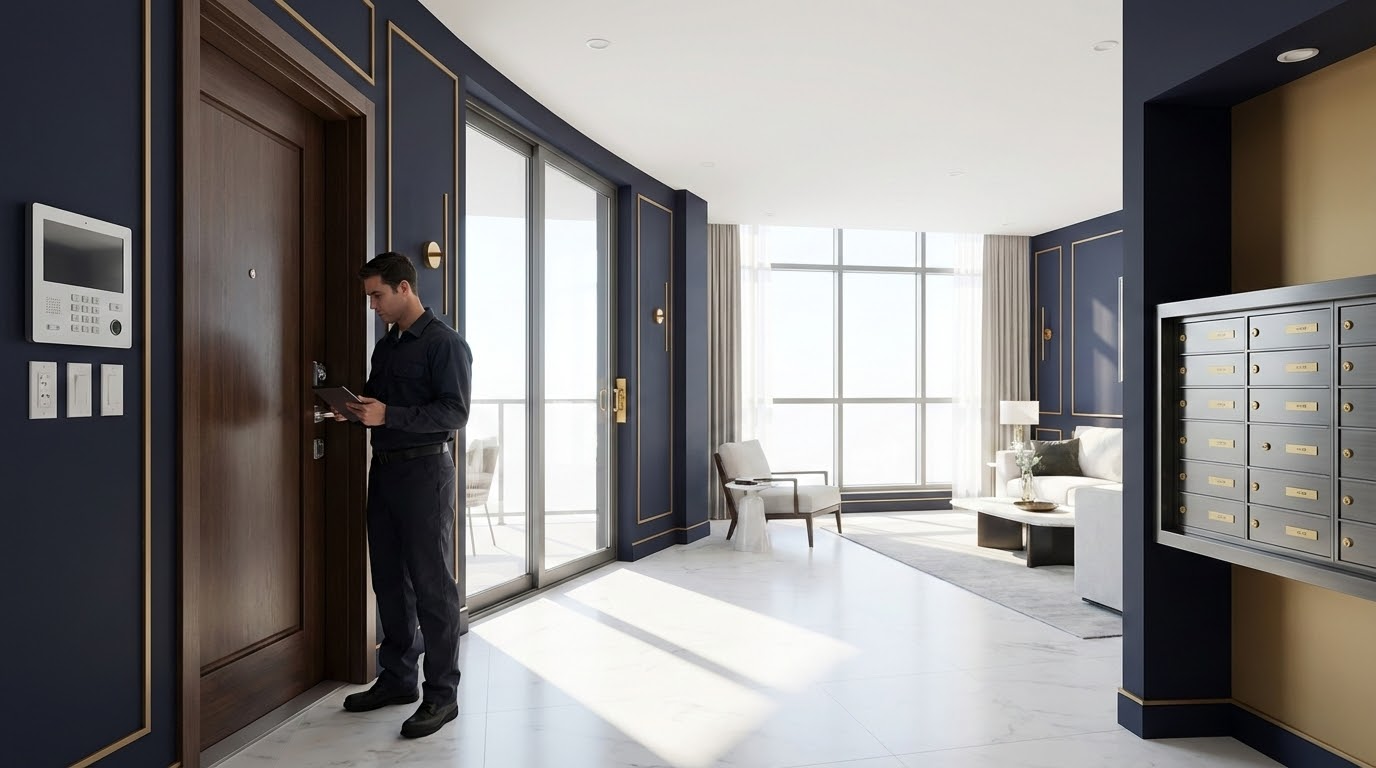
Comprehensive condo security extends beyond your entry door. Sliding patio doors present common vulnerability points. Storage unit locks may use different key systems. Mailbox security affects both package theft risk and potential identity theft through stolen mail.
Professional condo locksmith services can evaluate all access points to your unit. Secondary locks for sliding doors add protection without requiring HOA approval in most cases. Upgrading mailbox locks to pick-resistant cylinders deters theft attempts. A complete security review identifies weak points you might overlook when focusing only on main entry doors.
Frequently Asked Questions About Condo Locksmith Services
How quickly can a locksmith arrive for a condo lockout in San Antonio?
Our response times typically range from 15-30 minutes depending on location, traffic conditions, and time of day. Condo lockouts may take slightly longer if the technician needs to coordinate building access through security gates or lobby systems.
Do I need to be present for condo lock services?
Yes. Texas regulations require customer authorization for locksmith services, particularly those involving entry to a property. You must be present to provide identification and authorize the work being performed.
Can all my condo locks be keyed to one key?
In many cases, yes. “Keyed alike” services allow a single key to operate multiple locks. However, building master key requirements or incompatible lock types may limit this option. Your locksmith can assess feasibility during the service call.
Will changing my locks affect the building master key?
It can. If your building uses a master key system, any lock changes must maintain compatibility. Inform your locksmith about master key requirements before work begins so they can select appropriate hardware.
How do I verify a locksmith is licensed in Texas?
Request the technician’s license number and verify it through the Texas Department of Public Safety. Licensed locksmiths should readily provide this information and carry identification confirming their credentials. Our license number is TX #B16307.
What should I do if I lose my condo keys?
Contact a licensed locksmith for rekeying services as soon as possible. Lost keys create security risks since you cannot know whether someone found and copied them. Notify building management if your lost keys also access common areas.
How much does condo rekeying cost in San Antonio?
Rekeying costs vary based on the number of locks and complexity of your building’s master key system. We provide upfront pricing before any work begins. Call (210) 619-3986 for a free estimate.
Ready to Secure Your San Antonio Condominium?
15+ years serving San Antonio. Licensed, insured, and available 24/7.
Whether you need emergency lockout assistance, rekeying after moving into a new unit, or a complete security upgrade, professional condo locksmith services address your specific needs. Taking action now prevents security problems later. Contact our team to discuss your condo security needs and receive transparent pricing before any work begins.
“`