
Smart Lock vs Deadbolt San Antonio – What Actually Works Best for Your Home, Rental, or Business?
Home security in San Antonio is not a one-size-fits-all decision. Whether you own a house near the Medical Center, rent a unit off Broadway, or manage a small business in Stone Oak, the lock on your front door is your first line of defense. The smart lock vs deadbolt debate has become one of the most common questions homeowners and tenants ask when upgrading security in Bexar County. Understanding the real differences — beyond marketing claims — helps you invest wisely and sleep better at night.
Choosing the best door lock type depends on your lifestyle, your property type, local crime patterns, and how much maintenance you are willing to handle. A professional evaluation of your specific entry points through residential locksmith services in San Antonio can reveal vulnerabilities that no product listing will ever mention. At Immediate Response Locksmith, we help San Antonio residents navigate this decision every day with fast, honest guidance and reliable installation.
What Exactly Is a Deadbolt, and Why Has It Been the Standard for Decades?
A deadbolt is a mechanical locking mechanism that extends a solid metal bolt from the door into the door frame. Unlike a spring-loaded latch (the kind on a basic doorknob), a deadbolt cannot be pushed back without the correct key or thumb turn. This simple design has made it the default recommendation from law enforcement agencies, insurance companies, and locksmiths across Texas for generations.
The strength of a deadbolt comes from its bolt throw — the distance the bolt extends into the strike plate and frame. The Bexar County Sheriff’s Office Crime Prevention Unit specifies that a deadbolt must have a minimum 1-inch bolt throw to qualify for home security insurance credits in the county. That single inch of solid steel, combined with a properly reinforced strike plate and 3-inch screws reaching the wall studs, creates a barrier that resists kicking and prying far better than most people realize.
Single Cylinder vs Double Cylinder: A Safety Decision, Not Just a Security One
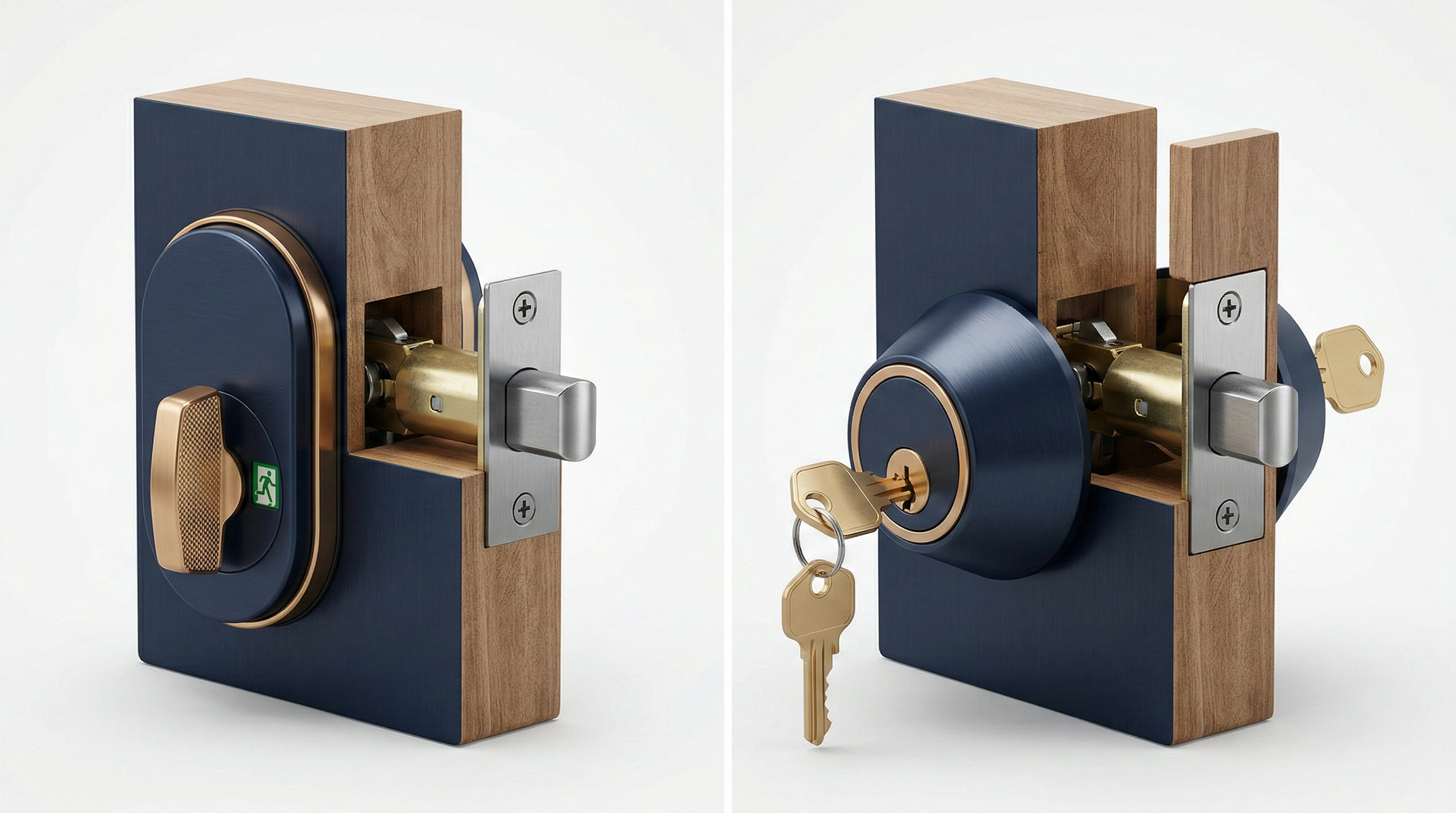
A single-cylinder deadbolt uses a key on the outside and a thumb turn on the inside. A double-cylinder deadbolt requires a key on both sides. The double-cylinder version is sometimes recommended when there is glass within 40 inches of the lock, because a burglar could break the glass and reach the thumb turn. However, this creates a serious safety concern during emergencies.
The Texas Real Estate Commission (TREC) flags double-cylinder deadbolts on egress doors as a potential hazard during home inspections. If you cannot unlock the door quickly from inside during a fire or emergency, the added security becomes a liability. In most San Antonio homes, a single-cylinder deadbolt combined with impact-resistant glass or a door reinforcement plate is the safer, code-compliant choice.
Under Texas Property Code Section 92.156, landlords are required to install deadbolts on all exterior doors of a rental dwelling. This law underscores how foundational deadbolts are to residential security in the state. Whether you are a tenant requesting a lock change or a landlord fulfilling your legal obligations, a licensed locksmith ensures compliance and proper installation.
How Does a Smart Lock Actually Work?
A smart lock is an electro-mechanical device that replaces or augments the traditional key with a digital access method. You might unlock it with a numeric keypad code, a smartphone app via Bluetooth or Wi-Fi, a fingerprint scanner, or even voice commands through a home automation system. Many smart locks still include a physical keyhole as a backup.
Here is the detail most marketing overlooks: the majority of residential smart locks are built around a standard deadbolt mechanism. The “smart” part is the motor and electronics that turn the bolt for you. This means the physical security foundation is often the same — what changes is how you interact with the lock and how you manage access to your property.
A Scenario Most People Overlook: What Happens When the Battery Dies?
Battery failure is the most common complaint among smart lock owners, according to community discussions across forums and review platforms. Most smart locks run on standard AA or CR123A batteries that last anywhere from six months to a year, depending on usage frequency and connectivity features. When those batteries die, you need a backup plan.
Reputable smart lock models provide low-battery alerts weeks before failure. Many include a physical key override or an external terminal where you can temporarily connect a 9V battery to power the motor long enough to unlock the door. The problem arises when homeowners ignore the alerts, lose the backup key, or never test the emergency access method. In San Antonio’s summer heat, battery life can shorten further. Planning ahead prevents a frustrating lockout at the worst possible moment.
Does a Smart Lock Work Without Wi-Fi?
Yes. Most smart locks operate locally using Bluetooth or a built-in keypad, which means they function perfectly without an internet connection. Wi-Fi connectivity is primarily needed for remote access features — locking or unlocking the door from your phone while you are away from home, receiving real-time alerts, or checking the activity log remotely.
If your San Antonio home has spotty internet or frequent outages, a smart lock with Bluetooth and keypad access will still work at the door. You simply lose the remote monitoring features until connectivity is restored. This distinction matters when evaluating what you actually need versus what sounds impressive on a product page.
Can Smart Locks Be Hacked? The Real Risk vs the Headline Risk
Digital hacking of smart locks is theoretically possible. Researchers have demonstrated vulnerabilities in certain Bluetooth protocols, relay attacks, and cloud account compromises. The NIST IR 8425 framework for consumer IoT products outlines baseline security expectations including secure default settings, timely software updates, and encrypted communication — standards that not every smart lock manufacturer meets.
However, the practical risk needs context. Bureau of Justice Statistics data on household burglary consistently shows that the vast majority of break-ins involve physical forced entry — kicking the door, breaking a window, or prying the frame. A burglar trying to access a home quickly is far more likely to target a weak door frame than to attempt a sophisticated digital exploit. The real cybersecurity risk with smart locks tends to involve user errors: weak PIN codes, shared access credentials that are never revoked, and firmware that is never updated.
How to Reduce Digital Risk on a Smart Lock
Treating your smart lock like any other connected device is the starting point. Use a unique, strong PIN code and change it periodically. Revoke access for anyone who no longer needs it — former tenants, past dog walkers, or one-time guests. Keep the lock firmware updated whenever the manufacturer releases a patch. If the lock connects through a hub or Wi-Fi bridge, make sure your home network uses WPA3 encryption and a strong router password.
Immediate Response Locksmith can help you configure smart lock settings during installation so that your digital access is secure from day one. This kind of hands-on guidance is one of the practical advantages of working with a local locksmith who understands both the physical and digital sides of modern security hardware.
Keyless vs Key Lock: Which Approach Fits Your Life?
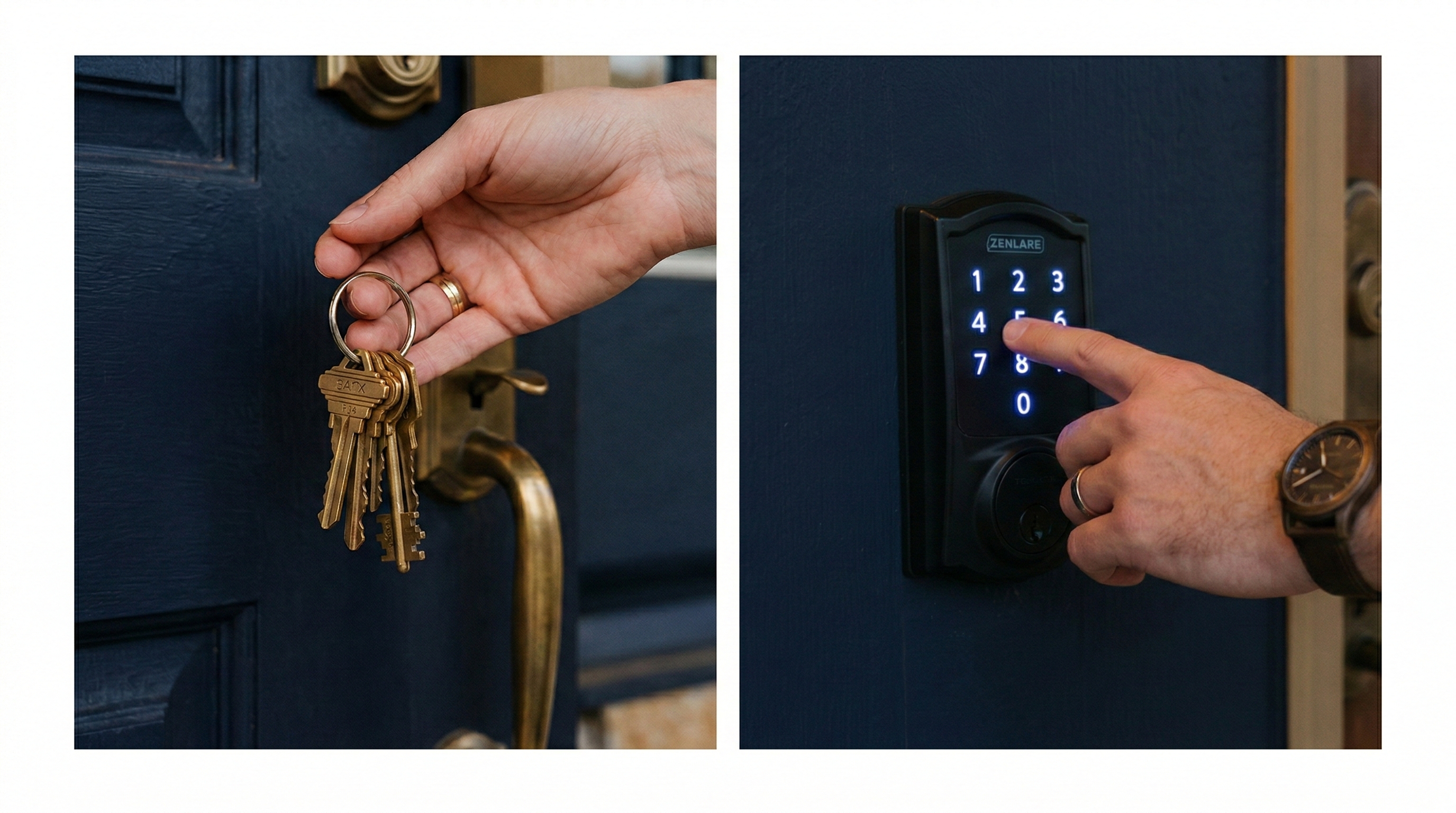
The keyless vs key lock decision often comes down to how many people need access and how frequently that changes. A traditional keyed deadbolt is simple, durable, and requires almost zero maintenance. But every time you need to add or remove someone’s access, you either need to cut a new key or rekey the lock entirely.
A keyless system lets you create and delete codes in seconds. For families with children who lose keys, homeowners who host guests frequently, or property managers handling tenant turnover, this convenience translates into real time and cost savings. On the other hand, if you live alone, rarely change your routine, and prefer minimal technology in your life, a quality keyed deadbolt does the job reliably year after year without batteries or apps.
As one of our recent customers shared:
“Cristin is hands-down the best locksmith I’ve ever worked with. She showed up quickly and handled a tricky lockout with total professionalism.” — Patrick M. ★★★★★
Digital vs Traditional Lock: Long-Term Reliability Compared
Mechanical deadbolts have a major advantage in longevity. A quality deadbolt from a reputable manufacturer, properly installed, can last 15 to 25 years or more with minimal maintenance — occasional lubrication and perhaps a cylinder replacement if keys wear down. There are very few moving parts and no electronic components to fail.
Smart locks, by contrast, have a typical lifespan of 5 to 10 years before motors wear out, touchscreens degrade, or the manufacturer stops supporting software updates. This matters for total cost of ownership. The lock that costs more upfront may also cost more over time if you factor in battery replacements, potential repairs, and eventual full replacement when the technology becomes obsolete.
| Factor | Traditional Deadbolt | Smart Lock |
|---|---|---|
| Average Lifespan | 15 to 25 years | 5 to 10 years |
| Power Source | None needed | Batteries (6 to 12 months per set) |
| Ongoing Maintenance | Lubrication, occasional rekey | Battery changes, firmware updates, potential motor replacement |
| Access Management | Physical keys; rekey to revoke | Digital codes; instant add/delete |
| Remote Control | Not available | Available with Wi-Fi models |
| Vulnerability Type | Lock picking, bumping, forced entry | Same physical risks plus digital risks |
What Is the Best Door Lock Type for a Front Door in San Antonio?
For most San Antonio homes, the answer is a high-quality Grade 1 or Grade 2 deadbolt as the security foundation. Whether you then add smart functionality on top of that mechanical base depends on your specific needs. The deadbolt handles the physical barrier; the smart module handles convenience and access management.
San Antonio’s climate adds a practical consideration. Summer temperatures regularly exceed 100 degrees, and humidity can spike during storm season. These conditions affect battery performance and can accelerate wear on plastic and rubber components in lower-quality smart locks. Choosing a smart lock rated for extreme temperatures, or keeping the lock shaded by a covered porch, helps extend its functional life.
A Common Mistake: Thinking Smart Locks Replace Deadbolts
One of the most frequent misunderstandings is treating smart locks and deadbolts as entirely separate categories. In reality, most residential smart locks are motorized deadbolts. They use the same bolt-into-frame mechanism. The critical question is not “smart or deadbolt” but rather “how good is the bolt, the strike plate, and the frame reinforcement behind whatever lock you choose?”
A smart lock installed on a hollow-core door with a flimsy strike plate and half-inch screws offers almost no security improvement over a basic knob lock. Conversely, a properly installed mechanical deadbolt on a solid-core door with a reinforced frame and 3-inch screws reaching the wall studs will stop most forced-entry attempts regardless of whether the lock has Bluetooth or not.
Total Cost of Ownership: What Most Comparisons Leave Out
| Cost Element | Deadbolt (Estimated Range) | Smart Lock (Estimated Range) |
|---|---|---|
| Hardware Purchase | $40 to $150 | $100 to $350 |
| Professional Installation | $50 to $120 | $75 to $175 |
| Annual Battery Cost | $0 | $8 to $25 |
| Rekey (per occurrence) | $50 to $100 | $0 (code change is free) |
| Replacement at End of Life | Every 15 to 25 years | Every 5 to 10 years |
| Potential Insurance Discount | Yes (with 1-inch bolt throw plus inspection) | Varies by insurer and model |
The Texas Department of Insurance notes that homeowners can qualify for “Safe Home” discounts by meeting specific security hardware criteria. A deadbolt meeting the 1-inch bolt throw standard is a straightforward path to that discount. Some insurers are beginning to recognize smart locks with monitoring features, but coverage varies and often requires additional documentation.
Is a Smart Lock a Good Choice for Rental Properties and Airbnb?
For landlords and short-term rental hosts in San Antonio, smart locks offer a practical advantage that is hard to replicate with traditional keys. You can generate unique codes for each guest or tenant and deactivate them the moment their stay ends. There is no need to collect keys, worry about unauthorized copies, or schedule a rekey between tenants.
Activity logs provide a record of when the door was locked and unlocked, which can be valuable for dispute resolution and property management. For properties with high turnover — common in areas near Joint Base San Antonio, the River Walk, and university districts — the savings on rekeying alone can offset the higher upfront cost of a smart lock within the first year or two.
Under Texas Property Code Section 92.156, tenants have the right to request a landlord rekey locks within seven days of taking possession. For landlords managing multiple properties across San Antonio, New Braunfels, Schertz, or Boerne, a smart lock with changeable codes simplifies compliance with this statute while reducing recurring locksmith visits for standard rekeying.
“Arrived within 15 minutes, fixed my lock in less than 10. Fast and reasonably priced.” — Jesus H. ★★★★★
Need a Lock Upgrade or Security Assessment?
Licensed technicians available 24/7 across San Antonio and surrounding areas. Honest advice, professional installation, no upselling.
Choosing the Right Solution Based on Your Specific Situation in Bexar County
Local context matters more than generic product reviews. Bexar County has seen ongoing property crime concerns, with the Sheriff’s Office recently warning about thefts targeting construction sites and neighborhoods in developing areas. This environment means that door and frame reinforcement is at least as important as the lock technology itself.
When Immediate Response Locksmith evaluates a property, the assessment goes beyond just the lock. We check door material, frame condition, strike plate quality, hinge security, and any glass near the lock. This comprehensive approach ensures that whatever lock type you choose — mechanical deadbolt, smart lock, or a combination — the entire door assembly works together as a cohesive security barrier. Our 24/7 availability means you can get this evaluation done on your schedule, not ours.
What Matters More Than the Lock Itself: Door and Frame Reinforcement
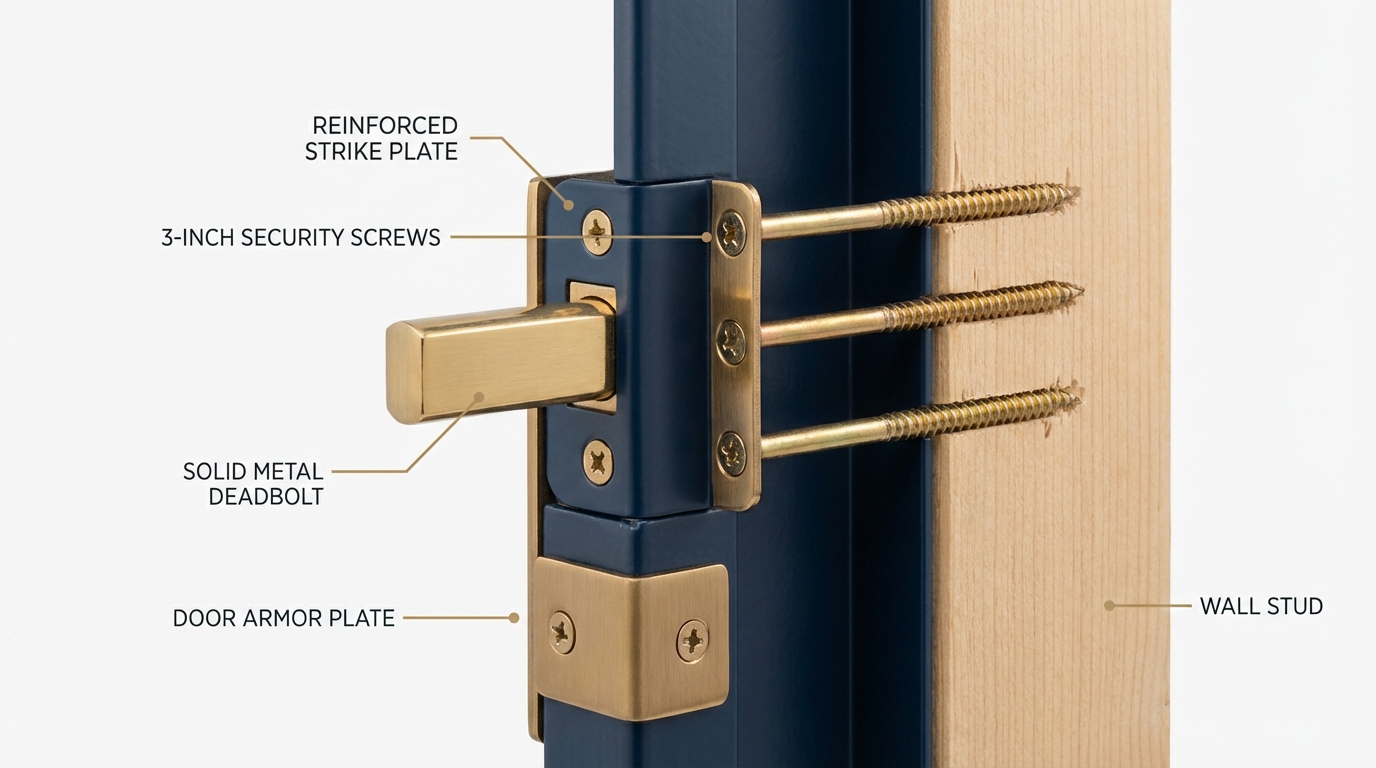
Community discussions on platforms like Reddit consistently highlight a hard-learned lesson: the lock is only as strong as what surrounds it. San Antonio residents who have experienced break-ins frequently report that the door frame splintered or the strike plate pulled free — not that the lock itself was picked or bypassed. Using 3-inch screws that anchor the strike plate into the wall stud behind the door jamb is one of the most cost-effective security upgrades available, regardless of lock type.
A reinforcement plate or door armor kit adds another layer of protection for under $50 in most cases. Combined with a solid-core door, this setup makes forced entry significantly harder and more time-consuming — which is often enough to deter an opportunistic burglar who is looking for a quick, quiet entry.
How Immediate Response Locksmith Helps San Antonio Residents Make the Right Choice
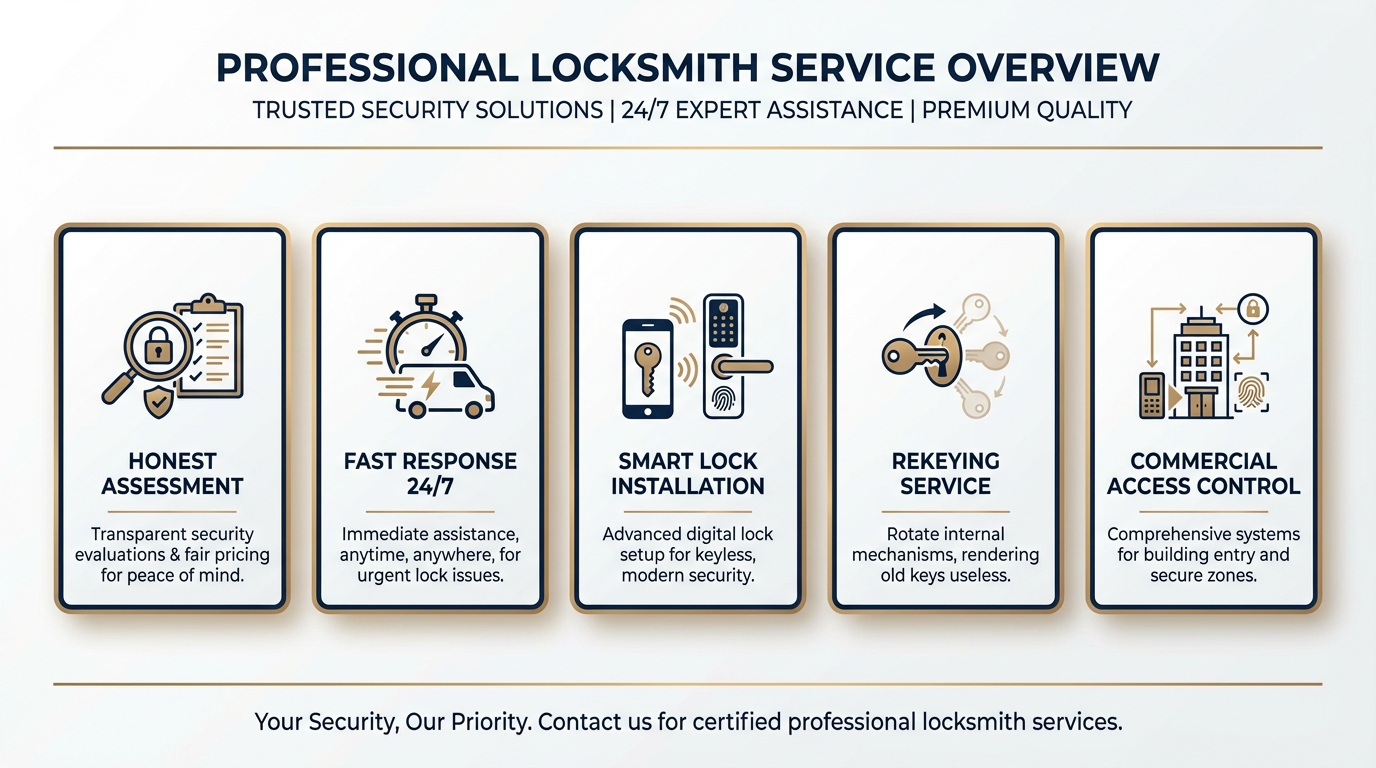
| What You Need | How We Help in Practice |
|---|---|
| Honest assessment of current security | On-site evaluation of doors, frames, locks, and vulnerabilities — not a sales pitch for the most expensive option |
| Fast response when locked out | 24/7 mobile locksmith service across San Antonio, with technicians who arrive equipped for both smart and traditional locks |
| Smart lock installation and setup | Proper configuration including digital access settings, backup key testing, and frame reinforcement during install |
| Rekeying after tenant turnover | Same-day rekeying or code reset service so your property is never exposed between occupants |
| Commercial access control | Scalable solutions from single-door keypads to integrated high-security commercial locking systems for offices and retail |
“Yvette was an absolute lifesaver. Kind, patient, and genuinely cared.” — Desaray S. ★★★★★
Frequently Asked Questions
Are smart locks safer than deadbolts?
Smart locks are primarily a convenience and access-management upgrade rather than a pure security upgrade. The physical security of both depends on the quality of the bolt mechanism, the door, and the frame. A well-installed Grade 1 deadbolt on a reinforced door can be just as secure — or more so — than a budget smart lock on a weak frame.
What happens if my smart lock is hacked?
In most real-world scenarios, the risk is not sophisticated hacking but rather weak PINs, shared codes that were never deleted, or outdated firmware. Following basic IoT security practices — strong codes, regular updates, revoking unused access — reduces this risk substantially. Physical forced entry remains a far more common threat than digital exploits.
Do I need a deadbolt if I already have a smart lock?
Most residential smart locks include a deadbolt mechanism built in. If your smart lock replaces your existing deadbolt, you already have one. The key is ensuring the bolt throw is at least 1 inch and the strike plate is properly reinforced with long screws. If your smart lock only replaces a knob lock, adding a separate deadbolt is strongly recommended.
Can I get a home insurance discount in Texas for upgrading my locks?
Yes. Texas homeowners may qualify for a “Safe Home” discount by meeting security criteria that include a deadbolt with a 1-inch bolt throw. The Bexar County Sheriff’s Office Crime Prevention Unit conducts inspections that can qualify your home for an approximate 5 percent insurance credit. Requirements and discounts vary by insurer, so check with your provider.
How often do smart lock batteries need to be replaced?
Most smart locks require battery replacement every 6 to 12 months, depending on usage frequency, connectivity features, and environmental conditions. San Antonio’s extreme summer heat can shorten battery life. Setting a calendar reminder and keeping a spare set of batteries near the door prevents unexpected lockouts.
Is a smart lock worth it for a rental property in San Antonio?
For properties with frequent tenant or guest turnover, a smart lock can save significant time and money by eliminating the need for physical key management and rekeying between occupants. The ability to create and revoke access codes remotely is especially valuable for short-term rentals and multi-unit properties near high-traffic areas like downtown or university districts.
Ready to Upgrade Your Security the Right Way?
Whether you are leaning toward a traditional deadbolt, a smart lock, or a combination of both, the quality of your installation determines how well any lock actually protects your home or business. Have you had your door, frame, and current hardware professionally evaluated? If not, that is the most important first step you can take today. Reach out to our team for a straightforward assessment and fast, affordable service — day or night.
For emergency locksmith assistance or to schedule a security consultation, contact Immediate Response Locksmith now. We serve San Antonio, New Braunfels, Schertz, Seguin, Boerne, Cibolo, Leon Valley, Live Oak, Universal City, Alamo Heights, Helotes, Converse, Selma, and Castle Hills.
Ready to Get Started?
15+ years serving San Antonio. Licensed, insured, and trusted by over 557 homeowners and businesses across Bexar County.