
Front Door Lock Installation San Antonio TX – Your Complete Security Guide
Your front door stands as the primary barrier between your family and potential intruders. When that barrier fails or becomes outdated, the security of everything you value hangs in the balance. Professional front door lock installation San Antonio TX services address this critical need, ensuring your entry door lock functions exactly as designed. Whether you have recently moved into a new home, experienced a break-in attempt, or simply want to upgrade aging hardware, understanding the installation process helps you make informed decisions about protecting your property.
This comprehensive guide covers everything San Antonio property owners need to know about selecting, installing, and maintaining a reliable main door lock system. From understanding different lock types to verifying locksmith credentials under Texas law, you will gain the knowledge necessary to enhance your home or business security. For urgent situations, an Immediate Response Locksmith can address your needs quickly, but preparation and knowledge remain your best allies in long-term security planning.
What Does Front Door Lock Installation Actually Include?
A professional lock installation encompasses far more than simply attaching hardware to your door. The process begins with removing any existing components and carefully evaluating the door and frame condition. Technicians measure the backset distance, verify door thickness, and assess whether the strike plate area requires reinforcement. Proper alignment between the bolt and strike plate proves essential for smooth operation and maximum security.
Installation professionals also examine the door jamb for signs of wear, rot, or previous damage that could compromise your new lock. When necessary, they adjust the door hinges to ensure proper alignment, preventing the common problem of bolts that stick or fail to engage fully. The final steps include testing the lock repeatedly from both sides, verifying that keys turn smoothly, and confirming that the deadbolt extends completely into the reinforced strike plate.
How Much Does Entry Door Lock Installation Cost in San Antonio?
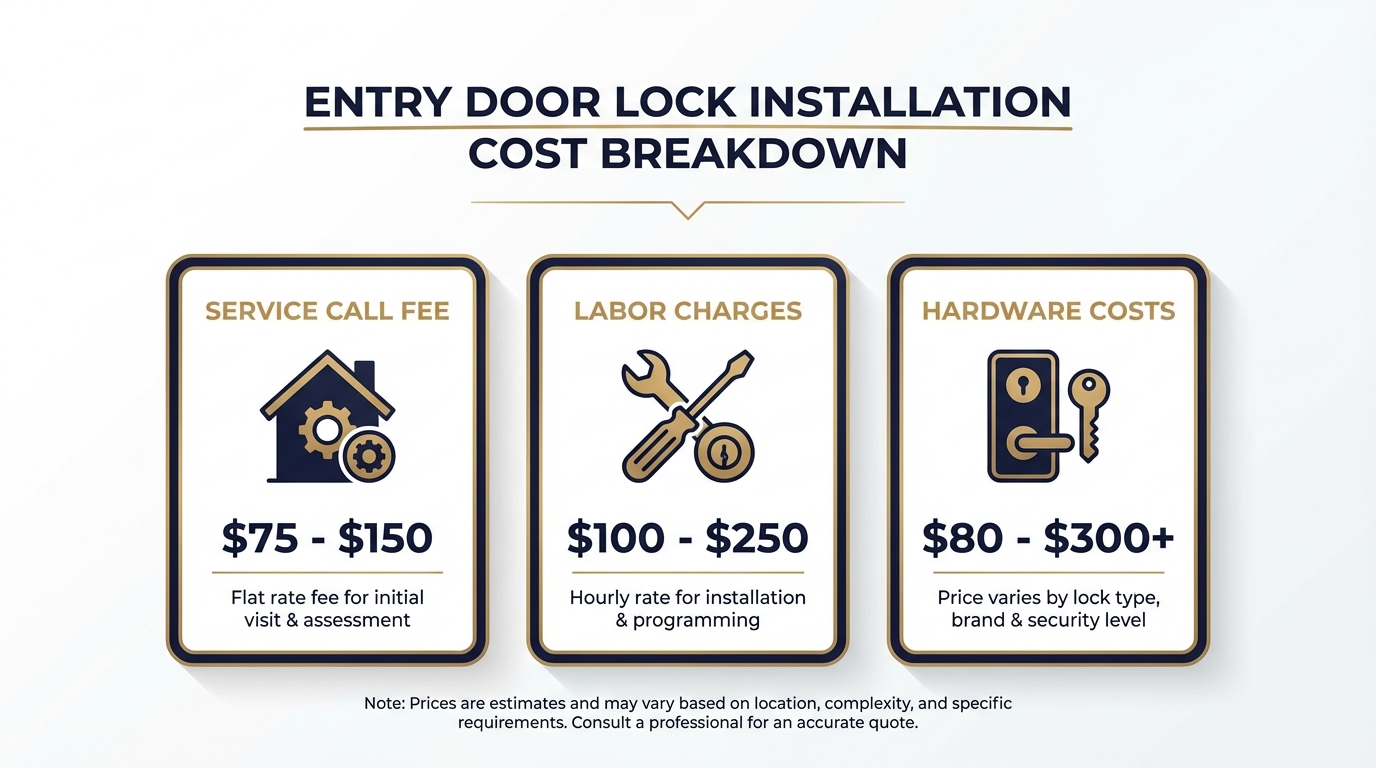
Pricing varies significantly based on several factors, making it essential to request detailed estimates before any work begins. The type of lock you choose directly impacts cost, with basic deadbolts at one end of the spectrum and high-security or smart locks at the other. Door condition matters too, as a fresh installation on a door without existing holes requires additional drilling and fitting work compared to a straightforward hardware replacement.
Most reputable locksmiths structure their pricing around three components: the service call fee, labor charges, and hardware costs. According to consumer protection guidance from the Better Business Bureau, you should always ask for an itemized estimate that breaks down each component. Be cautious of quotes that seem unusually low, as they often indicate hidden fees that appear after work begins. Getting everything in writing protects both parties and establishes clear expectations.
What Factors Influence Your Front Entry Lock Installation Price?
Hardware selection represents the most significant variable in your total cost. A standard Grade 2 residential deadbolt costs considerably less than a Grade 1 commercial-rated unit or a smart lock with advanced features. The ANSI/BHMA grading system, referenced in standards like ANSI/BHMA A156.40-2025, establishes performance requirements for residential deadbolts, helping you understand what you receive for your investment.
Door material and condition also affect pricing. Wooden doors with existing hardware cutouts typically require less work than metal or fiberglass doors that need new boring. If your door frame shows damage or your strike plate needs reinforcement with longer screws, these additions increase both labor time and material costs. Emergency or after-hours service naturally commands premium pricing compared to scheduled appointments during regular business hours.
When Is It Considered a Replacement Versus a Fresh Installation?
A replacement involves removing existing hardware and installing new components in the same prepared openings. This straightforward process works when your door already has properly sized holes for the lock body, latch, and strike plate. Fresh installation, by contrast, requires creating all necessary openings from scratch, demanding precise measurements and specialized tools to avoid damaging the door.
“Arrived within 15 minutes, fixed my lock in less than 10. Fast and reasonably priced.”
How Long Should Professional Lock Installation Take?
Most standard lock replacements require between twenty and sixty minutes for completion. Experienced technicians work efficiently while still taking time to verify proper function and alignment. Fresh installations on doors without existing hardware naturally take longer, sometimes extending to ninety minutes or more depending on door material and complexity.
Factors that extend installation time include misaligned doors, warped frames, or discovering hidden damage once old hardware comes off. Quality-focused professionals never rush through testing, preferring to cycle the lock multiple times and verify smooth operation from both sides before considering the job complete. This thoroughness prevents callbacks and ensures your security starts immediately.
Should You Rekey or Replace Your Front Door Lock?
Rekeying changes the internal pin configuration so old keys no longer work, while replacement installs entirely new hardware. When your existing lock functions well mechanically and meets your security standards, rekeying offers a cost-effective solution. This option works perfectly after moving into a new home, ending a roommate arrangement, or any situation where key control matters but the hardware itself remains sound.
Under Texas Property Code Section 92.156, landlords must change or rekey locks for new tenants within seven days of receiving a written request. This legal requirement underscores the importance of key control in maintaining property security. Whether you are a tenant exercising this right or a homeowner taking control of your security, rekeying provides an economical path to peace of mind.
Replacement becomes the better choice when you notice signs of wear like stiff key operation, a loose cylinder, or visible damage. Older locks may also lack modern security features that newer designs incorporate. If your current deadbolt predates current ANSI/BHMA standards, upgrading provides both improved function and enhanced protection against forced entry techniques.
When Does Rekeying Make No Sense?
Severely worn cylinders cannot be reliably rekeyed because the internal components have degraded beyond acceptable tolerances. Damaged locks that show signs of attempted forced entry should always be replaced rather than rekeyed. Similarly, if you want to upgrade from a basic lock to a high-security model with features like bump resistance or restricted keyways, replacement is your only option.
Which Lock Types Work Best for San Antonio Homes and Businesses?
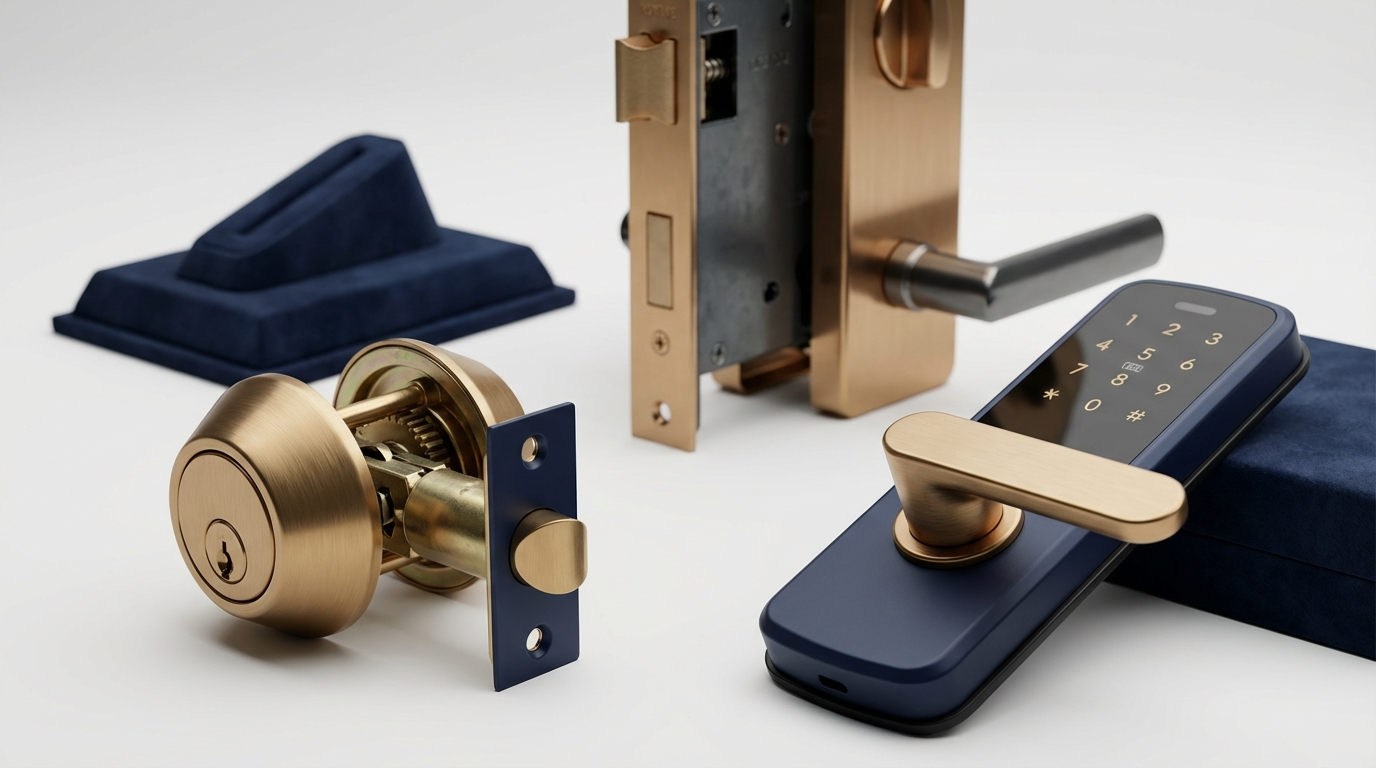
Deadbolts remain the foundation of residential security for good reason. Unlike spring-loaded latches that can be forced with a credit card or similar tool, deadbolts extend a solid metal bar into the door frame, requiring significantly more force to defeat. Single-cylinder deadbolts, operated by key from outside and thumb turn inside, suit most residential applications. Double-cylinder models requiring keys on both sides provide additional security for doors with nearby glass but create egress concerns during emergencies.
For businesses or high-traffic residential applications, commercial-grade hardware withstands heavier use and more aggressive attack attempts. Smart locks offer convenience features like keyless entry, remote access, and activity logging, though they require proper cybersecurity practices. The National Institute of Standards and Technology recommends strong passwords, enabling multi-factor authentication, and regularly updating firmware on any connected security device.
| Lock Type | Best For | Security Level |
|---|---|---|
| Single-Cylinder Deadbolt | Most residential doors | Good to Excellent |
| Double-Cylinder Deadbolt | Doors with glass panels | Excellent |
| Smart Lock | Tech-savvy homeowners | Good to Excellent |
| High-Security Deadbolt | High-risk properties | Maximum |
| Commercial Grade Lock | Businesses, high-traffic | Excellent |
What Distinguishes Entry Door Locks from Deadbolts?
The term entry door lock typically refers to the complete locking mechanism on your main door, which often combines a knob or lever lock with a deadbolt. The knob or lever portion provides basic latching to keep the door closed and may include a simple locking mechanism. However, this component alone offers minimal security against determined intruders since the spring-loaded latch can often be manipulated or forced.
Deadbolts add a critical security layer because they lack springs and must be deliberately rotated into the locked position. A properly installed deadbolt with at least a one-inch throw extends deep into a reinforced strike plate, creating substantial resistance to kicking or prying attacks. Most security professionals recommend combining both elements, using the knob lock for everyday convenience while relying on the deadbolt for actual security.
“Cristin completed the task in less than 5 minutes! Highly recommended!”
Can Locksmiths Install Locks on Doors Without Existing Holes?
Fresh installations on unprepared doors represent common work for professional locksmiths equipped with the proper tools and training. The process requires precise measurements to position the lock at standard height, typically around thirty-six inches from the floor for the main lock. Boring holes through the door face and edge demands accuracy to ensure the lock sits flush and operates smoothly.
Attempting this work without proper equipment often results in misaligned components, visible gaps around the hardware, or bolts that fail to engage the strike plate properly. Door material matters significantly, as metal and fiberglass doors require different techniques than wood. Professional installation protects your door from damage while ensuring the lock performs to its design specifications.
What Information Helps Get Accurate Installation Quotes?
Photographs dramatically improve quote accuracy. Capture images of the door showing its current condition, any existing hardware, and the edge where locks mount. Include a shot of the door frame and strike plate area. Measuring door thickness helps too, as locks come designed for standard dimensions and thicker or thinner doors may require specific hardware or modifications.
Need Professional Lock Installation?
Licensed technicians available 24/7 across San Antonio and surrounding areas.
Why Won’t Your Key Turn Smoothly in the Front Door Lock?
Stiff key operation frequently indicates alignment problems rather than lock failure. When doors sag on their hinges or frames shift due to foundation movement, the bolt no longer lines up perfectly with the strike plate opening. This misalignment creates friction that makes keys difficult to turn. You might notice that lifting the door handle while turning the key temporarily solves the problem, confirming alignment as the culprit.
Internal wear also contributes to difficult key operation. Cylinder pins and springs degrade over time, especially with frequent use or exposure to dust and debris. A worn key compounds the problem since the degraded cuts no longer engage pins precisely. Sometimes simple lubrication with graphite or a silicone-based product restores smooth operation. Persistent problems warrant professional evaluation to determine whether adjustment, repair, or replacement makes the most sense.
Does Upgrading the Strike Plate Actually Improve Security?
Strike plate reinforcement ranks among the most effective and affordable security upgrades available. Standard strike plates attach with short screws that grip only the door frame itself. When force is applied during a kick-in attempt, these short screws tear free from the relatively soft frame material, allowing the door to swing open even with a quality deadbolt engaged.
Upgrading to a reinforced strike plate with three-inch screws that penetrate through the frame into the structural studs behind it dramatically increases kick resistance. This modification distributes force across a larger area and anchors the entire assembly to the building’s framing. Combined with a properly installed deadbolt featuring a full one-inch throw, this simple upgrade transforms an average door into a substantially more secure barrier.
| Security Upgrade | Typical Cost Range | Effectiveness Against Forced Entry |
|---|---|---|
| Standard Strike Plate Replacement | Low | Minimal improvement |
| Reinforced Strike Plate with Long Screws | Low to Moderate | Significant improvement |
| Door Frame Reinforcement Kit | Moderate | Substantial improvement |
| High-Security Deadbolt Installation | Moderate to High | Excellent improvement |
How Do You Choose a Trustworthy Locksmith in San Antonio?
Texas regulates locksmith services under Chapter 1702 of the Occupations Code, requiring individual licensing for anyone performing locksmith work. According to Texas law, acting as a locksmith includes selling, installing, or servicing mechanical security devices. Before hiring anyone, verify they hold proper Texas credentials. The Texas Department of Public Safety explicitly warns that advertising locksmith services without proper licensing violates state law.
Legitimate locksmiths arrive in marked vehicles, carry identification, and willingly provide license verification. They ask appropriate questions about ownership or authorization, as Texas law requires customer identification and signed authorization for certain services. Established local businesses with verifiable physical addresses generally prove more reliable than anonymous services found through generic online searches. Checking reviews across multiple platforms helps identify patterns of quality or concern.
What Red Flags Indicate Potential Locksmith Scams?
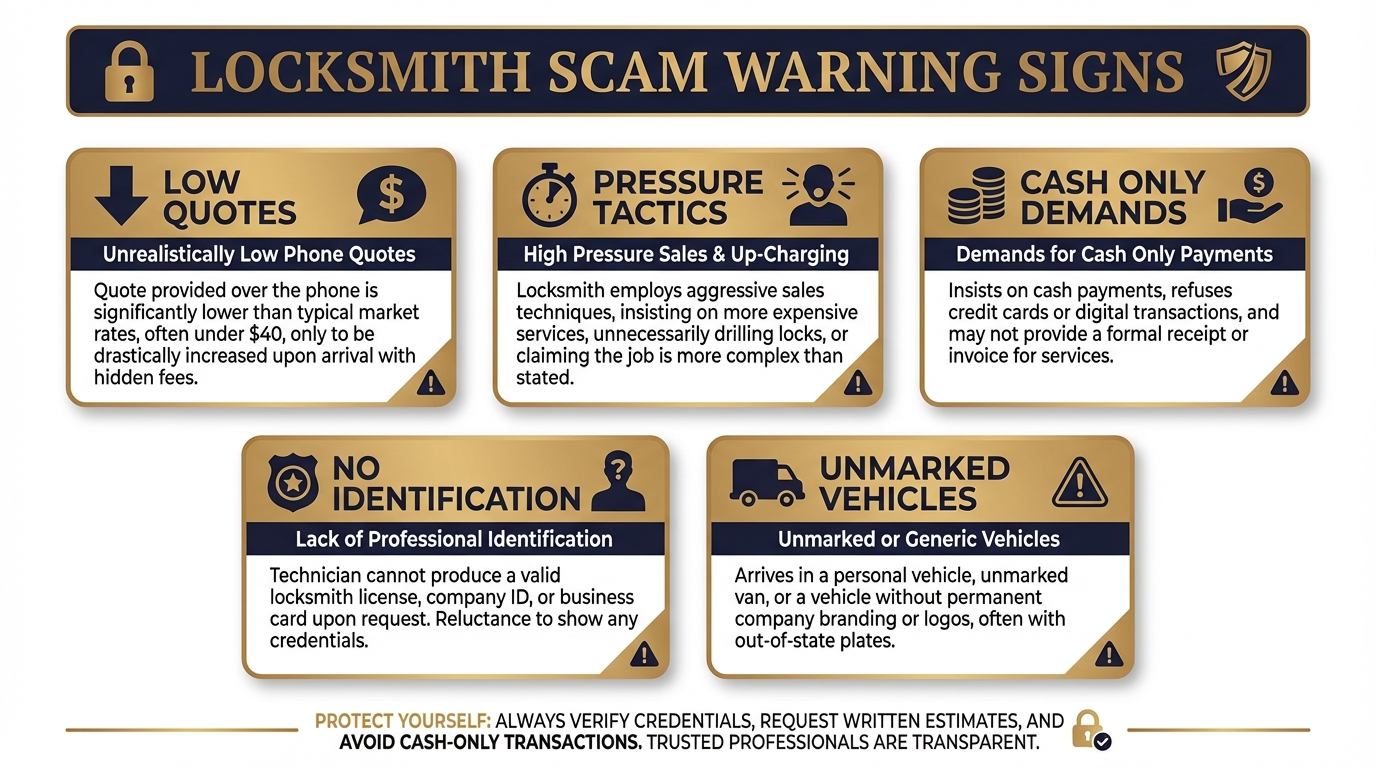
Suspiciously low quotes often serve as bait to get a technician on-site before revealing the real price. The Texas Attorney General’s office advises consumers to get multiple estimates and complete pricing details in writing before work begins. Pressure tactics, demands for cash-only payment, or refusal to provide itemized invoices all suggest problematic operators. Legitimate professionals explain what they will do, provide a written estimate, and complete work matching that description.
Arriving without proper identification or in unmarked vehicles raises immediate concerns. Drilling locks as a first resort rather than using less destructive techniques may indicate lack of skill or intent to upsell replacement hardware. Any resistance to providing a detailed invoice listing labor, parts, and total charges warrants serious concern. Walking away from such situations protects both your wallet and your security.
| What to Verify | Why It Matters |
|---|---|
| Texas Locksmith License | Legal requirement ensuring accountability |
| Physical Business Address | Established local presence indicates reliability |
| Itemized Written Estimate | Prevents surprise charges after work completes |
| Marked Service Vehicle | Professional appearance signals legitimate operation |
| Willingness to Show ID | Transparency demonstrates trustworthiness |
When Do You Need Emergency Lock Replacement Services?
Certain situations demand immediate professional attention regardless of time or day. A break-in or attempted forced entry compromises your lock’s integrity even if it still appears functional. Internal damage may not be visible but could allow easier defeat on a subsequent attempt. Lost or stolen keys, particularly when the finder might know your address, create urgent security gaps that rekeying or replacement closes immediately.
Locks that suddenly fail to operate properly leave your property unsecured until addressed. If you cannot lock your door at night or before leaving, the security gap is immediate and obvious. Tenant turnover in rental properties or employee changes at businesses often warrant prompt lock service to maintain access control. Immediate Response Locksmith services exist specifically for these time-sensitive situations.
“Yvette was an absolute lifesaver. Kind, patient, and genuinely cared.”
How Does Commercial Lock Installation Differ from Residential Work?
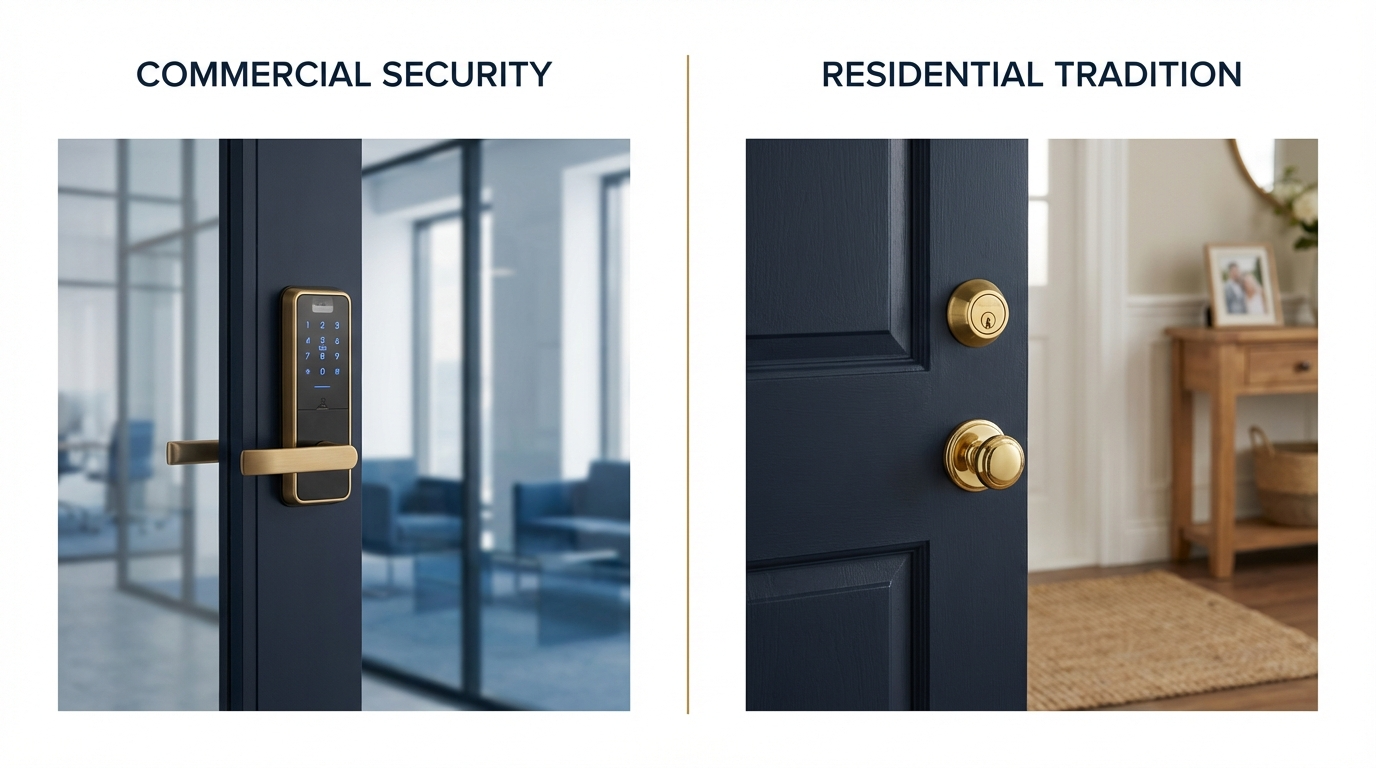
Commercial properties face heavier daily use, with locks cycling dozens or hundreds of times daily compared to typical residential patterns. This intensity demands hardware rated for commercial application, typically ANSI/BHMA Grade 1 or Grade 2 rather than the Grade 3 hardware acceptable for many homes. Commercial locks also face different attack profiles, with more sophisticated attempts requiring corresponding security measures.
Access control requirements differ substantially as well. Businesses often need master key systems, keypad entry, or integration with alarm and monitoring systems. Managing multiple users with varying access rights requires planning that residential installations rarely involve. Fire code compliance becomes more complex in commercial settings, where egress requirements under NFPA 101 restrict certain lock types, particularly double-cylinder deadbolts that could impede emergency exit.
Why Professional Installation Matters for Warranty and Performance
Lock manufacturers design their products to perform under specific installation conditions. When those conditions are not met, performance suffers regardless of hardware quality. The ANSI/BHMA standards referenced earlier note that actual security performance depends heavily on proper installation and door/frame conditions. A high-security lock installed incorrectly may provide less actual protection than a mid-grade lock installed properly.
Many manufacturers explicitly require professional installation to maintain warranty coverage. Attempting DIY installation may void this protection, leaving you responsible for replacement costs if problems develop. Beyond warranty concerns, improper installation creates vulnerabilities that defeat the lock’s design intent. Misaligned components, inadequate reinforcement, or incorrect boring dimensions can all create weaknesses an intruder might exploit.
What Maintenance Keeps Your Main Door Lock Working Properly?
Regular maintenance extends lock lifespan and ensures reliable operation when security matters most. Lubricating the cylinder annually with graphite or silicone-based products keeps internal components moving freely. Avoid oil-based lubricants that attract dust and eventually create gummy buildup that impedes operation. A few seconds of preventive lubrication prevents the frustrating stiffness that develops in neglected locks.
Periodic inspection catches developing problems before they become failures. Check that the deadbolt extends fully and retracts smoothly. Verify that the bolt engages the strike plate without requiring extra force or door lifting. Examine the strike plate screws to ensure they remain tight and have not worked loose from repeated impact. Addressing small issues promptly prevents the inconvenience and security gap of sudden lock failure.
Protect Your San Antonio Property Today
Our licensed technicians serve San Antonio, Alamo Heights, Castle Hills, Leon Valley, and surrounding areas.
Frequently Asked Questions About Front Door Lock Installation
Can all front door locks be keyed alike so one key works throughout my home?
Yes, most residential locks from the same manufacturer can be keyed alike during installation or rekeyed afterward to match. This convenience allows a single key to operate all entry points while maintaining security at each door. Your locksmith can coordinate this during installation or as a separate rekeying service.
How do I know if my current front door lock needs replacement?
Signs indicating replacement include visible damage, difficulty turning keys, a cylinder that wobbles, failure to latch properly, or hardware that predates current security standards. If your lock requires frequent jiggling, lifting the door, or multiple key attempts, these symptoms suggest internal wear warranting evaluation.
Do smart locks require special installation compared to traditional deadbolts?
Smart locks typically fit standard door preparations, though they may require attention to door thickness and compatibility with existing holes. Battery power and connectivity features may need basic setup and configuration. Some models integrate with existing deadbolt mechanisms while others replace the hardware entirely.
What should I do if I suspect my lock was tampered with but still works?
Any sign of tampering warrants professional inspection even if the lock currently functions. Attempted forced entry can create internal damage or misalignment that weakens security without obvious external evidence. A qualified locksmith can assess integrity and recommend repair or replacement as appropriate.
How often should front door locks be replaced for optimal security?
Locks do not have fixed replacement schedules like smoke detector batteries. Instead, replace them when they show wear signs, after security incidents, when keys have been lost or distributed too widely, or when technology advances make your current hardware obsolete. Well-maintained quality locks can last decades; neglected or abused hardware may fail much sooner.
Is it worth paying more for high-security locks rated to UL 437 standards?
UL 437 certification indicates the lock has passed rigorous testing against drilling, picking, and other attack methods. For properties with elevated risk profiles or valuable contents, this investment provides meaningful additional protection. Average residential applications may find mid-tier hardware sufficient when properly installed.
Ready to Secure Your San Antonio Property?
Your front door lock represents the first line of defense for everyone and everything inside your home or business. Selecting quality hardware, ensuring professional installation, and maintaining your locks properly creates security you can rely on daily. The information in this guide equips you to make informed decisions about your entry door lock needs and to identify trustworthy service providers.
What questions remain about protecting your property with the right front entry lock solution? Whether you need a new main door lock installation, want to upgrade existing hardware, or face an urgent security situation requiring immediate attention, professional help is available. For reliable front door lock installation San Antonio TX services backed by local expertise and commitment to customer satisfaction, reach out today to discuss your specific security needs and receive a detailed, transparent estimate.
Ready to Get Started?
15+ years serving San Antonio. Licensed and insured. Free estimates available.