
Property Management Locksmith San Antonio – The Ultimate Guide for Landlords and Property Managers
Managing rental properties in San Antonio demands attention to countless details. Among the most critical is security. Property management locksmith San Antonio services provide landlords and property managers with specialized expertise that goes far beyond standard residential locksmith work. These professionals understand the unique operational rhythm of rental property locks and multi unit locks across apartment complexes, condominiums, and commercial buildings.
Security breaches, tenant turnover deadlines, and legal compliance create constant pressure for property managers. A single delayed rekey can expose a property owner to liability. An unreliable locksmith partner can leave tenants locked out for hours. This guide covers everything property managers need to know about locksmith services in San Antonio, from routine rekeying procedures to emergency response protocols and Texas legal requirements.
Working with a licensed and reputable locksmith is not optional. Texas regulates locksmith services through the Department of Public Safety, and property managers who hire unlicensed operators risk both legal penalties and security vulnerabilities. The following sections will help you understand what to expect, what to demand, and how to build a locksmith partnership that protects your properties and your tenants.
Why San Antonio Property Managers Need Specialized Locksmith Services
Property managers face challenges that homeowners never encounter. A single-family homeowner might call a locksmith once every few years. A property manager overseeing fifty units might need locksmith services weekly. The volume alone demands a different approach. Beyond frequency, property managers must coordinate access for maintenance staff, respond to tenant emergencies at all hours, and maintain compliance with state security device laws.
Multi-unit properties present unique complexities. Master key hierarchies must function correctly across dozens or hundreds of doors. Individual tenant security cannot be compromised by system-wide vulnerabilities. Every lock-related decision affects multiple stakeholders simultaneously. This is why generic locksmith services often fail property managers. Specialized apartment complex locksmith providers understand these operational realities and build their services accordingly.
Ensuring Tenant Safety and Property Security
Professional locksmith services directly impact tenant safety. When a previous tenant retains keys to a unit, the new occupant faces potential unauthorized entry. When locks malfunction, tenants may be unable to secure their homes. When emergency lockouts occur at night, immediate response locksmith availability determines whether a tenant waits minutes or hours for resolution.
Preventative measures reduce emergency calls significantly. Regular lock inspections identify worn cylinders before they fail. Proper door alignment prevents the jamming that causes lockouts. Quality hardware resists forced entry attempts. An experienced apartment complex locksmith helps property managers implement these preventative strategies across their entire portfolio rather than simply responding to problems after they occur.
Meeting Texas Legal Compliance for Rental Properties
Texas Property Code Chapter 92 Subchapter D establishes specific requirements for security devices in rental properties. According to Texas Property Code § 92.156, landlords must rekey or change security devices operated by a key, card, or combination no later than the seventh day after the tenant turnover date. This is not a suggestion. Failure to comply exposes property owners to tenant remedies including potential lease termination and recovery of costs.
Beyond rekeying timelines, landlords must install specific security devices without waiting for tenant requests. Texas Property Code § 92.153 mandates deadbolts on exterior doors, window latches, sliding door security bars or pins, and peepholes where applicable. Property managers who neglect these requirements face liability that far exceeds the cost of proper compliance. A knowledgeable locksmith partner helps ensure every unit meets these standards before tenant occupancy.
Essential Locksmith Services for Property Management in San Antonio
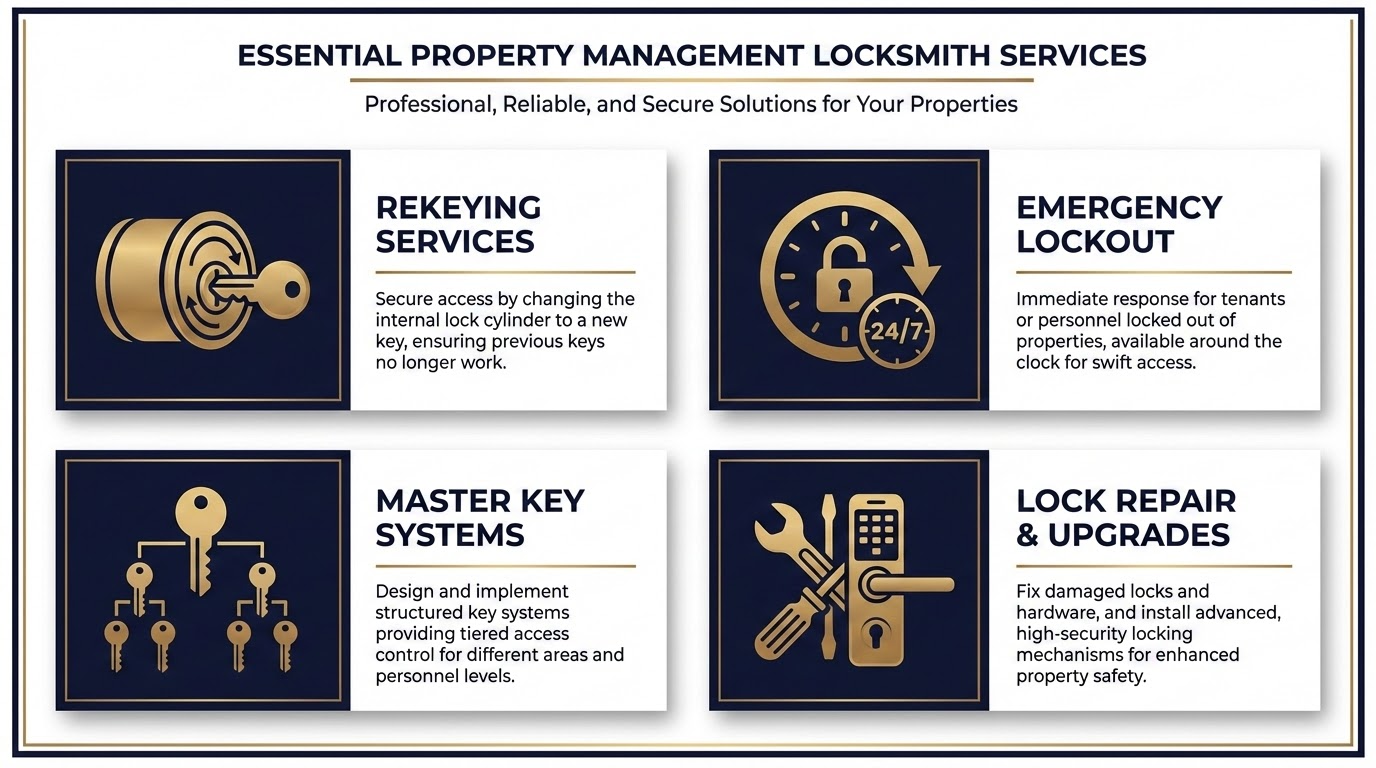
Property management locksmith services encompass far more than cutting keys and opening locked doors. Comprehensive providers offer systematic solutions that address the full lifecycle of property security, from initial tenant move-in through turnover and beyond.
Rekeying and Lock Changes After Tenant Turnover
Rekeying represents the most frequent locksmith need for property managers. When a tenant vacates, their keys must be rendered useless before the next occupant moves in. Texas law establishes a seven-day deadline from the tenant turnover date for this critical security measure. Property managers who coordinate rekeying efficiently can often complete it during the standard unit preparation process.
Rekeying offers significant advantages over full lock replacement in most situations. The process changes the internal pin configuration of existing cylinders, making old keys inoperable while preserving functional hardware. This approach costs less than replacement and takes less time per unit. However, when locks show significant wear, corrosion, or damage, replacement becomes the better choice. An experienced locksmith assesses each situation and recommends the appropriate solution for rental property locks and multi unit locks alike.
Emergency Lockout Services for Tenants and Staff
Lockouts happen at the worst possible times. A tenant arrives home at midnight to find they have lost their keys. A maintenance worker accidentally locks tools inside a unit. A property manager needs immediate access during an emergency inspection. These situations demand immediate response locksmith capabilities that operate around the clock.
Property managers should establish clear protocols for lockout response. Who can authorize tenant lockout assistance? What identification must tenants provide? How quickly should the locksmith arrive? Defining these parameters in advance prevents confusion during actual emergencies and protects both the property management company and the locksmith provider from liability concerns.
Master Key Systems for Efficient Property Access
Master key systems transform property management operations. Instead of carrying dozens of individual keys, maintenance staff can access multiple units with a single master key. Property managers can access all units under their supervision. Meanwhile, each tenant’s individual key works only on their own unit, maintaining personal security.
These systems require careful planning and professional implementation. Different access levels serve different functions. A tenant key opens one unit. A floor master might open all units on one floor. A building master opens all units in a building. A grand master might span multiple buildings. When a unit is rekeyed for a new tenant, the master key hierarchy must remain intact. This technical requirement distinguishes apartment complex locksmith specialists from general residential locksmiths.
Lock Repair, Replacement, and Upgrades
Locks deteriorate over time. Cylinders wear from thousands of key insertions. Deadbolt mechanisms stiffen. Strike plates loosen from door frames. Regular maintenance extends hardware life, but eventually replacement becomes necessary. Property managers benefit from locksmith partners who can assess hardware condition objectively and recommend repairs versus replacement based on long-term cost effectiveness.
Security upgrades also merit consideration. Smart locks and keyless entry systems offer advantages for certain properties, though they require infrastructure investment and ongoing management. High-security cylinders with patented keyways prevent unauthorized key duplication. Reinforced strike plates resist kick-in attacks. Each upgrade decision should align with property security needs and budget constraints. Texas Property Code § 92.153 establishes minimum requirements, but property managers may choose to exceed those standards based on property location and tenant expectations.
Texas Regulations for Locksmiths and Property Security
Understanding the regulatory framework helps property managers select qualified locksmith partners and ensure their properties meet legal requirements. Texas maintains specific statutes governing both locksmith licensing and landlord security obligations.
Licensing Requirements for Locksmiths in Texas
The Texas Department of Public Safety regulates locksmith services under Texas Occupations Code Chapter 1702. According to Texas Occupations Code § 1702.102, operating as a locksmith company without proper licensing violates state law. Individual locksmith technicians must also hold appropriate credentials.
Property managers should verify licensing before engaging any locksmith service. The Texas Online Private Security (TOPS) portal allows anyone to search for licensed individuals and companies. This verification takes minutes and prevents engagement with unlicensed operators who may lack insurance, training, or accountability. Licensed locksmiths have undergone background checks and demonstrated minimum competency standards.
Tenant Rights and Landlord Responsibilities for Security Devices
Texas law grants tenants specific rights regarding security devices. If a landlord fails to install required devices or comply with rekeying obligations, tenants have remedies available under Texas Property Code § 92.164. These remedies can include lease termination, actual damages, and recovery of costs incurred to remedy the landlord’s failure.
Texas Property Code § 92.161 establishes that landlords must respond to tenant security device requests within a reasonable time. The statute creates a presumption that seven days constitutes reasonable time in most circumstances. Property managers who exceed this timeframe risk tenant complaints and potential legal action. Maintaining a reliable locksmith relationship ensures prompt response capability.
Authorization and Documentation for Locksmith Services
Texas Occupations Code § 1702.2865 requires locksmiths to obtain government-issued identification and signed authorization before performing services that provide property access. This requirement protects both property owners and locksmiths from liability arising from unauthorized entry. Property managers should establish clear authorization procedures with their locksmith partners.
Documentation serves multiple purposes. Records of rekeying dates demonstrate compliance with legal deadlines. Key distribution logs establish chain of custody. Work orders detail what services were performed at each unit. This documentation protects property managers during tenant disputes, insurance claims, and ownership transitions. Professional locksmith providers deliver comprehensive documentation as standard practice.
Choosing the Right Property Management Locksmith in San Antonio
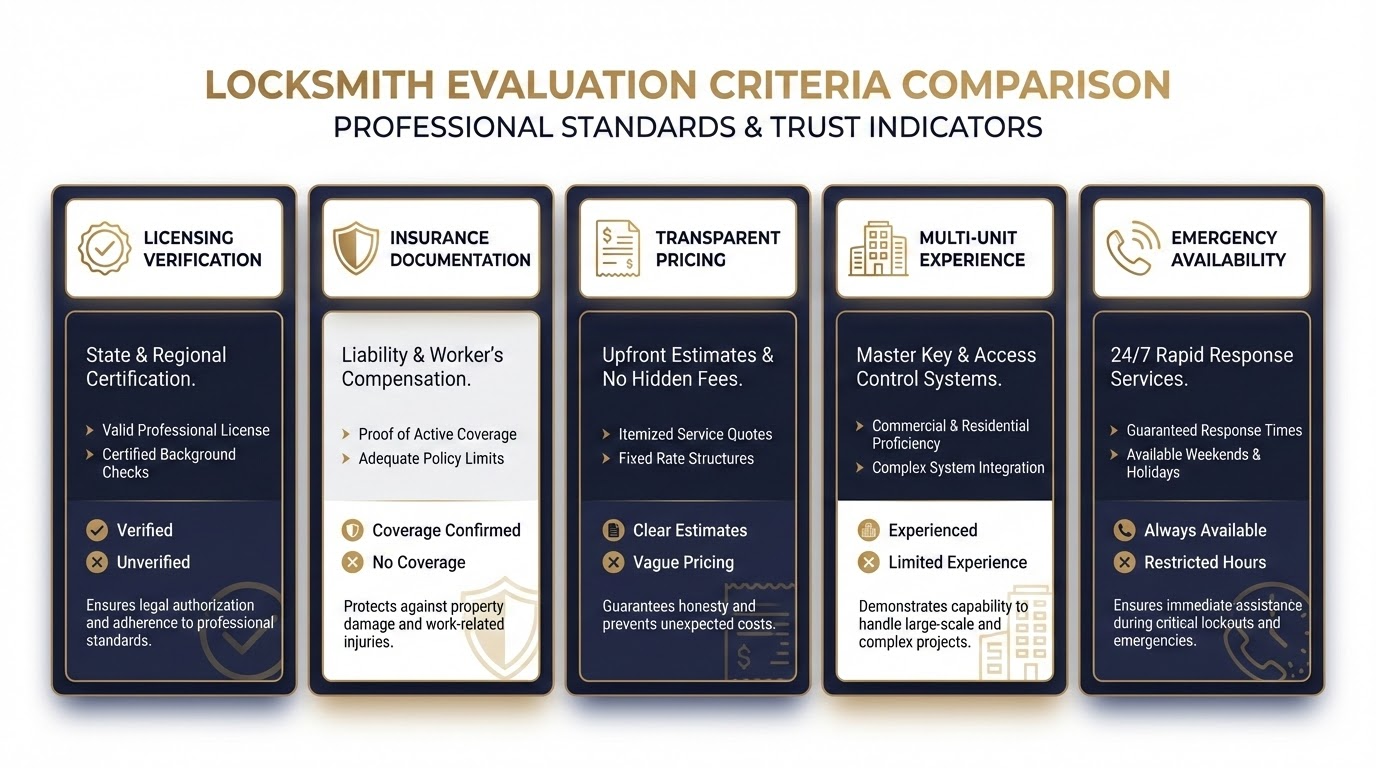
Selecting a locksmith partner requires evaluation beyond simple price comparison. The right provider becomes an operational asset. The wrong choice creates ongoing headaches and potential liability exposure.
Verifying Licensing and Insurance
License verification should be the first step in evaluating any locksmith provider. Use the Texas DPS TOPS portal to confirm both company and individual technician credentials. Ask for proof of current licensing before signing any service agreement. Licensing demonstrates that the provider meets state regulatory requirements and has passed background screening.
Insurance verification is equally important. General liability coverage protects against property damage during service calls. Workers compensation coverage protects property managers from claims if a technician is injured on the property. Request certificates of insurance naming your property management company as an additional insured party.
Experience with Multi-Unit Properties and Commercial Accounts
Property management locksmith work differs substantially from residential service calls. Providers experienced with multi unit locks understand master key system maintenance, high-volume rekeying coordination, and the operational priorities of property managers. They can handle large-scale projects efficiently and maintain consistency across dozens or hundreds of units.
Ask prospective locksmiths about their experience with apartment complex locksmith work specifically. How many multi-unit properties do they currently service? What is their largest single-property account? Can they provide references from other property management companies? Experience matters because property management creates unique challenges that residential-focused locksmiths may not anticipate.
Emergency Response Capabilities and Availability
Property emergencies do not respect business hours. Tenant lockouts occur at midnight. Security breaches happen on holidays. Property managers need immediate response locksmith services available around the clock. Evaluate prospective providers on their actual emergency response capabilities, not just their advertising claims.
Ask specific questions about response times. What is the average arrival time for emergency calls? Is there a dedicated emergency dispatcher or does after-hours service route through a call center? What premium applies to emergency service? Establishing clear service level expectations prevents frustration when emergencies actually occur.
Transparent Pricing and Quoting
Locksmith pricing scams remain unfortunately common. The Better Business Bureau warns consumers about bait-and-switch tactics where a low phone quote transforms into a much higher invoice once the technician arrives. Property managers should demand written quotes before any work begins.
Legitimate locksmith providers offer transparent per-cylinder pricing for rekeying, clear service call fees, and detailed invoices that itemize every charge. They welcome questions about pricing and explain any variables that might affect final cost. If a prospective locksmith hesitates to provide clear pricing information, consider that a significant warning sign.
| Evaluation Criteria | What to Look For | Red Flags |
|---|---|---|
| Licensing | Verifiable Texas DPS credentials for company and technicians | Unable to provide license numbers or hesitates when asked |
| Insurance | Current general liability and workers compensation certificates | Claims to be insured but cannot produce documentation |
| Pricing | Written quotes with per-unit and per-cylinder breakdowns | Vague estimates or refusal to quote until on-site |
| Experience | References from other property management companies | Primarily residential focus with limited commercial experience |
| Availability | Documented 24/7 response with clear emergency protocols | After-hours calls go unanswered or route to voicemail |
What Documentation Should Property Managers Expect After Locksmith Services?
Professional locksmith providers deliver comprehensive documentation with every service call. This documentation serves operational, legal, and financial purposes. Property managers should establish documentation expectations during initial provider selection and hold partners accountable for consistent delivery.
Work orders should identify each unit serviced, specify what work was performed, and note any conditions discovered during service. Key distribution records should document how many keys were created and who received them. Compliance documentation should timestamp rekeying completion relative to tenant turnover dates. This paper trail demonstrates due diligence and supports property managers during any subsequent disputes or audits.
| Document Type | Required Information | Purpose |
|---|---|---|
| Work Order | Unit number, door locations, services performed, technician name, date/time | Service verification and billing reconciliation |
| Key Log | Number of keys created, recipients, signatures if applicable | Chain of custody and security accountability |
| Compliance Certificate | Rekey completion date, tenant turnover date, statutory deadline | Legal compliance documentation |
| Condition Report | Hardware status, recommended repairs, security concerns noted | Maintenance planning and liability protection |
How Much Does Property Management Locksmith Service Cost in San Antonio?
Pricing for property management locksmith services varies based on several factors. Understanding these variables helps property managers budget accurately and evaluate quotes effectively. Most providers structure pricing around a combination of service call fees and per-unit or per-cylinder charges.
Standard rekeying typically costs less than full lock replacement. The exact differential depends on hardware type and condition. Emergency service commands premium pricing, often fifty percent or more above standard rates. Master key system work may carry additional charges due to the technical complexity involved. Property managers should request detailed pricing schedules from prospective providers and compare them systematically.
Volume relationships often reduce per-unit costs. A property manager who guarantees monthly service volume may negotiate better rates than one who calls sporadically. Some locksmith providers offer annual contracts with fixed pricing for routine services. These arrangements provide budget predictability and often include priority scheduling for the property management account.
What Happens If a Master Key Is Lost or Compromised?

Master key loss represents a serious security event for multi-unit properties. Unlike an individual tenant key, a master key potentially provides access to every unit in the system. Property managers need clear protocols for responding to this scenario and should discuss contingency plans with their locksmith partner in advance.
The response depends on the level of key that was lost. A tenant change key affects only one unit and requires simple rekeying. A building master key potentially compromises every unit in that building. A grand master key could affect multiple buildings. The scope of required rekeying escalates accordingly, as does the cost and logistical complexity.
Prevention reduces the likelihood of this scenario. Strict key control policies limit who possesses master keys. Key tracking systems document custody at all times. Some property managers use high-security cylinders with restricted keyways that prevent unauthorized duplication. These preventative investments often cost less than the emergency rekeying that follows a master key compromise.
Comparing Scheduled Maintenance Service Versus Emergency Response
Property managers benefit from understanding the distinction between scheduled maintenance locksmith work and emergency response service. Each serves different purposes and carries different cost structures. Optimizing the balance between them reduces overall locksmith expenses while maintaining security standards.
Scheduled maintenance includes planned rekeying during tenant turnover, periodic lock inspections, hardware replacements identified during property assessments, and master key system updates. This work can be coordinated in advance, batched for efficiency, and completed during normal business hours. Per-unit costs are typically lowest for scheduled work.
Emergency response addresses immediate security needs. Tenant lockouts, security breaches, malfunctioning locks that prevent unit access, and similar urgent situations require rapid response regardless of time or day. These calls carry premium pricing and cannot be avoided entirely. However, property managers who invest in preventative maintenance and quality hardware reduce their emergency call frequency substantially.
Need Property Management Locksmith Services?
Licensed technicians available 24/7 for San Antonio property managers.
What Additional Services Do Commercial Locksmiths Provide for Apartment Complexes?
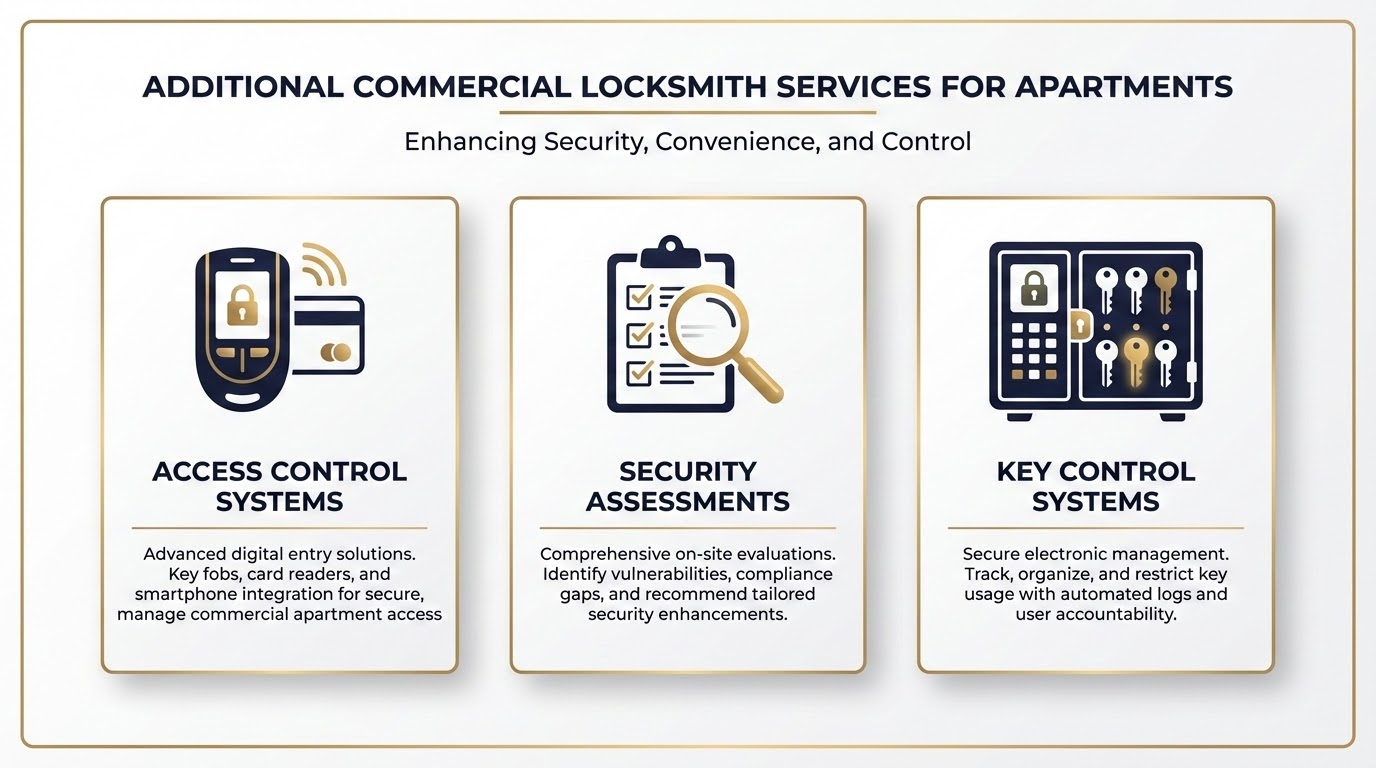
Beyond standard rekeying and lockout response, commercial locksmith providers offer services that address the broader security needs of apartment complexes and multi-unit properties. Property managers should understand these additional capabilities when evaluating potential partners.
Access control system installation and maintenance represents a growing service category. Electronic access systems using key fobs, cards, or codes provide enhanced security and audit capabilities. These systems can track who accessed which doors and when. However, they require specialized expertise that not all locksmiths possess.
Security assessments help property managers identify vulnerabilities before incidents occur. A thorough assessment evaluates door and frame condition, lock hardware adequacy, lighting around entry points, and overall access control effectiveness. Professional recommendations from these assessments guide capital improvement priorities.
Key control system implementation helps larger properties manage key distribution systematically. These systems may include restricted keyway hardware that prevents unauthorized duplication, electronic key cabinets that log access, or comprehensive key management software. The appropriate solution depends on property size and operational complexity.
Frequently Asked Questions
Do landlords in Texas have to rekey locks between tenants?
Yes. Texas Property Code § 92.156 requires landlords to rekey or change security devices operated by key, card, or combination no later than the seventh day after the tenant turnover date. This applies to all exterior door locks and any other security devices that use keys or codes. The landlord bears the cost of this mandatory rekeying.
How can I verify that a locksmith is properly licensed in Texas?
Use the Texas Online Private Security portal at tops.portal.texas.gov to search for licensed individuals and companies. Enter the locksmith company name or individual technician name to confirm their licensing status. Legitimate locksmiths will readily provide their license numbers for verification.
What security devices are landlords required to install in Texas rental properties?
Texas Property Code § 92.153 mandates specific security devices including deadbolts on exterior doors, window latches, sliding door security pins or bars, and peepholes on doors without windows. These devices must be installed without waiting for tenant requests. Additional devices may be required based on local ordinances or lease terms.
How quickly should a property management locksmith respond to emergencies?
Response time expectations vary based on the service agreement. Many property managers establish service level agreements requiring response within thirty to sixty minutes for emergency lockouts. The specific timeframe should be documented in your service contract. Providers serving property management accounts should maintain around the clock emergency dispatch capabilities.
What is the difference between rekeying and replacing locks?
Rekeying changes the internal pin configuration of an existing lock cylinder, making old keys inoperable while preserving the existing hardware. Replacement removes the entire lock mechanism and installs new hardware. Rekeying costs less and works faster when hardware is in good condition. Replacement is appropriate when locks are worn, damaged, or require upgrade to different specifications.
Can a tenant rekey their own locks in Texas?
Texas Property Code § 92.163 restricts tenant alterations to security devices. Tenants generally cannot rekey, change, or remove security devices without landlord permission. Security devices installed or changed under the property code become fixtures of the property. Tenants who need different security arrangements should request them through proper channels.
Ready to Improve Your Property Security Operations?
15+ years serving San Antonio property managers. Licensed, insured, and available 24/7.
Property management demands reliable partners who understand your operational realities. Security cannot be an afterthought when you are responsible for dozens or hundreds of tenants and their homes. The right locksmith relationship streamlines tenant turnover, ensures legal compliance, and provides peace of mind during emergencies.
Whether you manage a single apartment complex or an extensive portfolio across San Antonio, professional locksmith services tailored to property management make a measurable difference in your daily operations. Have questions about rekeying schedules, master key systems, or compliance requirements? Contact our team to discuss how we can support your property management needs.