
Commercial Access Control San Antonio – The Complete Guide for Business Owners
Protecting a commercial property in San Antonio requires more than traditional locks and keys. Modern businesses face evolving security threats that demand smarter, more responsive solutions. A commercial access control San Antonio system replaces outdated methods with digital credentials, giving business owners precise control over who enters their facilities and when. This comprehensive guide explores how an entry control system works, the types available, compliance requirements specific to San Antonio, and how to select the right immediate response locksmith for installation and ongoing support.
What Makes Commercial Access Control Essential for San Antonio Businesses?
Traditional keys present significant vulnerabilities for commercial properties. Keys can be lost, duplicated without authorization, or retained by former employees. Tracking who accessed a building and when becomes nearly impossible. These limitations create security gaps that expose businesses to theft, liability issues, and operational inefficiencies. An immediate response locksmith specializing in business access control can assess current vulnerabilities and recommend a transition path to digital solutions that address these concerns directly.
Without a robust access control system, businesses commonly face unauthorized after-hours access, difficulty managing contractor or vendor entry, and no reliable record of building activity. These issues become especially problematic for San Antonio businesses operating multiple locations or managing high employee turnover.
“Arrived within 15 minutes, fixed my lock in less than 10. Fast and reasonably priced.”
How Does a Modern Entry Control System Benefit San Antonio Operations?
A well-designed entry control system delivers measurable advantages across security, operations, and cost management. Preventing unauthorized access becomes straightforward when every door requires valid credentials. Granular control allows managers to define exactly which employees can access specific areas during designated hours. Server rooms, inventory storage, and executive offices can have restricted access separate from common areas.
Detailed audit trails record every entry and exit attempt, creating accountability and supporting investigations when incidents occur. According to NIST SP 800-53 guidelines, maintaining physical access logs represents a fundamental security control for organizations of all sizes. Remote management capabilities allow administrators to modify access privileges, lock down facilities, or respond to alerts from any location with internet connectivity.
Cost savings emerge from eliminating re-keying expenses when employees leave and from improved operational efficiency. Scalability ensures the system grows alongside the business, accommodating new hires, additional doors, or expanded facilities without starting over.
Card and Fob Access: When Is This the Right Choice?
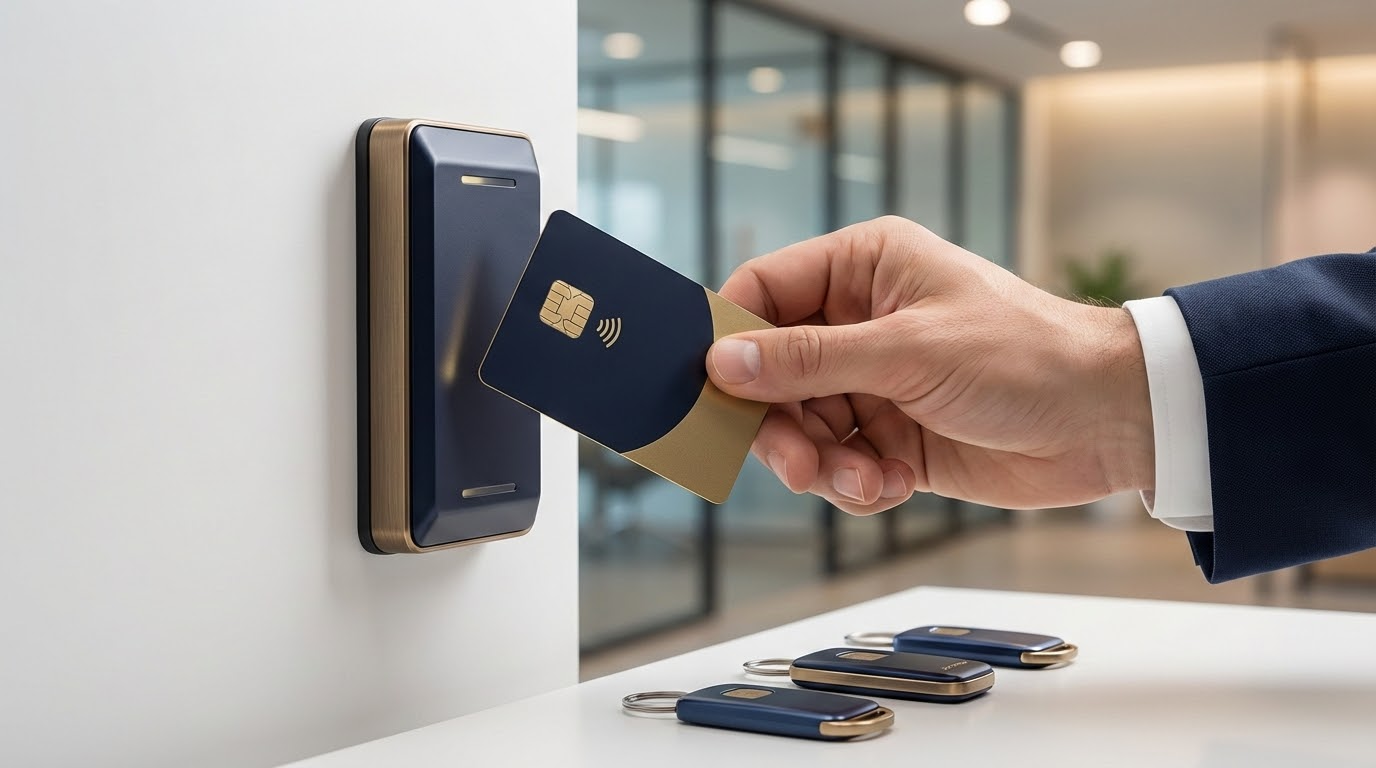
Proximity cards and key fobs remain popular choices for commercial access control San Antonio installations. These systems use radio frequency identification to authenticate users when they present their credential near a reader. The technology offers simplicity that employees quickly adopt regardless of technical comfort level.
Card and fob systems suit businesses with moderate security requirements and staff who prefer a familiar credential format. Retail stores, small offices, and light industrial facilities frequently implement this technology. A significant advantage involves instant credential management. When an employee departs, administrators can immediately revoke their card or fob access from a central management console without physically retrieving the credential.
Biometric Access Systems: Where Does High Security Make Sense?
Fingerprint scanners, facial recognition devices, and other biometric technologies verify identity based on unique physical characteristics. These systems provide the highest authentication confidence because credentials cannot be shared, lost, or forgotten. San Antonio businesses protecting sensitive data, valuable inventory, or regulated materials often select biometric solutions for critical access points.
Medical facilities, research laboratories, financial institutions, and data centers represent typical applications. While biometric hardware costs more than card readers, the enhanced security and elimination of credential management overhead often justify the investment for high-risk areas.
Keypad Systems: Which Scenarios Fit Code-Based Entry?
PIN codes and keypads offer straightforward access control without requiring users to carry physical credentials. This approach works well for common areas, break rooms, or locations where temporary access is frequently needed. Delivery drivers, cleaning crews, and occasional visitors can receive time-limited codes that expire automatically.
Effective keypad management requires regular code changes and disciplined user administration. Businesses must balance convenience against the reality that codes can be shared or observed. Many commercial access control San Antonio installations combine keypads with other credential types, using codes for lower-security doors while protecting critical areas with stronger authentication.
Mobile Access Control: Is Smartphone-Based Entry Right for Your Business?
Mobile credentials transform employee smartphones into access devices. Users authenticate through an app that communicates with door readers via Bluetooth or near-field communication. This modern approach appeals to businesses prioritizing convenience and streamlined credential distribution.
Administrators can issue or revoke mobile credentials instantly without physical card distribution. Employees appreciate eliminating another item to carry. Integration with existing security platforms often proves smoother because mobile systems typically feature modern APIs and cloud connectivity. Businesses managing multiple San Antonio locations find particular value in centralized mobile credential administration.
| Credential Type | Best For | Key Advantages | Considerations |
|---|---|---|---|
| Card/Fob | General commercial use | Familiar format, easy deployment | Physical credentials can be lost |
| Biometric | High-security areas | Cannot be shared or duplicated | Higher hardware cost |
| Keypad | Temporary/shared access | No credentials to manage | Codes can be shared |
| Mobile | Modern workplaces | Instant provisioning, nothing to carry | Requires smartphone adoption |
What Building and Fire Codes Apply to San Antonio Access Control Installations?
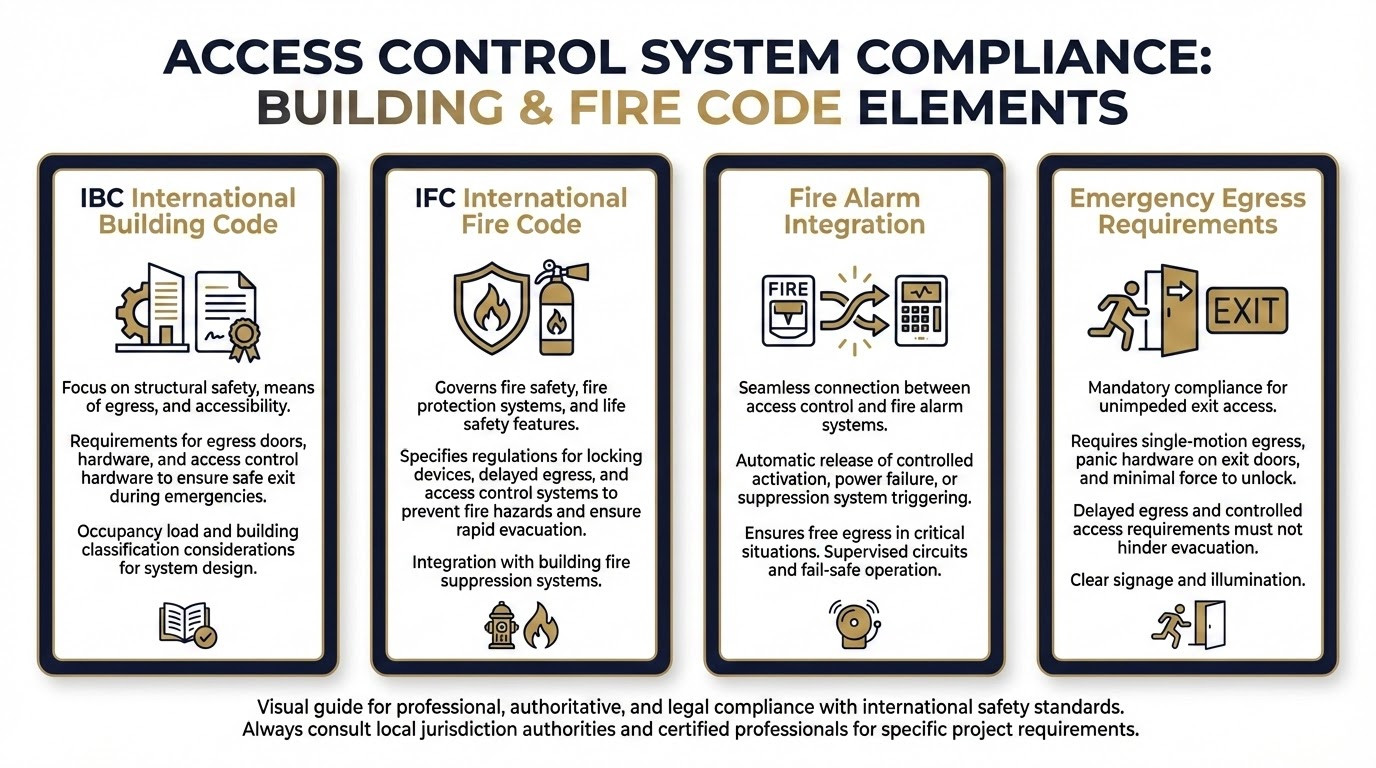
San Antonio adopts International Code Council standards including the International Building Code and International Fire Code. Compliance with these codes is mandatory for access control installations, particularly regarding emergency egress requirements. The city’s Development Services Department maintains current code information and amendment schedules that installers must follow.
Fire alarm integration represents a critical compliance element. Access-controlled doors on egress paths must unlock automatically when fire alarms activate, ensuring occupants can exit safely during emergencies. San Antonio’s 2024 Fire Code amendments, effective May 2025, reinforce these integration requirements. Businesses installing or upgrading commercial access control must verify their systems meet current fire safety standards.
How Do Texas Accessibility Standards Affect Entry Control System Hardware?
Texas Accessibility Standards establish specific requirements for door and gate hardware that impact access control component selection. Hardware must be operable with one hand without requiring tight grasping, pinching, or twisting motions. Mounting heights for readers, keypads, and related controls must fall within specified ranges, typically between 34 and 48 inches above the floor.
These requirements ensure individuals with disabilities can independently operate access control equipment. Businesses must verify that all system components, from credential readers to exit buttons, comply with TAS guidelines. Non-compliant installations risk code violations and may require costly modifications after deployment.
“Cristin is hands-down the best locksmith I’ve ever worked with. She showed up quickly and handled a tricky lockout with total professionalism.”
Why Does UL 294 Certification Matter for Commercial Access Control?
UL 294 establishes testing and certification standards for access control system units. Equipment carrying this certification has undergone rigorous evaluation for safety, reliability, and performance. The standard covers controllers, readers, exit devices, and locking components that comprise a complete business access control system.
For controlled or delayed egress applications, UL 1034 provides additional standards addressing electric strikes and magnetic locks. Understanding how these certifications apply helps businesses select equipment that meets both safety requirements and operational needs. Fail-safe operation, where doors unlock during power failures or fire alarm activation, represents a key consideration that UL standards address for egress doors.
| Standard | Covers | Why It Matters |
|---|---|---|
| UL 294 | Access control system units | Ensures safety and performance of controllers, readers, locking hardware |
| UL 1034 | Controlled/delayed egress devices | Addresses electric strikes and maglocks for egress compliance |
| IBC/IFC | Building and fire safety | Mandates emergency egress and fire alarm integration |
| TAS | Accessibility | Ensures hardware usability for individuals with disabilities |
What Steps Should Businesses Take When Planning Access Control?
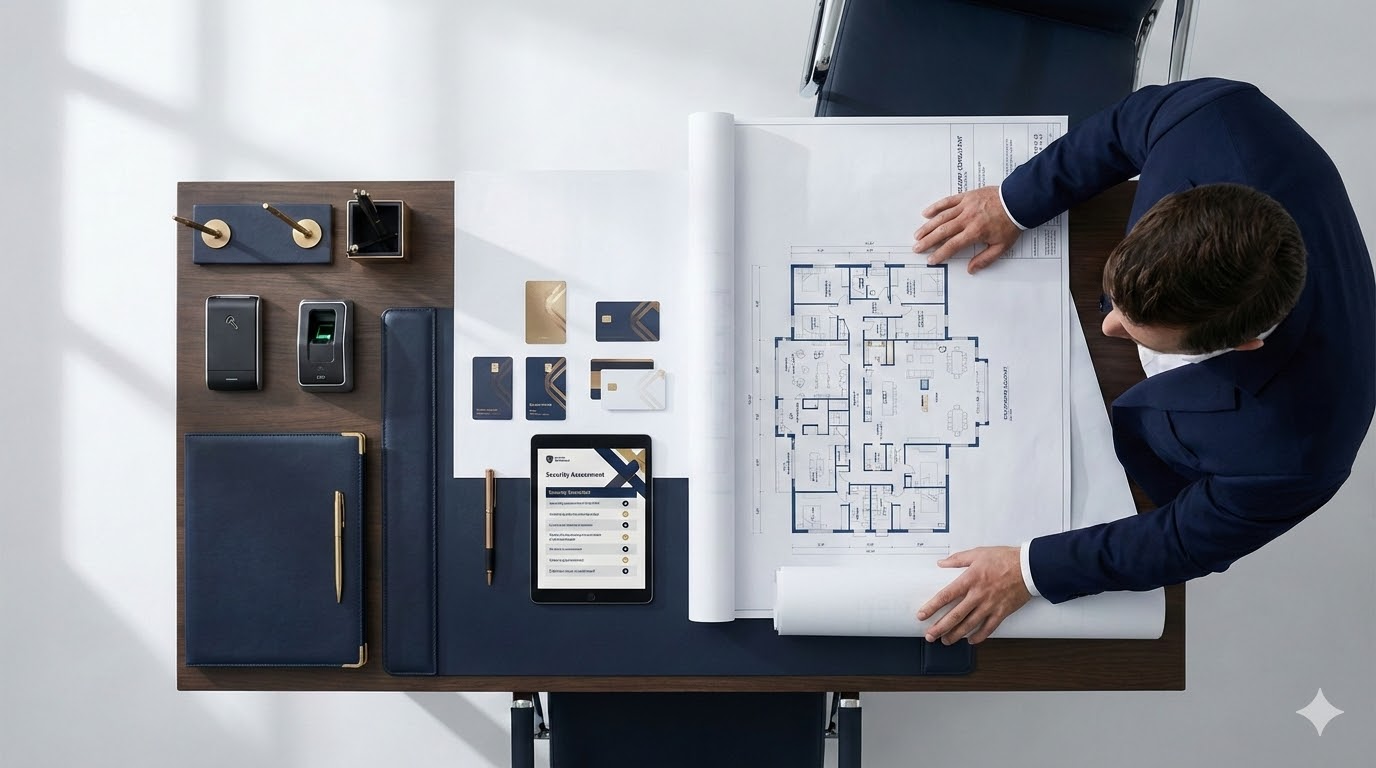
Effective planning begins with a thorough assessment of security needs. Identify high-traffic entry points, restricted zones requiring enhanced protection, and operational hours that influence access schedules. Consider which employees need access to which areas and whether contractors, vendors, or visitors require managed entry.
Vulnerability analysis reveals weak points in current security. Doors with minimal oversight, areas storing valuable equipment or sensitive information, and locations with irregular supervision deserve priority attention. This assessment informs system design decisions including credential types, reader placement, and integration requirements.
Which Components Create a Robust Commercial Access Control System?
Access control panels serve as the system’s central processing units, managing credential validation and door control decisions. Quality panels support multiple doors, store event logs, and communicate with management software. Reader devices interpret credentials at each controlled door, whether scanning cards, reading fingerprints, or receiving mobile signals.
Electrified locking hardware physically secures doors until valid credentials release them. Electric strikes work with existing door latches and often provide the most natural appearance. Magnetic locks use powerful electromagnets and suit applications where fail-safe operation is required. Both types must integrate properly with fire alarm systems and include appropriate exit provisions.
Maglocks typically require push-to-exit buttons mounted between 40 and 48 inches high and within five feet of the door, conforming to IBC and NFPA requirements. Exit devices like panic bars ensure rapid egress during emergencies. Management software ties everything together, enabling credential administration, monitoring, and reporting from centralized or cloud-based platforms.
How Can Access Control Integrate with Other Security Systems?
Video surveillance integration links door events with camera recordings, allowing security personnel to verify who accessed a door at any given time. This capability proves invaluable during incident investigations and provides visual confirmation that credentials are being used by authorized individuals.
Alarm system integration creates a unified security approach where access events can trigger or influence intrusion detection responses. A door forced open can immediately generate an alarm notification. Integration with HR management systems simplifies employee onboarding and offboarding by automatically provisioning or revoking access credentials based on employment status changes.
What Qualities Define a Reliable Immediate Response Locksmith for Access Control?
Experience with commercial installations distinguishes qualified providers from general locksmiths. Expertise in local codes including IBC, IFC, and Texas Accessibility Standards ensures compliant installations that pass inspection. Knowledge of UL standards helps select appropriate equipment for each application.
Comprehensive service offerings should include initial consultation, system design tailored to specific business needs, professional installation, and ongoing maintenance support. Emergency repair services matter because access control failures can prevent business operations or compromise security. Response time commitments provide assurance that problems will receive prompt attention.
Businesses benefit from working with providers who conduct thorough site surveys before proposing solutions. This approach identifies potential installation challenges, existing infrastructure that can be leveraged, and specific requirements that influence system design. At Immediate Response Locksmith San Antonio, the team provides exactly this type of comprehensive commercial security support, from initial assessment through ongoing maintenance.
“Emilio rescued me when my car would not let me in. Life saver!”
What Should a Professional Site Survey Include?
A proper site survey documents every door requiring access control, noting door type, frame construction, existing hardware, and proximity to power and network infrastructure. Photos capture current conditions and help during system design. The survey identifies potential complications like unusual door materials, long cable runs, or locations requiring special mounting considerations.
Critical doors receive particular attention. Main entrances, server rooms, storage areas, and executive offices often have different security requirements than interior office doors. The survey should also note emergency egress paths and fire alarm locations that affect installation planning and compliance.
How Should Businesses Evaluate Access Control Proposals?
Detailed proposals break down costs by component, including hardware for each door, installation labor, programming, and any recurring software or monitoring fees. Vague lump-sum quotes make comparison difficult and may hide unfavorable terms. Ask specifically about warranty coverage for equipment and workmanship.
Response time guarantees for service calls should appear in writing. Documentation deliverables matter too. Expect to receive complete user lists, access level configurations, and administrative login information upon project completion. Training for staff who will manage daily operations ensures the business can fully utilize system capabilities.
Need a Free Commercial Security Assessment?
Our licensed technicians will evaluate your property and recommend the best access control solution for your business.
What Advanced Features Are Transforming Commercial Access Control?
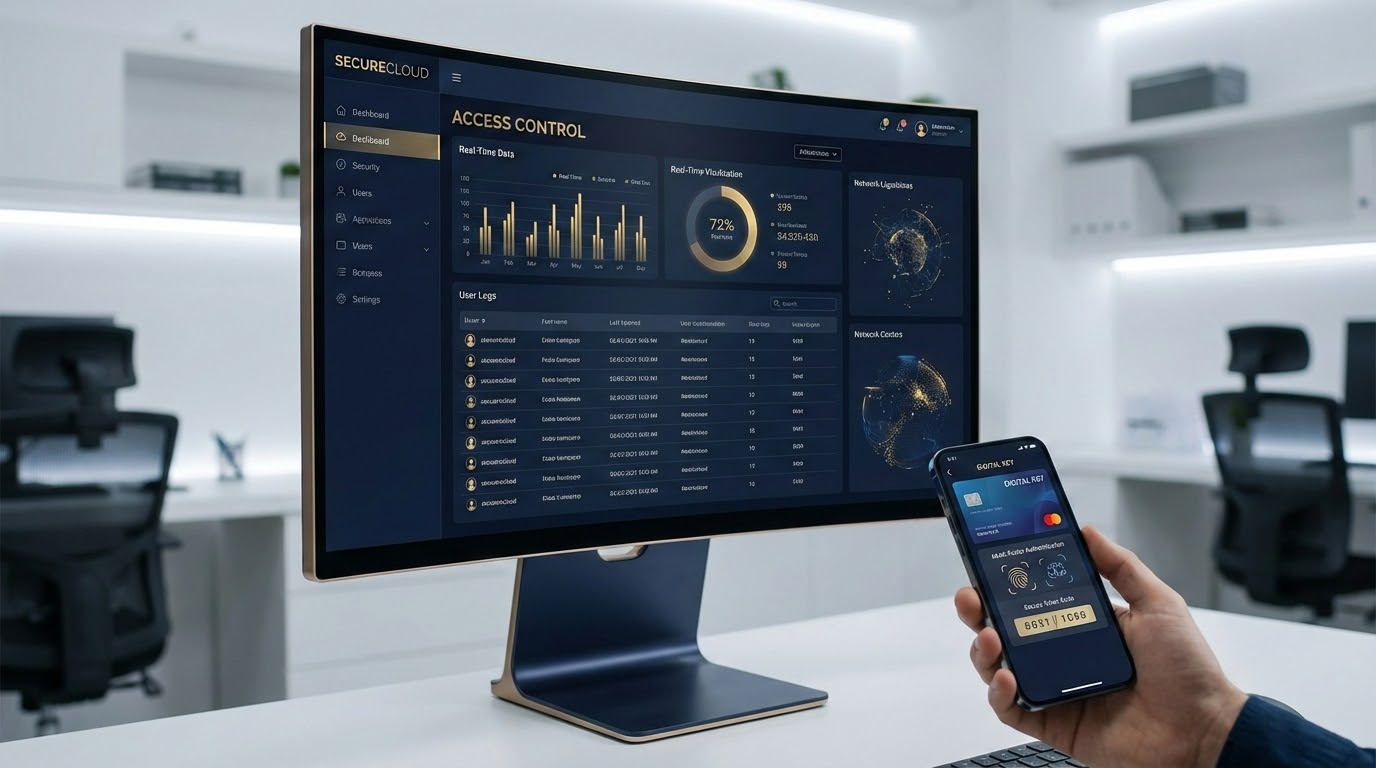
Cloud-based systems eliminate on-site servers and reduce IT infrastructure requirements. Administrators access management portals through web browsers from any location. Automatic software updates ensure systems remain current without manual intervention. Scalability improves because adding doors or locations requires only hardware installation and cloud configuration.
CISA recommends multi-factor authentication as a cybersecurity essential for businesses. Modern access control platforms increasingly support MFA, requiring users to present multiple credentials before gaining entry to high-security areas. This approach significantly reduces unauthorized access risk even if one credential type becomes compromised.
How Do Visitor Management Systems Enhance Commercial Security?
Dedicated visitor management streamlines guest entry while maintaining security oversight. Pre-registration allows hosts to authorize visitors before arrival. Check-in kiosks capture visitor information, print temporary badges, and notify hosts automatically. Detailed logs track visitor presence throughout facilities.
These systems integrate with core access control to issue temporary credentials that expire automatically. Businesses hosting frequent clients, vendors, or contractors benefit from reduced front desk workload and improved visitor experience. Compliance requirements in some industries mandate visitor tracking that these systems readily provide.
What Cybersecurity Considerations Apply to Networked Access Control?
Networked access control systems face cyber threats just like other IT infrastructure. Strong passwords for administrative accounts prevent unauthorized system changes. Network segmentation isolates access control equipment from general business networks, limiting exposure if other systems become compromised.
Regular security audits identify vulnerabilities before attackers exploit them. Firmware updates address known security issues in hardware components. Businesses should understand their access control provider’s security practices and ensure cloud-based systems employ appropriate encryption and access controls.
| Security Practice | Purpose | Implementation |
|---|---|---|
| Strong Passwords | Prevent unauthorized admin access | Complex passwords, regular changes |
| Network Segmentation | Isolate access control systems | Separate VLANs or physical networks |
| Regular Updates | Address known vulnerabilities | Scheduled firmware and software updates |
| Multi-Factor Authentication | Enhance credential security | Require multiple verification methods |
Frequently Asked Questions About Commercial Access Control San Antonio
How much does commercial access control cost per door in San Antonio?
Costs vary based on reader type, locking hardware, existing infrastructure, and software requirements. Basic card reader installations on prepared doors cost less than biometric systems requiring new wiring. Cloud-based systems may include monthly subscription fees while on-premise solutions involve higher upfront hardware costs. Request itemized proposals that separate hardware, installation, and recurring expenses for accurate comparison.
Can access control be installed on existing doors without full replacement?
Many installations successfully retrofit existing doors with access control hardware. Feasibility depends on door and frame construction, current hardware condition, and proximity to power and network connections. A professional site survey determines what modifications, if any, existing doors require. Metal and solid wood doors typically accommodate retrofits more easily than glass or specialized door types.
What happens to access control during a power outage?
Professional installations include battery backup to maintain operation during outages. Backup duration varies by system design but typically provides several hours of continued operation. Door behavior during extended outages depends on configuration. Fail-safe doors unlock to ensure egress while fail-secure doors remain locked to maintain security. Critical doors may have different settings based on their function and location.
How quickly can employee access be revoked when someone leaves the company?
Modern access control systems allow immediate credential revocation through management software. Administrators can disable a card, fob, mobile credential, or PIN within seconds from any authorized workstation or mobile device. This capability eliminates the security gap that occurs with traditional keys when employees depart unexpectedly.
Does access control require internet connectivity to function?
Basic door control can operate locally without internet connectivity. However, remote management, mobile credentials, cloud-based administration, and real-time alerts require network connectivity. Businesses must decide whether local-only operation meets their needs or whether cloud connectivity provides essential functionality worth the infrastructure requirements.
How does access control integrate with fire alarm systems?
Integration ensures access-controlled doors on egress paths unlock automatically when fire alarms activate. This safety requirement is mandated by building and fire codes. Proper integration involves connecting access control panels to fire alarm systems so door releases trigger immediately upon alarm activation, allowing unrestricted emergency egress.
Ready to Secure Your San Antonio Business?
15+ years serving San Antonio. Licensed and insured. Free commercial security assessments available.
Implementing commercial access control represents a significant step toward protecting your business assets, employees, and operations. The right system delivers security improvements, operational efficiencies, and compliance confidence that traditional locks simply cannot match. Whether you need a straightforward card access system for a small office or a sophisticated multi-site solution with biometric authentication and cloud management, professional guidance ensures you select and implement the optimal configuration for your specific requirements.
What security challenges does your business face that modern access control could address? Connect with the experienced team at Immediate Response Locksmith San Antonio to discuss your commercial security needs and discover how a tailored access control solution can protect what matters most to your organization.